Environment Minister reviews CAQM’s new digital nerve centre to track air pollution
Source Entity
The Indian Express
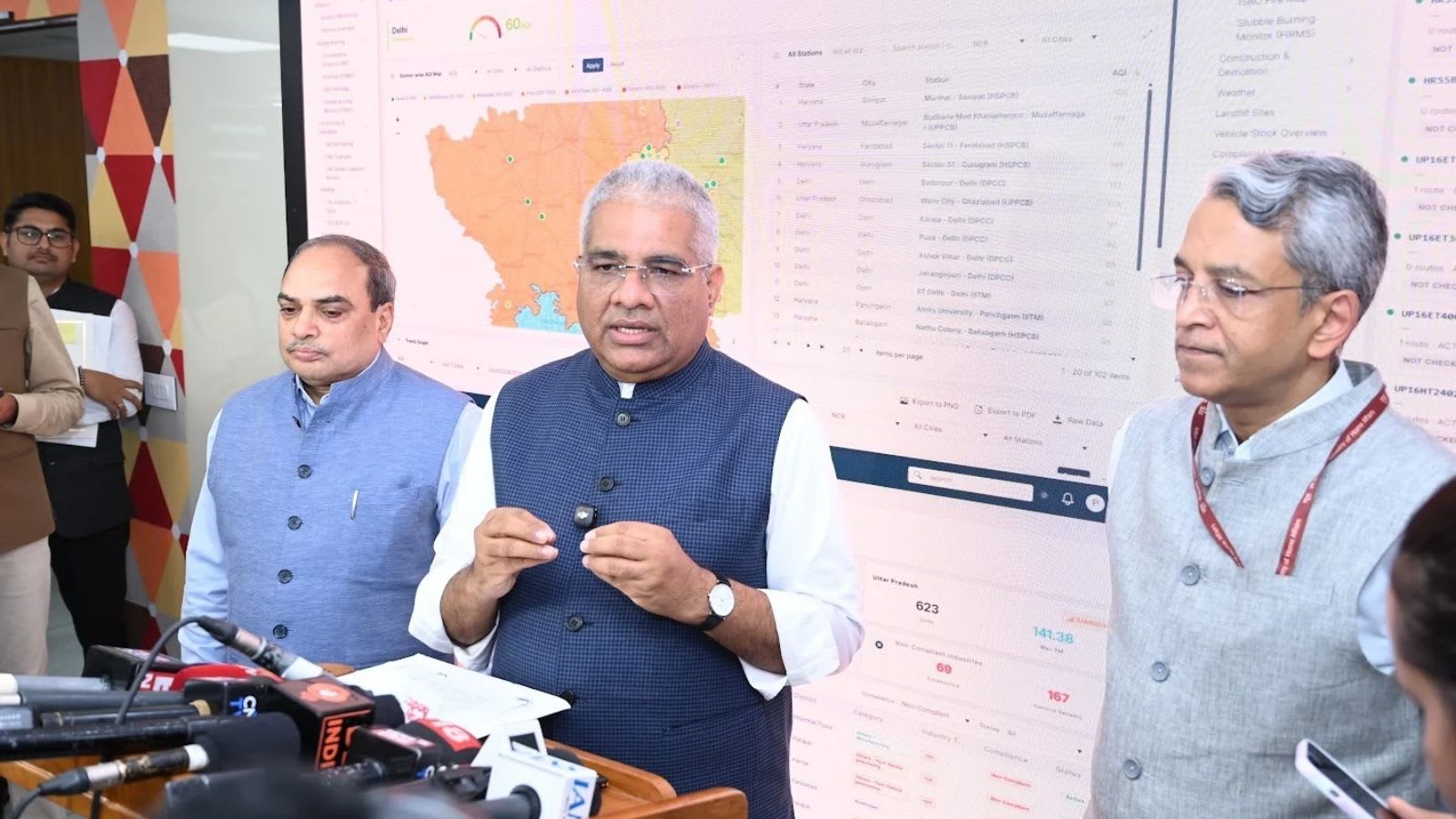
The Union Environment Minister has reviewed the new PAVAN digital command center, designed to enhance real-time tracking of air pollution in the Delhi-NCR region. This initiative marks a significant technological step toward improving enforcement and data-driven policy compliance.
Enhancing Air Quality Governance through PAVAN
The Union Minister for Environment, Forest and Climate Change, Bhupender Yadav, recently conducted a comprehensive review of the Commission for Air Quality Management’s (CAQM) new digital nerve center, known as the Platform for Air Quality Vigilance and Analytics for NCR (PAVAN). This Integrated Command and Control Centre (I3C) represents a strategic shift toward data-centric governance in the battle against the chronic air pollution issues plaguing the Delhi-National Capital Region (NCR).
Technological Framework and Strategic Objectives
By leveraging real-time data streams, the PAVAN platform aims to streamline the monitoring of air pollution compliance across the NCR. The primary objective is to move beyond reactive policy-making and toward proactive, evidence-based enforcement. During the live demonstration, officials showcased how the system integrates diverse data points to monitor pollution levels, which is critical for the CAQM’s mandate to coordinate enforcement actions across state boundaries in the NCR.
Scaling Digital Infrastructure
This development signifies the expansion of digital surveillance infrastructure in the capital. As the second I3C operational in New Delhi—following the one established by the Delhi Pollution Control Committee (DPCC)—the PAVAN platform creates a more robust secondary layer of oversight. The synergy between the DPCC’s local monitoring and the CAQM’s regional oversight is expected to fill critical gaps in jurisdiction-based reporting and enforcement.
Implications for Regional Enforcement
Air pollution in the NCR is a complex, multi-jurisdictional challenge that requires seamless coordination between central and state agencies. The PAVAN platform acts as a digital bridge, ensuring that compliance data is accessible and actionable in real-time. This level of transparency is vital for holding stakeholders accountable and ensuring that emission standards are not just set but strictly observed throughout the year.
Future Trends in Environmental Monitoring
Looking ahead, the integration of advanced analytics into air quality management suggests a future where predictive modeling could become standard practice. By analyzing historical trends alongside real-time data, authorities may eventually be able to forecast pollution spikes with greater accuracy, allowing for preemptive measures rather than emergency interventions. This digital pivot underscores a broader national commitment to leveraging technology to solve long-standing environmental health crises.
Conclusion
The launch and successful review of PAVAN mark a pivotal moment in India's environmental policy. As the government continues to refine the operational readiness of this platform, the focus must remain on ensuring that the data generated by this nerve center translates into tangible reductions in pollutants and improved public health outcomes for the millions residing in the Delhi-NCR region.