Karnataka seeks Lok Sabha seat freeze: ‘Our success mustn’t shrink our voice’
Source Entity
The Indian Express
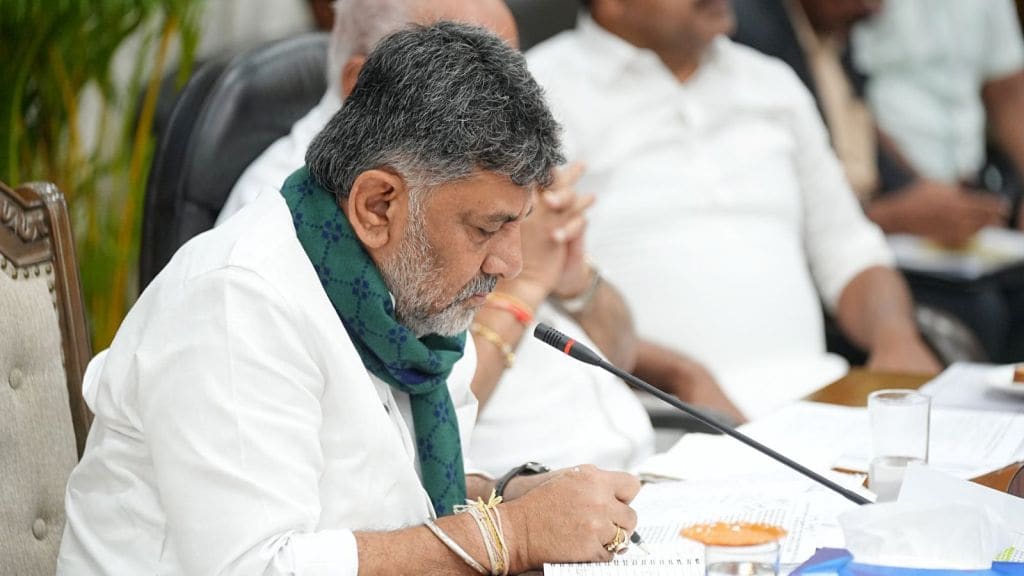
Karnataka CM D.K. Shivakumar has urged the Southern Zonal Council to freeze the Lok Sabha strength at 543 seats based on the 1971 census. He argues that southern states should not be penalized politically for their successful population stabilization efforts.
The Call for Political Equity in Southern India
At the 31st meeting of the Southern Zonal Council held in Mahabalipuram, Karnataka Chief Minister D.K. Shivakumar spearheaded a significant policy demand regarding the future of Indian parliamentary representation. Addressing a forum chaired by Union Home Minister Amit Shah, Shivakumar articulated a growing concern among southern states: that their success in population stabilization should not result in a diminished political voice at the national level.
The Argument for 1971 Census Benchmarking
Central to Shivakumar’s proposal is the demand to retain the 1971 census as the foundation for the upcoming delimitation exercise. By advocating for the preservation of the existing 543 Lok Sabha seats, the Karnataka Chief Minister aims to prevent a shift in political power that would disproportionately favor regions with higher population growth rates. The proposal suggests a 25-year freeze on the current seat allocation, providing a buffer that protects the status quo for southern states that have historically adhered to national family planning mandates.
Economic Contribution vs. Political Representation
Shivakumar framed his argument not merely as a numbers game, but as a matter of fundamental fairness. He highlighted the economic role of the southern states, describing them as the "engine of the Indian economy." The core of his rhetoric suggests that these states, which contribute significantly to the national exchequer, deserve a proportional "weight and voice" in federal decision-making. He argued that the discipline shown by the South in controlling demographics should be viewed as a national achievement rather than a liability.
Integrating Women's Reservation
Beyond the delimitation freeze, the resolution moved by the Karnataka government also addresses the implementation of women's reservation. Shivakumar proposed that this quota be accommodated within the existing 543 seats. This approach reflects a desire to advance gender representation in the legislature without triggering a wider reallocation of seats that might destabilize the current regional balance of power in the Lok Sabha.
Broader Implications for Federalism
This demand highlights the increasing friction between the Union government and southern states regarding the fiscal and political structure of India. The call for "fairness in funds, voice, and respect" underscores a broader struggle for equity in federal devolution. As India prepares for future delimitation, the tension between population-based representation and the recognition of regional development and policy success will likely remain a critical fault line in national politics.
Conclusion
The intervention by D.K. Shivakumar at the Southern Zonal Council serves as a formal assertion of the southern states' political interests. By linking population control performance with the right to sustained representation, the Karnataka government has set a definitive benchmark for upcoming legislative debates. Whether the Union government adopts this resolution remains to be seen, but the demand has certainly elevated the discourse on the future of India's democratic architecture.
Multiple Citing Sources