HDK asks ECI to reveal facts
Source Entity
India Latest News: Top National Headlines Today & Breaking News | The Hindu
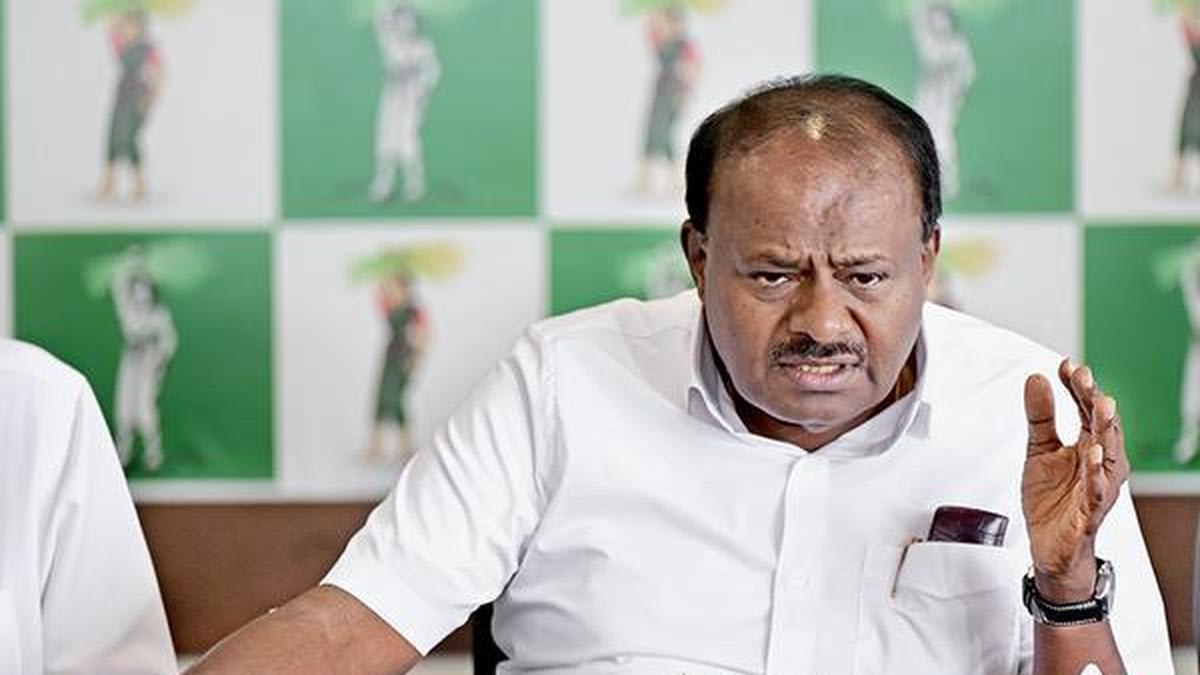
Union Minister Chirag Paswan has urged the Election Commission to address public doubts regarding its neutrality amid controversy over a rescheduled event. The poll body attributed the change to routine logistical adjustments.
Scrutiny Over Election Commission Autonomy
The recent discourse surrounding the Election Commission of India (ECI) has intensified following the postponement of an event in Uttar Pradesh involving Election Commissioner Gyanesh Kumar. While the poll body has officially characterized the change as a result of routine logistical and administrative adjustments, the event has triggered a broader conversation regarding the transparency and perceived impartiality of constitutional institutions. Such procedural shifts, while common in administrative calendars, are currently being viewed through a lens of heightened political sensitivity.
The Call for Institutional Accountability
Union Cabinet Minister Chirag Paswan has publicly challenged the Election Commission to proactively address the growing skepticism surrounding its operations. By stating that the ECI must maintain the trust of the people, Paswan has underscored the vital importance of public perception in the health of a democracy. His intervention highlights a growing consensus among political stakeholders that independent bodies must not only operate with integrity but must also be seen to be doing so, especially when public scrutiny begins to mount.
Distinguishing Political Rhetoric from Constitutional Duty
Paswan’s commentary draws a sharp line between political maneuvering and constitutional responsibility. He explicitly noted that it is not the role of the government or individual political parties to defend the ECI. By emphasizing that political entities lack the access to the internal deliberations of the Commission, he places the burden of clarity squarely on the shoulders of the Chief Election Commissioner. This stance suggests a preference for institutional self-correction rather than political interference, which could risk further compromising the perceived neutrality of the body.
Managing Public Trust in Democratic Processes
At the heart of this controversy is the preservation of public confidence in the electoral machinery. When questions are raised about the timing or scheduling of official events, the ECI faces a delicate challenge: balancing its administrative autonomy with the need for transparency. If the ECI remains silent in the face of persistent questioning, it risks allowing suspicion to fester, which can ultimately weaken the legitimacy of the democratic process itself.
Broader Implications and Future Trends
This incident serves as a bellwether for the ongoing tension between administrative efficiency and political accountability. As India moves toward future electoral cycles, the pressure on independent institutions to provide clear, timely, and defensible explanations for their internal adjustments will likely increase. Moving forward, the ECI will likely need to adopt more robust communication strategies to preemptively address concerns, ensuring that logistical decisions are not misinterpreted as politically motivated actions. Ultimately, the stability of the electoral system depends on the Commission’s ability to defend its own integrity without external prompting.
Multiple Citing Sources
Verification Required?