T.N. government to appeal against Ponmudy’s acquittal in ₹28.37-crore red sand quarrying case, ED tells Madras HC
Source Entity
India Latest News: Top National Headlines Today & Breaking News | The Hindu
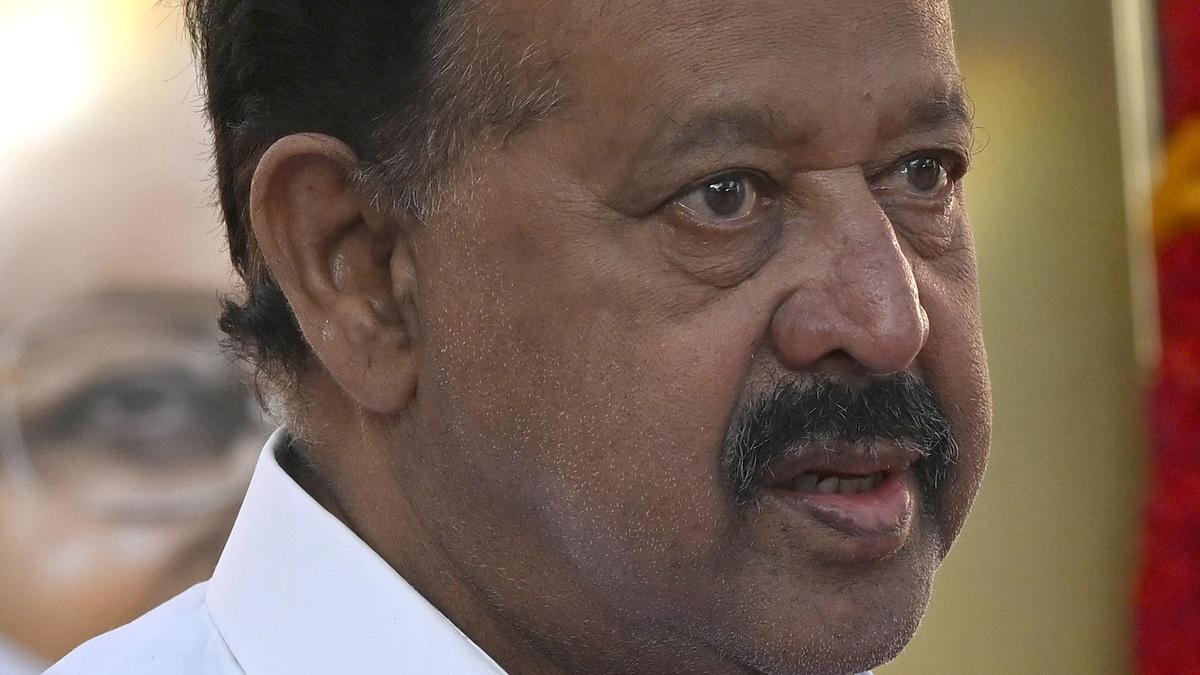
Prominent political figures in South India are currently challenging investigations by the Directorate of Enforcement. Recent court developments involve cases against Kerala's Pinarayi Vijayan and Tamil Nadu's K. Ponmudy, highlighting ongoing tensions between state leaders and central agencies.
Tensions Escalate Between State Leadership and Central Agencies
The political landscape in Southern India is currently defined by a series of high-stakes legal confrontations involving the Directorate of Enforcement (ED) and prominent state-level leaders. In Kerala, Chief Minister Pinarayi Vijayan has publicly denounced the agency's probe into the Exalogic-CMRL transaction, characterizing the investigation as a politically motivated effort to target him through his daughter. This assertion reflects a broader pattern of friction between regional administrations and federal investigative bodies, where the boundaries of financial oversight and political autonomy frequently overlap.
The Exalogic-CMRL Controversy
At the heart of the Kerala dispute is the argument regarding the legitimacy of financial transactions between Exalogic and CMRL. Mr. Vijayan contends that these payments were for services rendered in full compliance with the law and that all requisite tax obligations were met. By framing the ED’s focus on his daughter as an indirect attack on his own political career, the Chief Minister is attempting to mobilize his base, portraying the central agency’s actions as an overreach of power designed to destabilize his administration.
Legal Wrangling in Tamil Nadu
Concurrently, in Tamil Nadu, the legal machinery is grappling with the complexities of the Prevention of Money Laundering Act (PMLA). The Madras High Court is overseeing a significant development where the state government has indicated its intent to appeal the acquittal of former DMK Minister K. Ponmudy and his associates in a substantial red sand quarrying case. The ED’s role in informing the court of the state’s decision underscores the intricate, and often contradictory, interplay between state-level legal strategies and federal enforcement priorities.
Procedural Fairness and the BNSS
Another layer of this complex narrative is the judiciary's emphasis on procedural due process, as evidenced by the Madras High Court’s ruling in the case of Jaffer Sadiq. By setting aside a sessions court order for failing to grant a hearing, the High Court has reinforced the necessity of adhering to Section 223(1) of the Bharatiya Nagarik Suraksha Sanhita (BNSS). This move demonstrates that even in high-profile money laundering cases, the court remains the ultimate arbiter of procedural fairness, ensuring that the rights of the accused to be heard are not eclipsed by the urgency of the investigation.
Broader Implications and Future Trends
These developments signal a period of intense scrutiny for regional political entities. The reliance on the PMLA as a primary tool for investigation has transformed how state-level corruption cases are litigated. Moving forward, we can expect to see an increase in legal challenges centered on the interpretation of federal versus state jurisdiction. As political leaders continue to contest these probes, the judiciary will likely face a growing volume of petitions seeking to quash PMLA proceedings, potentially leading to new precedents regarding the limits of investigative reach and the protection of due process in India’s federal structure.
Multiple Citing Sources
Verification Required?