‘Claim not true’: Election Commission responds to Prakash Raj’s ‘shifted’ voter status
Source Entity
The Indian Express
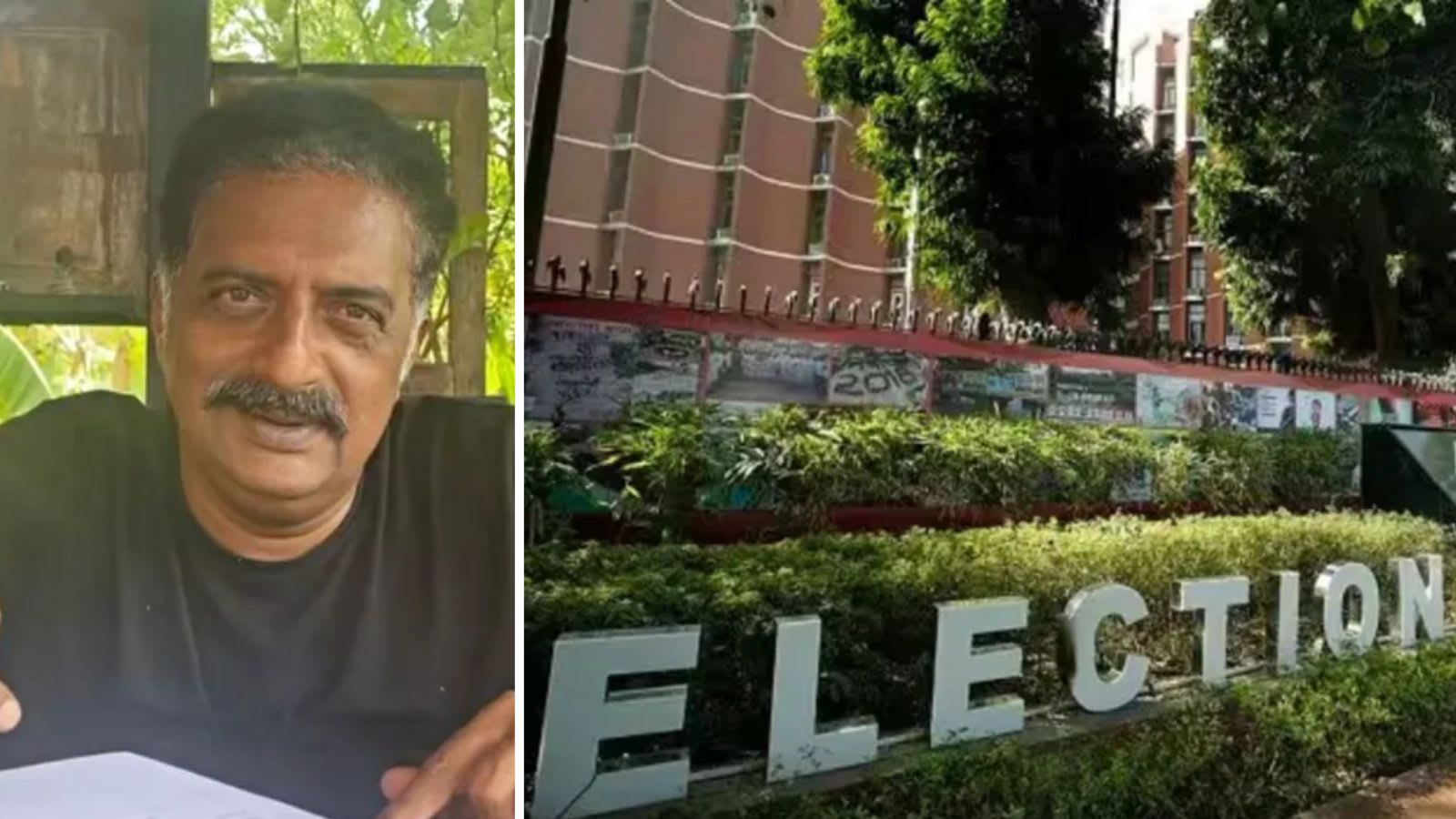
The Election Commission clarified that actor Prakash Raj remains registered on the electoral rolls following his concerns about being mislabeled as 'shifted'. Meanwhile, Karnataka's Special Intensive Revision process has successfully corrected over 240,000 erroneous voter classifications.
Election Commission Clarifies Electoral Status Amidst Public Scrutiny
Recent concerns raised by actor Prakash Raj regarding his inclusion in the 'Absent, Shifted, Dead, Duplicate and Others' (ASDDO) list during the Special Intensive Revision (SIR) in Karnataka have prompted an official response from the Election Commission. The controversy centered on the actor's belief that his voter status had been compromised, potentially disenfranchising him. However, the Bengaluru Central City Corporation’s poll officer, Jagadish G, clarified that the actor’s registration remained active at Serial Number 970, Part Number 1 of the Shanthinagar Assembly Constituency as of the July 16 data freeze.
Understanding the ASDDO Classification
The ASDDO list is a mechanism used by the Election Commission to maintain the integrity of electoral rolls by identifying voters who may no longer reside at their registered address or are deceased. While these lists are essential for preventing electoral fraud, the case of Prakash Raj highlights the administrative friction that can occur during the verification process. The Election Commission's swift response serves to maintain transparency and public trust in the electoral process, demonstrating that the system contains checks and balances to rectify individual grievances.
The Scale of Rectification in Karnataka
The broader context of this incident reveals a massive, ongoing effort to clean and update voter rolls across Karnataka. Since the onset of the SIR, the Chief Electoral Officer has been managing a complex dataset involving millions of voters. Data indicates that the number of voters flagged in the ASDDO category decreased from 1.11 crore on August 5 to 1.08 crore by mid-week, showcasing the efficacy of the extended enumeration phase in catching and fixing administrative errors.
Impact of Extended Enumeration
Errors in electoral rolls are often attributed to the challenges of house-to-house verification conducted by Booth Level Officers (BLOs). The recent data is telling: 85,267 voters were wrongly marked as 'absent', and 95,037 were incorrectly labeled as 'shifted'. Additionally, over 80,000 voters were categorized under 'other' due to issues like refusing to sign enumeration forms. By rectifying these 2,41,082 errors, the Election Commission has significantly improved the accuracy of the voter registry, ensuring that legitimate citizens are not barred from exercising their democratic rights.
Future Trends in Electoral Management
This episode underscores the necessity of continuous, digital-first verification processes in Indian elections. As the state moves toward more robust systems, the role of public scrutiny—exemplified by high-profile figures highlighting potential errors—serves as a necessary feedback loop for administrative bodies. Moving forward, the Election Commission will likely continue to emphasize the 'extended enumeration' model, as it provides a safety net for voters who might otherwise be erroneously deleted from the rolls due to procedural lapses.
Conclusion
In summary, the situation involving Prakash Raj was a procedural misunderstanding that highlights the importance of the ongoing Special Intensive Revision in Karnataka. While administrative errors are inevitable in a state with a massive electorate, the successful removal of over 240,000 incorrect ASDDO flags proves that the system is responsive to oversight. Maintaining accurate voter rolls is a dynamic, complex challenge, but one that remains foundational to the health of India’s democratic processes.