Derailed Essex to London train leads to travel chaos
Source Entity
BBC News
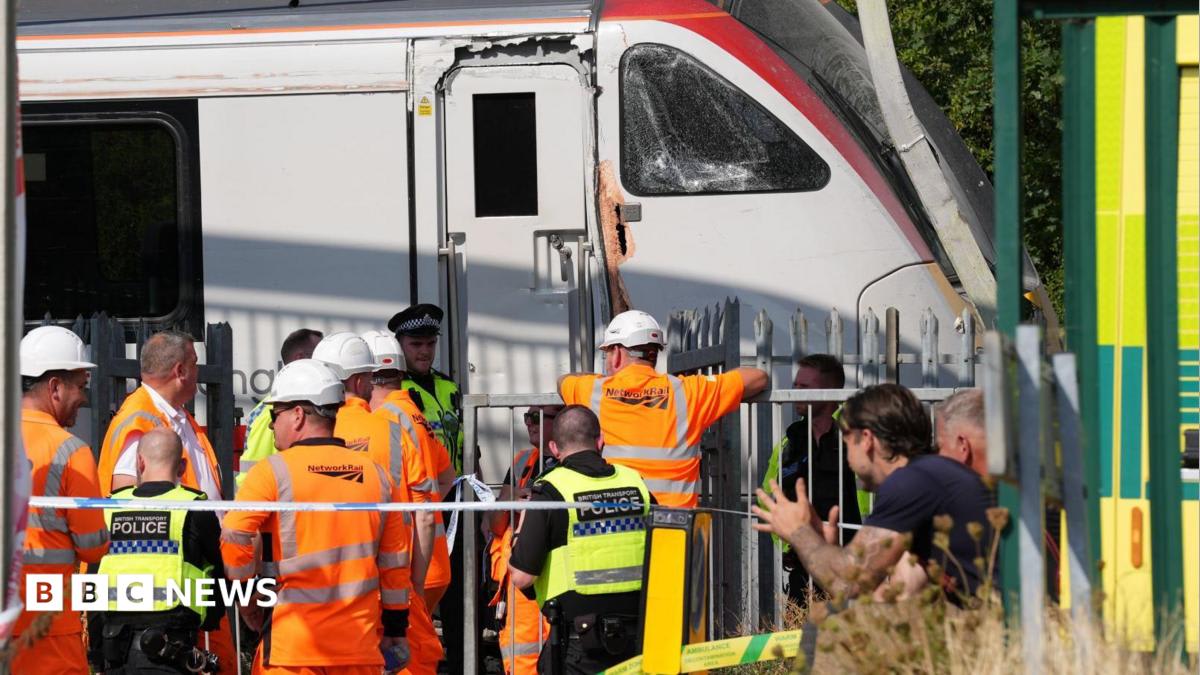
Two separate train derailments occurred in Southeast England within a 24-hour window, causing significant travel disruption. While the Essex incident resulted in no injuries, the preceding East Sussex crash left two passengers seriously hurt.
Rapid Succession of Rail Incidents in Southeast England
Railway infrastructure in Southeast England is currently under intense scrutiny following two distinct train derailment incidents occurring within a 24-hour timeframe. On Friday, a Greater Anglia service traveling from Southend Victoria to London Liverpool Street derailed near Wickford at approximately 14:12 BST. While the event caused significant operational chaos, leading to the total cancellation of services on the line, officials confirmed that the train remained upright and none of the 45 passengers on board sustained injuries.
The Essex Incident: A Narrow Escape
The derailment near Wickford involved the rear carriages of the commuter train leaving the tracks. Emergency response protocols were immediately activated, with British Transport Police, paramedics, and firefighters dispatched to the scene to ensure passenger safety. The fact that the train remained upright is considered a fortunate outcome, as it mitigated the risk of catastrophic trauma for those on board. However, the operational impact was immediate, paralyzing a critical artery for commuters traveling between Essex and the capital.
Contextualizing the East Sussex Derailment
This incident is particularly concerning due to its proximity to a separate derailment in East Sussex, which took place less than 24 hours prior. On Thursday afternoon, shortly before 16:00 BST, a Southern service derailed near Lewes. Unlike the Wickford incident, the East Sussex crash resulted in serious injuries to at least two passengers. The temporal and geographic proximity of these two events has raised urgent questions regarding the current state of rail maintenance and safety standards in the region.
Investigative Challenges and Safety Protocols
As of now, the causes for both derailments remain under investigation. Railway investigators must determine whether these incidents share a common root cause—such as localized infrastructure failure, track conditions, or environmental factors—or if they are purely coincidental. The primary focus for authorities is to ascertain why two separate commercial services left the tracks in such a short window, as public confidence in the rail network often hinges on the transparency and speed of these safety reviews.
Broader Implications for Rail Transport
These events highlight the inherent vulnerabilities in high-traffic commuter networks. When a train derails, the ripple effects are not limited to the immediate site; they disrupt the complex scheduling of the entire regional network, impacting thousands of passengers. The economic and social cost of these disruptions is substantial, as they force commuters to find alternative routes and place additional strain on localized transport systems.
Future Trends and Safety Oversight
Moving forward, it is highly probable that the Department for Transport and the Office of Rail and Road will initiate a more rigorous inspection cycle for tracks across Southeast England. The goal will be to identify any systemic weaknesses that could lead to further incidents. As the UK continues to balance aging infrastructure with the demands of modern, high-frequency commuting, these dual derailments serve as a stark reminder of the critical importance of proactive maintenance and rigorous safety oversight to prevent future, potentially more devastating, accidents.