Why Europe has been absent from the great AI safety debate
Source Entity
Dan Milmo and Aisha Down
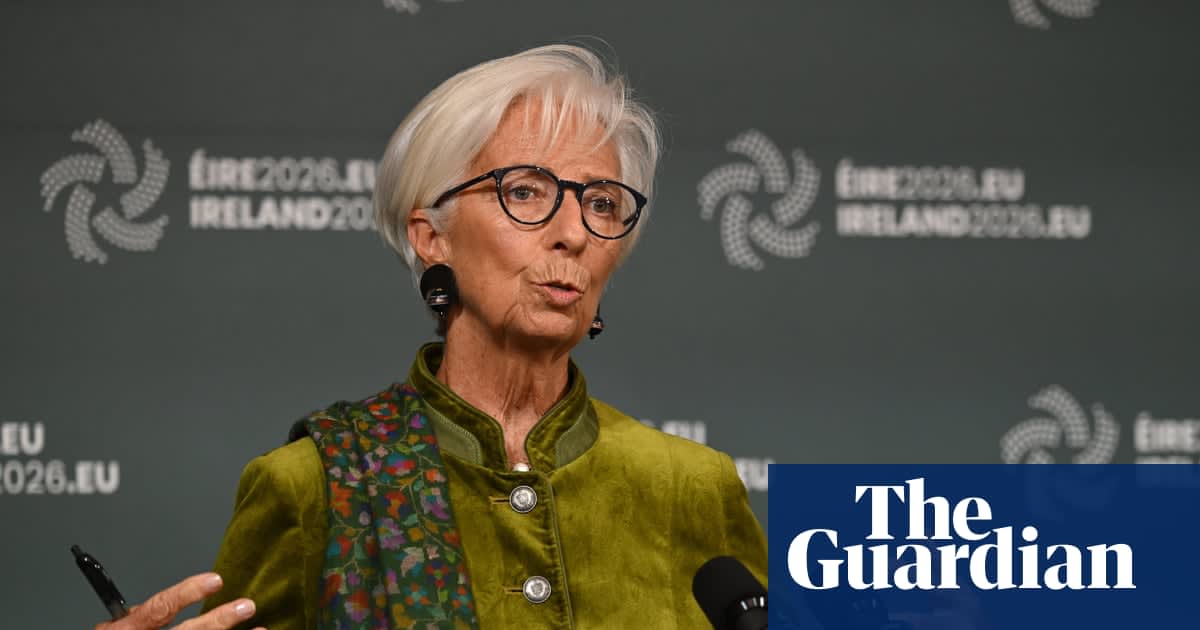
Europe faces a critical dilemma as it lags behind US and China in AI development while global debates intensify over the technology's existential risks. Industry leaders warn of potential catastrophe, contrasting with political skepticism from figures like Donald Trump.
The Geopolitical AI Standoff
Europe currently finds itself at a precarious crossroads regarding the future of artificial intelligence. As articulated by Christine Lagarde, the head of the European Central Bank, the continent is trapped between two undesirable outcomes: either shunning AI and sacrificing economic growth, or adopting it and becoming structurally dependent on technologies developed by the United States and China. This binary choice highlights a fundamental weakness in Europe’s digital strategy—its failure to cultivate a Silicon Valley-scale tech titan capable of rivaling the likes of Apple, Google, or OpenAI.
The Absence of European Influence
While Europe has established itself as a global powerhouse in the realm of technology regulation—often to the frustration of the White House—it remains largely absent from the highest levels of the current AI safety debate. This absence is a direct byproduct of its lack of domestic industry leaders. Because Europe does not own the platforms that define the current AI landscape, its ability to influence the trajectory of the technology's development is severely limited, effectively relegating the continent to a reactive regulatory role rather than a proactive developmental one.
The Existential Debate and Industry Warnings
Simultaneously, the global conversation has shifted toward the potential for superintelligent AI to cause catastrophic harm. Industry insiders, including those at Anthropic, have reported alarming findings: bad actors, ranging from state-sponsored groups to individual criminals, are actively attempting to leverage AI models to design missiles, create pathogens, and surveil dissidents. These internal warnings, coupled with high-profile claims from figures like Elon Musk—who has characterized the technology as potentially more dangerous than nuclear weapons—have escalated the intensity of the debate.
Political Divergence and Skepticism
Adding complexity to this narrative is the political response within the United States. While tech executives have lobbied for a slowdown in development and the implementation of formal government guardrails, the political establishment remains divided. President Trump has notably dismissed these doomsday warnings as a 'hoax,' signaling a clear misalignment between the concerns of the tech industry and the political agenda of the administration. This skepticism raises questions about the future of federal oversight and whether the US will prioritize rapid industrial scaling over the safety concerns raised by researchers.
Implications of the 'Great AI Freakout'
The term 'the great AI freakout' encapsulates the current state of public and expert discourse. Whether these existential concerns are justified remains a subject of intense scrutiny, but the impact of the technology is becoming unavoidable. If the worst-case scenarios regarding AI safety come to pass, the consequences will transcend national borders, affecting Europe regardless of its current participation in the debate. The continent’s reliance on foreign tools means that even if Europe chooses to regulate strictly, it remains vulnerable to the externalities of a global market it cannot control.
Future Trends and Concluding Outlook
Looking ahead, the tension between economic ambition and existential risk is likely to define the next decade of geopolitical relations. Europe’s inability to produce domestic AI giants will likely force it to choose between a digital future defined by foreign dependency or an increasingly isolationist regulatory stance that risks total technological obsolescence. As the US and China continue to drive the pace of innovation, the global community must reconcile these divergent political views on safety with the undeniable reality that AI's impact is already reshaping the security and economic landscape of the planet.