Kolkata-based GRSE launches indigenous ocean research vessel 'Sagar Manthan'
Source Entity
India Latest News: Top National Headlines Today & Breaking News | The Hindu
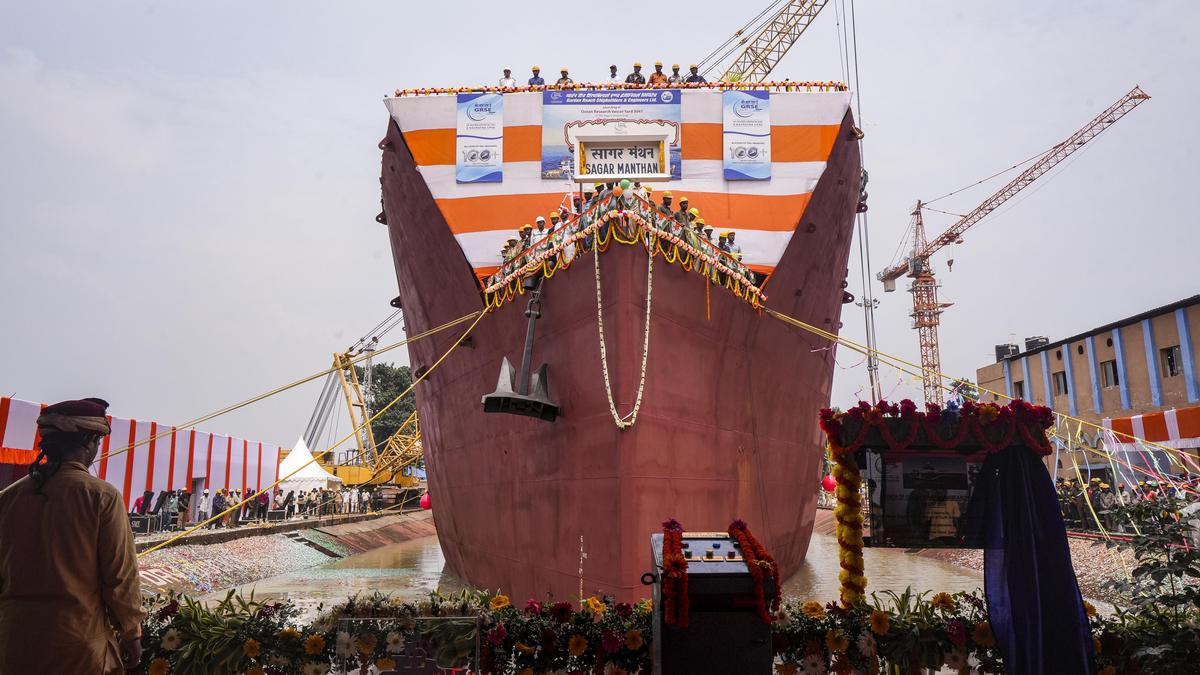
Cochin Shipyard Limited has commenced construction on the Indian Navy's next-generation missile vessels, while GRSE launched the 'Sagar Manthan' ocean research ship. These developments mark significant milestones in India's indigenous maritime defense and deep-sea exploration capabilities.
Strengthening India’s Maritime Sovereignty and Scientific Reach
India has taken two significant strides toward bolstering its maritime footprint through indigenous engineering. On September 18, 2026, Cochin Shipyard Limited (CSL) officially laid the keel for the first of six Next-Generation Missile Vessels (NGMV) for the Indian Navy. Simultaneously, Garden Reach Shipbuilders and Engineers (GRSE) launched the 'Sagar Manthan' ocean research vessel on September 9, 2026, signaling a dual-pronged approach to enhancing both naval combat readiness and scientific exploration.
Advancing Naval Combat Capabilities
The NGMV project represents a critical modernization effort for the Indian Navy. Designed as high-speed, agile platforms, these vessels are equipped with advanced surface-to-surface missile systems, robust anti-missile defenses, and sophisticated air surveillance and fire control radars. By focusing on these specific technical capabilities, the Navy aims to enhance its offensive power against enemy warships and land targets, ensuring a dominant presence in contested maritime zones. The involvement of top naval leadership, including Vice Admiral Sanjay Sadhu, underscores the strategic priority placed on these vessels for regional stability.
Deep-Sea Exploration and the Blue Economy
While the NGMVs focus on defense, the launch of the 'Sagar Manthan' highlights India's commitment to the 'Deep Ocean Mission.' This ₹840-crore research vessel, built for the National Centre for Polar and Ocean Research (NCPOR), is a testament to India's growing expertise in complex shipbuilding. Expected to be operational by early 2028, the vessel will serve as a floating laboratory, facilitating critical research that supports India’s strategic interests in the Indian Ocean and beyond.
The Role of Indigenous Shipyards
Both CSL and GRSE serve as the backbone of India’s 'Atmanirbhar Bharat' (Self-Reliant India) initiative in the defense and maritime sectors. By shifting away from foreign imports to indigenous construction, the government is not only saving foreign exchange but also building a localized industrial ecosystem. The expertise gained through these complex projects creates a ripple effect, fostering innovation in materials science, naval architecture, and sensor integration technology.
Strategic Implications and Future Trends
Looking ahead, the successful deployment of the NGMV fleet will likely necessitate a shift in naval doctrine, allowing for more rapid response capabilities in littoral waters. Furthermore, the 'Sagar Manthan' serves as an anchor for India’s long-term environmental and resource-mapping goals. As global powers compete for control over oceanic resources, these vessels provide India with the scientific data and military deterrents required to protect its maritime interests.
Conclusion
The concurrent progress of these projects highlights a mature maritime policy. By integrating high-end naval strike power with advanced oceanographic research capabilities, India is effectively securing its borders while simultaneously unlocking the potential of the deep sea. These developments set the stage for a more robust, self-sufficient, and technologically advanced maritime future for the nation.
Verification Required?