How bicycles, motorcycles took over the roads of Madras
Source Entity
India Latest News: Top National Headlines Today & Breaking News | The Hindu
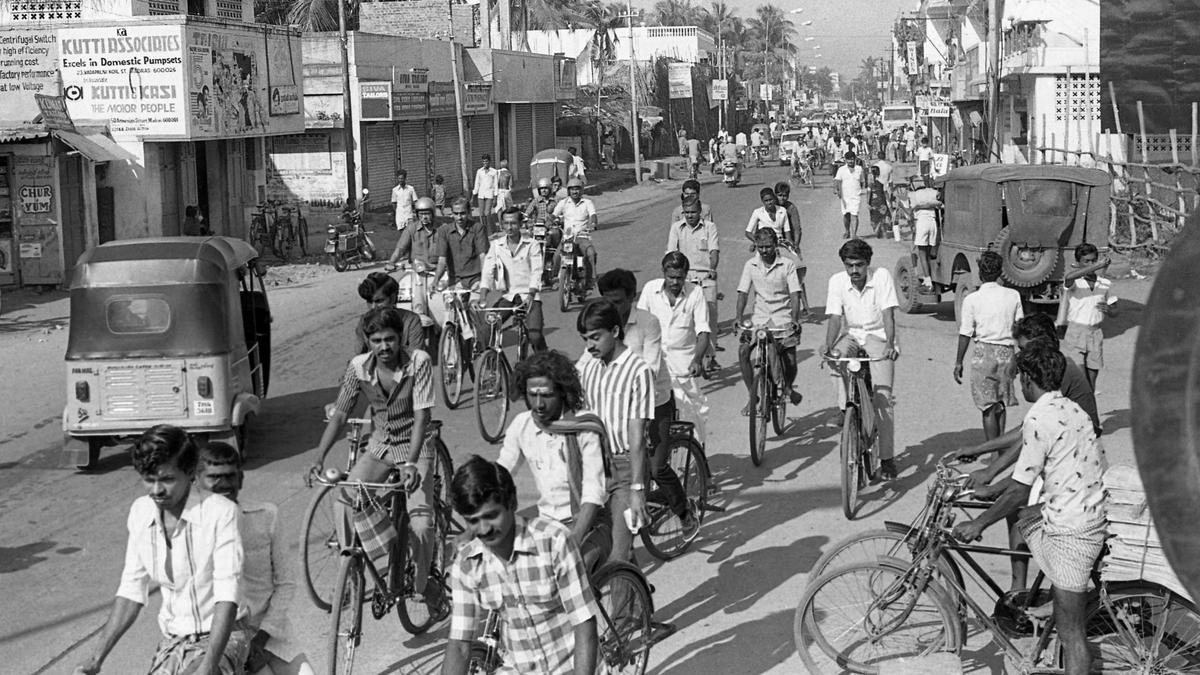
Madras has evolved from early 19th-century rail infrastructure to a complex modern transit landscape dominated by autorickshaws and two-wheelers. While historical rail projects struggled to reach their full potential, the city's transport evolution reflects a continuous struggle to balance rapid urban growth with mobility needs.
The Evolution of Urban Mobility in Madras
The story of transportation in Madras is a narrative of rapid adaptation and systemic growth. From the early introduction of rail infrastructure in the 1830s to the current era of autorickshaws and motorized two-wheelers, the city has constantly recalibrated its movement to suit its expanding population. This evolution is not merely a record of vehicles, but a reflection of how urban planning has struggled to keep pace with the sheer density of a metropolis that has grown exponentially over nearly two centuries.
The Rail Legacy: A Pioneering Start
Madras holds the distinction of being the first place in India to introduce trains. Long before the iconic Mumbai-Thane line, Madras utilized a rail line in the 1830s to haul stone from Red Hills, an engineering feat credited to Arthur Cotton. By 1856, the city established commercial rail connectivity between Royapuram and Walajah Road. Despite this early lead, the suburban rail network never achieved the same critical status as its Mumbai counterpart. The subsequent introduction of the MRTS and the ongoing development of the Metro Rail represent the city's persistent, if sometimes delayed, attempts to modernize its backbone of public transport.
The Rise of the Autorickshaw
Perhaps no vehicle captures the 'love-hate' spirit of Madras quite like the autorickshaw. Arriving in the early 1970s with a humble fleet of roughly 200, these vehicles have exploded in number to approximately 1,00,000 by 2026. Today, they serve as a vital lifeline for 1.5 million passengers daily. Despite frequent complaints regarding traffic violations and the regulatory cat-and-mouse game between authorities and operators, the autorickshaw remains the city's most reliable 'hurry-up' transport, proving that the demand for point-to-point mobility often outstrips formal transit capacity.
Two-Wheelers and the Changing Roadscape
Before the dominance of motor vehicles, the roadscape was defined by animal-drawn vehicles like the rekla. The bicycle arrived in the 1880s, quickly establishing a presence that necessitated public interest—and even police warnings regarding safety stunts. As the city transitioned into the motorized age, the two-wheeler became the quintessential mode of private transport. The establishment of manufacturing giants like Royal Enfield in the region cemented the city's status as a hub for motorized two-wheelers, which remain the most convenient way to navigate modern traffic.
Regulatory Challenges and Future Trends
Throughout this history, authorities have consistently remained a step behind the rapid adoption of new transit modes. Whether it was the early policing of bicycle stunts in the 1890s or the ongoing management of a massive autorickshaw fleet, the city’s governance has struggled to contain the spontaneous nature of its transit evolution. The future of Madras transport will likely depend on how effectively the current Metro Rail expansion can integrate with the existing, high-volume informal networks like autorickshaws.
Conclusion
Madras has traversed a long road from 19th-century stone-hauling trains to a modern, congested, yet vibrant urban landscape. The city’s history demonstrates that while formal infrastructure projects often face delays or unrealized potential, the resilience of commuters and the adaptability of local transport modes continue to drive the city forward. Balancing these diverse transit layers will remain the defining challenge for urban planners in the years ahead.
Multiple Citing Sources
Verification Required?