FAA to finally ditch floppy disks in what it calls "historic" tech upgrade
Source Entity
Jon Brodkin
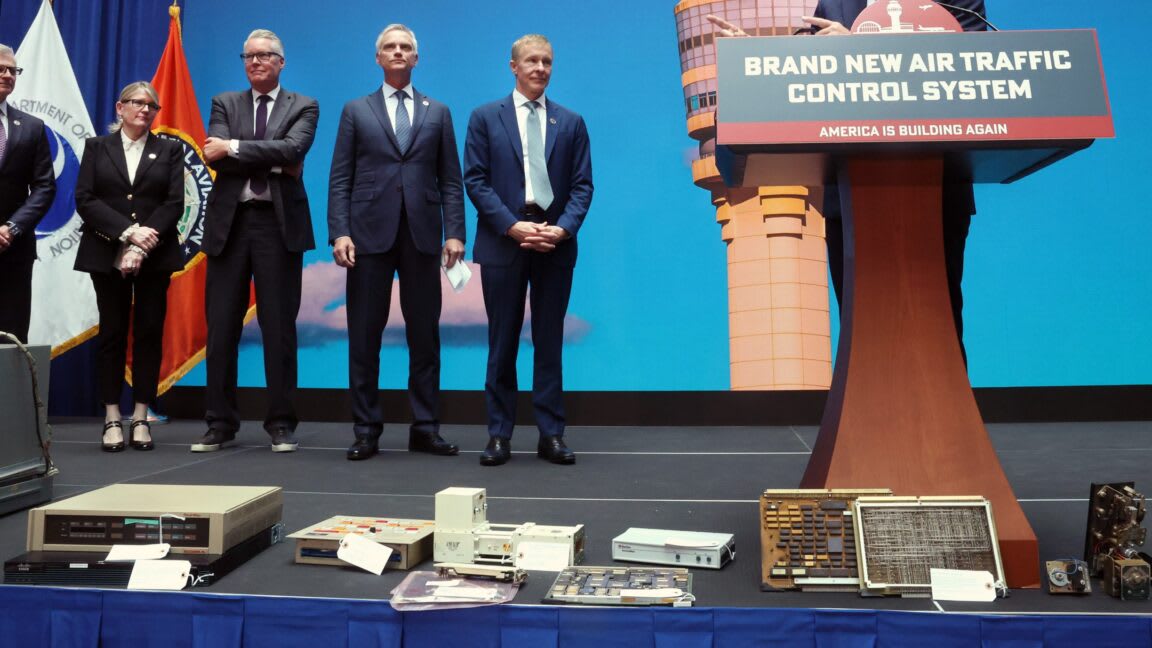
The FAA is replacing 1980s-era computer systems that rely on floppy disks to store critical weather and aviation data. This modernization effort, expected to conclude by 2028, introduces the new Enterprise Information Display System to over 400 facilities.
The Sunset of Legacy Tech: FAA Modernizes ATC Infrastructure
For years, a persistent narrative has circulated regarding the United States aviation infrastructure: the idea that the Federal Aviation Administration (FAA) relied on 1980s-era floppy disks to track aircraft in real-time. While this image evokes a sense of technical fragility in the face of modern aviation demands, the reality is far more nuanced. As confirmed by recent announcements from U.S. Transportation Secretary Sean P. Duffy, these disks were never used to track the approximately 5,200 planes in domestic airspace at any given moment, but rather served as the backbone for critical data storage within legacy computer systems.
Understanding the Role of Legacy Systems
These vintage systems, specifically the Information Display System 4, were tasked with storing essential weather reports and other mission-critical information utilized by air traffic controllers. While the hardware—which dates back to the 1980s—has functioned reliably for decades, the reliance on magnetic storage media like floppy disks presented an increasing logistical and security challenge. Maintaining such antiquated hardware requires specialized knowledge and increasingly scarce spare parts, making the transition to modern infrastructure a necessity rather than an elective upgrade.
The Shift to E-IDS
To address these vulnerabilities, the FAA has initiated the deployment of the Enterprise Information Display System (E-IDS). This new platform is designed to consolidate the functions previously fragmented across four separate 1980s-era systems. By integrating these disparate data streams into a single, secure, and modernized interface, the FAA aims to improve the efficiency and reliability of information delivery to air traffic controllers across more than 400 facilities nationwide.
A Timeline for Modernization
The transition is not an instantaneous switch but a phased, methodical rollout. The Department of Transportation has committed to a complete phase-out of the floppy disk-reliant systems by 2028. This timeline reflects the complexity of updating critical national infrastructure without disrupting the high-tempo environment of American airspace. The transition is part of a broader, ongoing effort to modernize U.S. air traffic control to meet the demands of 21st-century aviation.
Broader Implications and Future Trends
This transition highlights a common challenge faced by large-scale government and industrial organizations: the "technical debt" accumulated by aging, mission-critical systems. Replacing these systems is rarely just a matter of swapping hardware; it involves rigorous testing, software re-engineering, and intensive training for personnel. As the FAA completes this transition, the aviation industry will likely move toward more cloud-integrated and networked data solutions, significantly reducing the footprint of physical, legacy-dependent hardware in favor of agile, digital-first architectures.
Conclusion
The retirement of floppy disks from FAA facilities marks the end of a long-standing chapter in aviation history. By replacing these 1980s-era systems with the modern E-IDS, the FAA is not merely updating hardware, but ensuring the long-term resiliency of the National Airspace System. As the 2028 deadline approaches, the successful implementation of this project will serve as a benchmark for how critical infrastructure can be modernized safely and effectively in a rapidly evolving technological landscape.