He was in Tihar. But Bishnoi-Hashim Baba gang aide ‘spotted’ at Jantar Mantar
Source Entity
Mahender Singh Manral
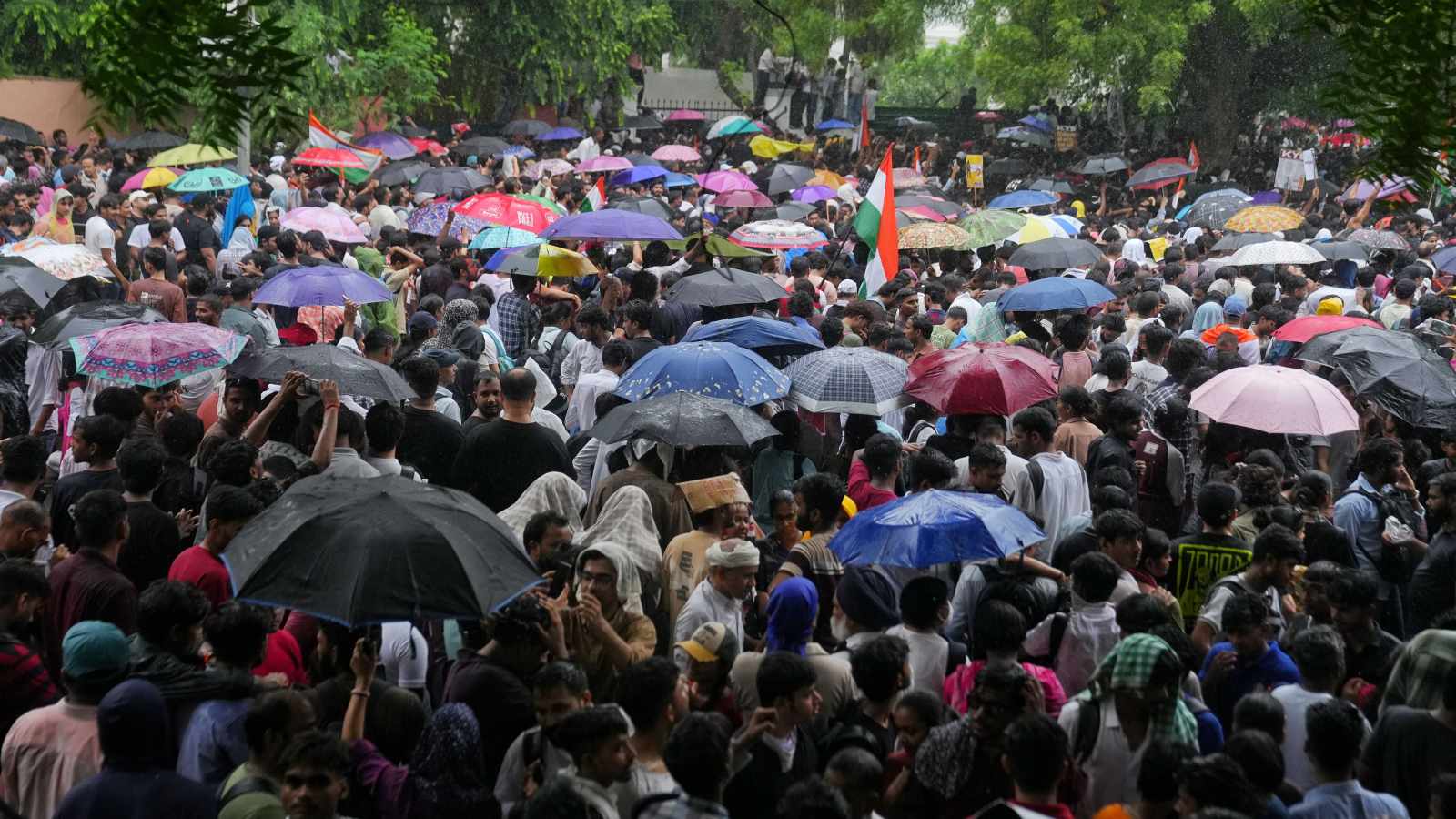
Facial recognition technology at Jantar Mantar falsely identified an incarcerated gang member among protesters. The incident highlights significant reliability concerns regarding the deployment of surveillance software in public spaces.
Surveillance Reliability Under Scrutiny
The recent deployment of Facial Recognition System (FRS) technology at Jantar Mantar has sparked a critical debate regarding the efficacy and accuracy of automated surveillance tools in India. During a period of student protests, the system flagged 2,873 individuals with criminal records. Among these, the software identified Yogesh, an alleged associate of the Lawrence Bishnoi and Hashim Baba gangs, at the protest site on July 25. However, subsequent verification against official jail and court records confirmed that Yogesh was physically incarcerated in Tihar Jail at the time of the alleged sighting, casting doubt on the system's operational integrity.
The Discrepancy of Data
The discrepancy between the FRS output and reality is striking. While the technology pinpointed an individual at 4:24 pm on July 25, official records prove Yogesh has been in custody since late 2024, with specific entries documenting his imprisonment dates on November 17 and November 29. This failure suggests that the system may be prone to 'false positives,' where biometric data is misidentified or matched incorrectly, potentially leading to the wrongful labeling of citizens and the misdirection of law enforcement resources.
Broader Implications for Public Surveillance
This incident serves as a cautionary tale for the integration of Artificial Intelligence in public security. When surveillance systems fail to distinguish between a person in a secure facility and an individual at a public protest, the consequences can be severe. For law enforcement, such errors create administrative burdens and undermine the credibility of investigative leads. For the public, the existence of such flawed surveillance tools raises significant questions about privacy, civil liberties, and the potential for wrongful accusations based on algorithmic errors.
Historical Context and Technological Limitations
The use of facial recognition in high-density areas like Jantar Mantar is often framed as a necessity for public order. However, technical limitations—such as lighting conditions, camera angles, and the quality of reference databases—frequently compromise the accuracy of these systems. As seen in this instance, the inability of the software to account for the current status of the suspect suggests a lack of real-time synchronization between prison management systems and field surveillance databases.
Future Trends and Policy Recommendations
Moving forward, the reliance on FRS requires a more rigorous oversight framework. It is imperative that automated alerts are treated as secondary leads rather than definitive evidence. Policymakers must mandate human-in-the-loop verification processes to ensure that algorithmic outputs do not infringe upon the rights of the innocent or misinform investigative efforts. Without stringent validation protocols, the deployment of such technology may continue to yield unreliable results, ultimately hindering rather than helping the cause of public safety.