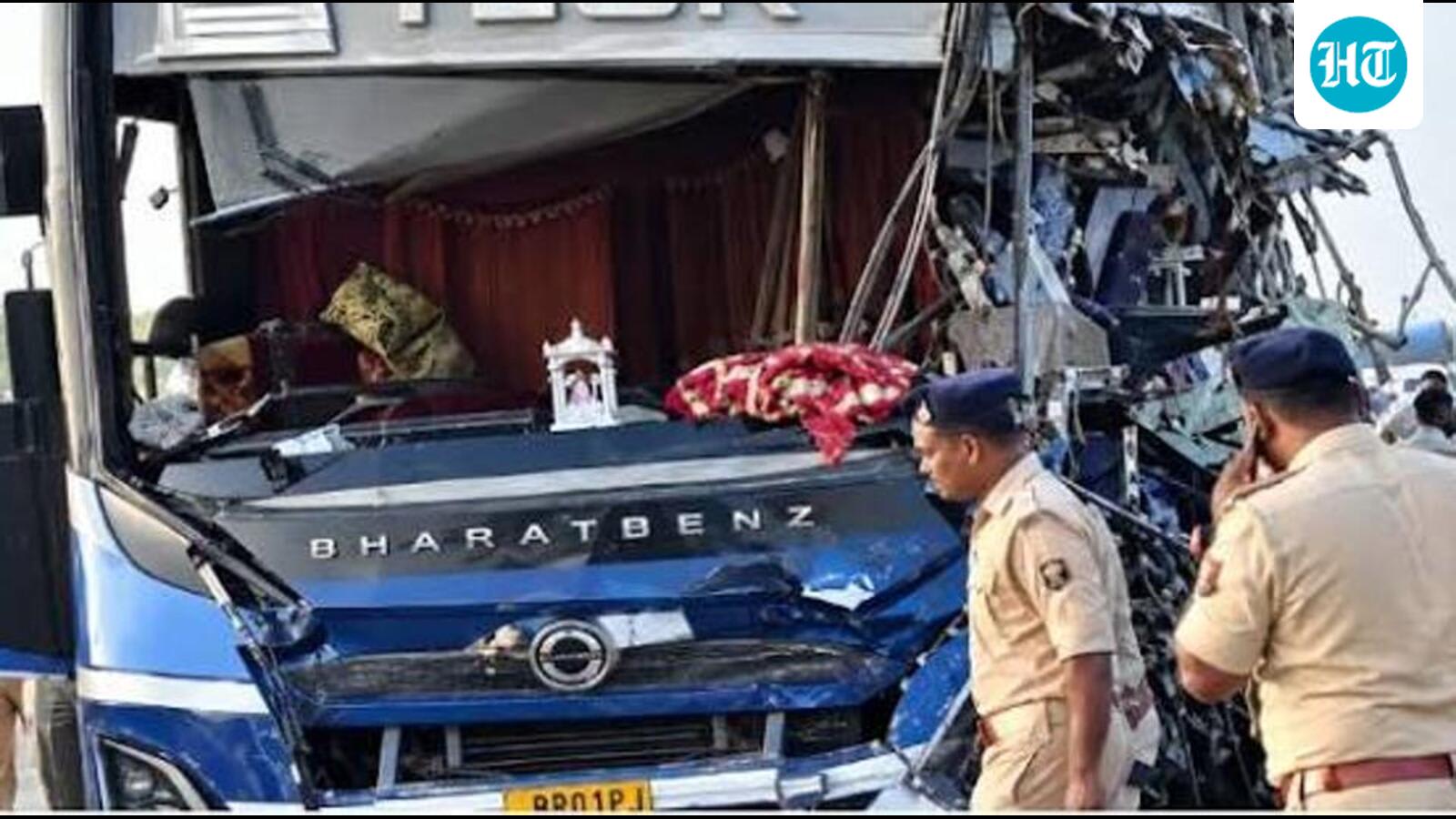
4 killed, 4 hurt as bus collides with trailer on Gorakhpur Link Expressway
Source Entity
Latest News: Todays Latest News Headlines from India & World | Hindustan Times | Hindustan Times
Two separate, fatal road accidents occurred recently on major Indian expressways, resulting in 11 total deaths and multiple injuries. Authorities are investigating the causes, which include potential driver fatigue and high-speed collisions.
Tragic Road Accidents Claim Multiple Lives on Indian Expressways
In a harrowing series of events, India’s rapidly expanding expressway network has become the site of two major fatal accidents within a short window, resulting in significant loss of life. In Maharashtra, a high-speed collision on the Samruddhi Mahamarg near Amravati claimed the lives of seven individuals, while a separate collision on the Gorakhpur Link Expressway in Uttar Pradesh resulted in four fatalities. These incidents highlight the ongoing safety challenges associated with high-speed travel on modern infrastructure.
The Amravati Tragedy: A Community in Mourning
The accident on the Samruddhi Mahamarg occurred during the early hours, involving a Bolero pickup van carrying a Durga idol. The group, consisting of young devotees from Sindi Meghe, Wardha, was returning from Shegaon when a speeding truck struck their vehicle near the Dhamangaon railway stretch. The impact resulted in five immediate fatalities, with two additional victims succumbing to their injuries en route to the hospital. The scale of the tragedy has devastated the local community, as the victims were actively participating in preparations for the Navratri festival.
Expressway Safety and the Human Factor
On the Gorakhpur Link Expressway in Ambedkar Nagar, a private bus traveling from Delhi to Darbhanga collided with a trailer transporting tiles. The severity of the crash, which mangled the left side of the bus, suggests a high-velocity impact. While investigations are ongoing, preliminary police reports indicate that driver fatigue—specifically the possibility of the driver dozing off at the wheel—is a primary suspect in the cause of the collision. This underscores the critical need for stricter enforcement of rest intervals for long-haul commercial and passenger vehicle operators.
Infrastructure and Operational Risks
Both the Samruddhi Mahamarg and the Gorakhpur Link Expressway are designed for high-speed transit, yet these incidents reveal persistent vulnerabilities in operational safety. The Samruddhi Mahamarg incident, occurring near chainage number 97, highlights the risks associated with mixing different vehicle types on high-speed corridors. The collision between a heavy truck and a smaller pickup van serves as a stark reminder of the physics involved in high-speed traffic, where smaller vehicles are disproportionately affected.
Emergency Response and Medical Logistics
The response to these tragedies necessitated rapid coordination between local law enforcement and regional medical facilities. In the Amravati case, injured survivors were initially transported to Dhamangaon Rural Hospital before being referred to the Adani Institute of Higher Education and Research in Wardha. The logistical challenge of managing mass casualty incidents on remote stretches of expressways places a heavy burden on rural healthcare infrastructure, necessitating robust emergency response protocols.
Looking Ahead: Improving Expressway Safety
As India continues to prioritize the construction of high-speed expressways to bolster economic connectivity, the focus must shift toward mitigating human and systemic errors. Future trends in road safety will likely emphasize the integration of advanced driver-assistance systems (ADAS) and stricter monitoring of driving hours to prevent fatigue-related crashes. Furthermore, public awareness campaigns regarding speed limits and lane discipline on high-speed carriageways remain essential to preventing such tragic recurrences.
Verification Required?