Riot police clash with students as education protests rage in France
Source Entity
BBC News
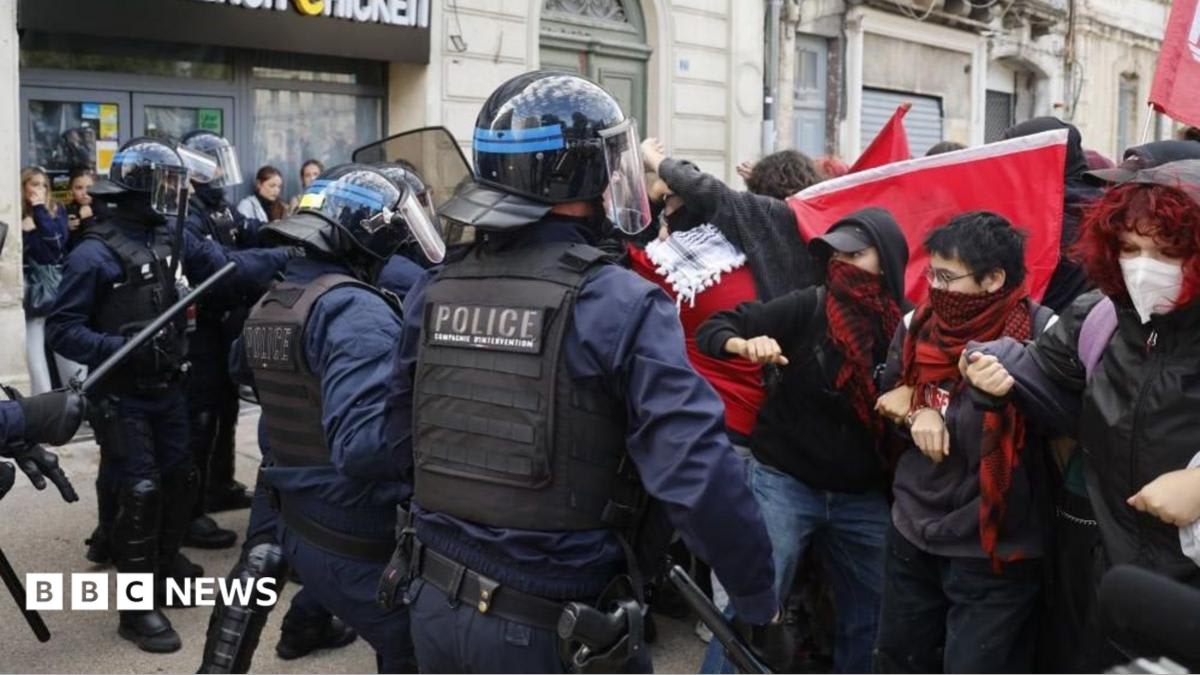
Widespread student protests across France have led to the closure of hundreds of schools due to grievances over infrastructure and teacher shortages. The demonstrations have escalated into violent clashes between protesters and law enforcement, resulting in injuries and significant national disruption.
The Escalation of Student Unrest in France
A wave of intense student mobilization has swept across France, transforming from localized demonstrations in Paris into a nationwide crisis affecting over 500 schools. The movement, which began nearly two weeks ago, reflects deep-seated frustrations among the youth regarding the state of the French educational system, specifically citing deteriorating school infrastructure, severe teacher shortages, and the grueling nature of the daily academic schedule.
Core Grievances and Systemic Strain
At the heart of the unrest is a perception that the French lycées are failing their students. The school day, which can span from 8 a.m. to 6 p.m., has become a focal point of discontent. When combined with crumbling building conditions and a lack of adequate teaching staff, students argue that the current model is unsustainable. The scale of the disruption is significant, with the Interior Ministry reporting that over 1,000 schools were affected at the height of the unrest, leading to over 400 closures by Friday.
The Shift Toward Violence
What began as a plea for educational reform has increasingly manifested as a public order challenge. In cities ranging from Paris and Lille to Strasbourg and Belfort, peaceful demonstrations have frequently devolved into violent confrontations. Reports indicate that at least 65 staff members have sustained injuries during the unrest. The situation in Belfort took a particularly dark turn with the arrest of a 17-year-old on suspicion of attempted homicide following an attack on a police officer.
Law Enforcement Response and Public Safety
The tactical response from French authorities has been robust, characterized by the use of tear gas in cities like Strasbourg and police charges in Parisian suburbs such as Pantin. Protesters have responded with acts of civil disobedience, including the blockade of school entrances and the setting of fires to refuse bins in urban centers like Rennes and Paris. The cycle of confrontation has created a feedback loop, with students expressing that heavy-handed police tactics only serve to heighten their resolve and anger.
Broader Implications and Future Outlook
The persistence of these protests suggests that the government faces a complex dilemma. By failing to address the structural issues of teacher shortages and facility maintenance, the state risks further alienating a generation that feels ignored by the current administration. As the demonstrations continue to spread, the French government must weigh the necessity of maintaining public order against the urgent requirement for systemic educational reform. The coming weeks will likely determine whether the state can de-escalate the tension through dialogue or if the cycle of school closures and civil unrest will define the academic year.
Multiple Citing Sources