ChatGPT Made "President-Elect" Error In Flavio Bolsonaro's Post, Says Ally
Source Entity
NDTV News Search Records Found 1000
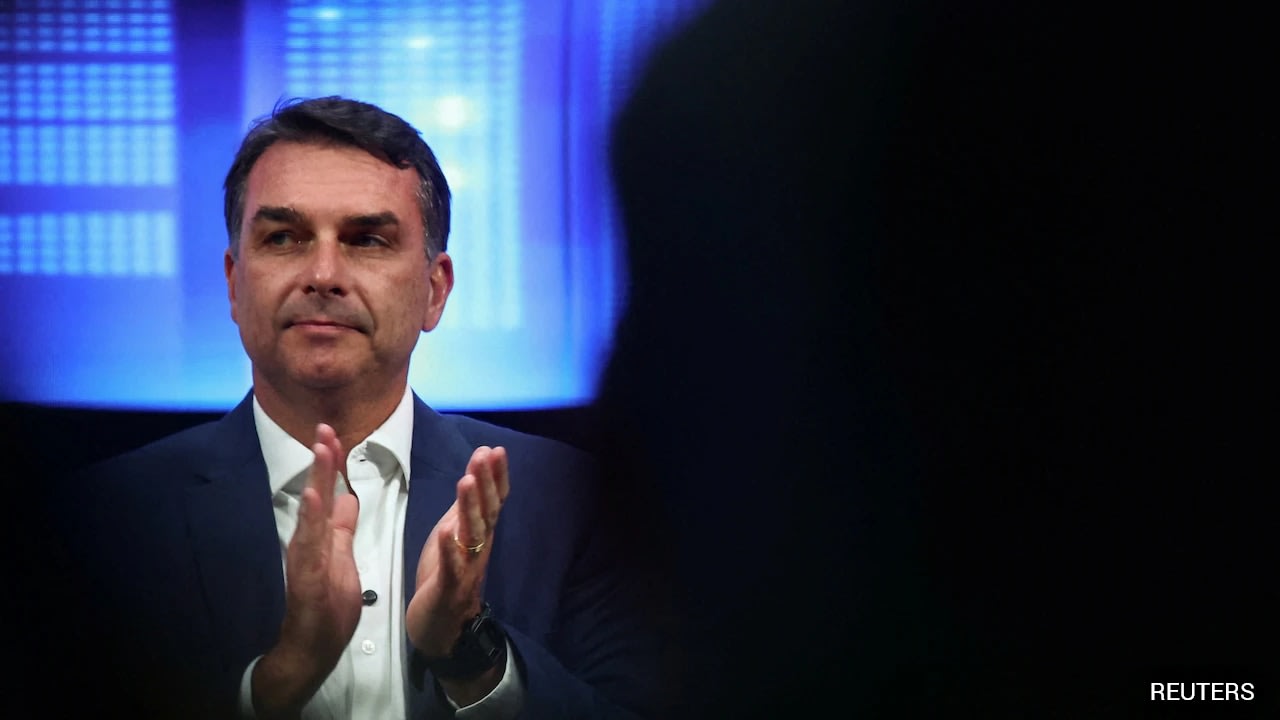
Flávio Bolsonaro faced widespread mockery after briefly declaring himself Brazil's 'true president-elect' following his electoral defeat. The controversial claim, compounded by his flight to the U.S., has further alienated him from the Brazilian political landscape.
The Collapse of a Narrative: Analyzing the Flávio Bolsonaro Incident
An Unprecedented Political Blunder
In a move that has stunned political observers, Flávio Bolsonaro attempted to reshape the narrative of his recent electoral defeat by declaring himself the "true president-elect" of Brazil. This proclamation, which lasted only 58 minutes, was swiftly met with intense public ridicule and condemnation. By attempting to subvert the established democratic outcome through a digital declaration, Bolsonaro inadvertently accelerated the erosion of his own political capital, turning a period of transition into a moment of national embarrassment.
The Role of Technology and Misinformation
Central to this incident is the reported role of generative AI, specifically ChatGPT, which was cited by allies as the mechanism behind the error. This highlights a growing concern regarding the intersection of political rhetoric and automated content creation. When political figures rely on non-human tools to craft legitimacy, the potential for catastrophic public relations failures increases. The incident serves as a cautionary tale for modern campaigns regarding the risks of outsourcing messaging to algorithms without rigorous human oversight.
Contextualizing the Flight to the U.S.
This incident cannot be viewed in isolation from the broader context of the Bolsonaro family's recent activities. Following his loss to his left-wing adversary, Flávio Bolsonaro’s decision to flee to Miami just 48 hours later created a power vacuum that he attempted to fill with his inflammatory social media posts. This departure has been interpreted by many, including his own former supporters, as an admission of defeat and an attempt to evade the domestic political consequences of his actions.
The Backlash from the Conservative Establishment
Perhaps the most significant consequence of this episode is the alienation of the conservative right in Brazil. Major publications, such as Estado de São Paulo, have publicly distanced themselves from the Bolsonaro family, labeling them as "coup-mongers" and "reckless." This shift in media sentiment suggests a realignment within the Brazilian right, where moderate conservatives are actively seeking to dissociate from the populist and disruptive tactics that characterized the Bolsonaro era.
Implications for Future Democratic Stability
The widespread mockery and subsequent political isolation of the Bolsonaro camp signal a potential cooling of the extreme polarization that has gripped Brazil. By framing his actions as "foolishness," the mainstream media is effectively normalizing the rejection of anti-democratic rhetoric. Moving forward, the political survival of the Bolsonaro faction appears increasingly fragile, as the credibility of their claims continues to disintegrate in the face of public and institutional scrutiny.
Conclusion: A Lesson in Political Reality
Ultimately, the 58-minute "president-elect" claim serves as a poignant conclusion to a contentious election cycle. It underscores the limitations of digital influence when disconnected from the material reality of electoral outcomes. As Brazil moves past this event, the focus shifts toward the long-term stability of its democratic institutions and the potential for a new era of conservative politics that is unburdened by the legacy of recent political volatility.
Verification Required?