Two years after launch, Walmart’s Flipkart is closing in on India’s quick-commerce leaders
Source Entity
Jagmeet Singh
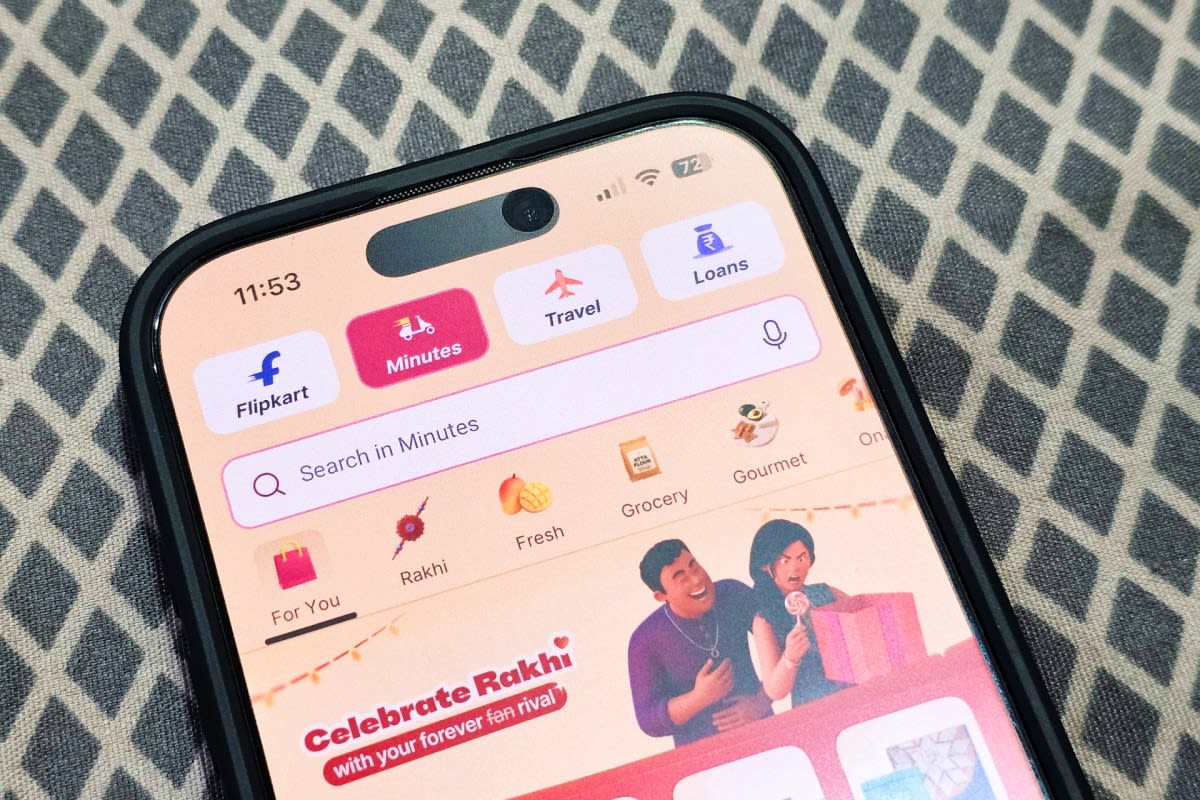
Walmart-owned Flipkart has seen its quick-commerce service, Flipkart Minutes, surge to over 1.1 million daily orders. This rapid growth positions the e-commerce giant as a major competitor to established players like Swiggy’s Instamart.
The Rapid Rise of Flipkart Minutes in India's Quick-Commerce Arena
A Strategic Pivot in E-commerce
Walmart-owned Flipkart has made a significant impact on the Indian retail landscape with its quick-commerce venture, 'Flipkart Minutes.' Launched in August 2024, the service represents a calculated pivot for the e-commerce giant, which previously relied on traditional, slower delivery models. By aggressively entering the instant delivery sector, Flipkart is acknowledging that the modern Indian consumer now prioritizes speed as much as product variety and price.
Scaling at Unprecedented Rates
The growth metrics for Flipkart Minutes are staggering, reflecting a rapid capture of market share. Data indicates that the service now processes between 1.1 million and 1.2 million orders per day. This represents a nearly threefold increase from the 390,000 to 400,000 orders recorded in November, demonstrating the scalability of Flipkart's logistics network and its ability to rapidly onboard customers accustomed to the convenience of quick commerce.
Competitive Dynamics and Market Positioning
Flipkart’s rapid expansion is effectively narrowing the gap with established market leaders. With daily volumes reaching the 1.1 to 1.2 million mark, Flipkart is now within striking distance of Swiggy’s Instamart, which currently reports approximately 1.4 million daily orders. This shift highlights a broader trend where traditional e-commerce players are encroaching upon the territory of startups that pioneered the 10-to-20-minute delivery model.
The Broader Implications for Indian Retail
The entry of global giants like Flipkart and Amazon into the quick-commerce space signals a maturation of the sector. For years, Indian startups have invested heavily in building the infrastructure required for hyper-local delivery. Now, these incumbents are leveraging their existing supply chains, capital reserves, and massive user bases to dominate the space, potentially forcing smaller, venture-backed startups to either consolidate or pivot their business models to remain relevant.
Looking Ahead: The Future of Instant Delivery
As the competition intensifies, the primary focus for these companies will likely shift toward operational efficiency and unit economics. While high order volumes are a clear indicator of consumer demand, the long-term viability of the quick-commerce model depends on the ability to achieve profitability amid high logistics costs. Flipkart’s trajectory suggests that the battle for India's instant delivery market will be defined by the scale of infrastructure and the ability to maintain rapid growth without compromising service quality.
Conclusion
Flipkart’s successful entry into quick commerce underscores a critical evolution in the Indian digital economy. By rapidly scaling its delivery capacity, the company has proven that even late entrants can disrupt established markets through aggressive execution and massive logistical reach. The ongoing rivalry between Flipkart, Swiggy, and Amazon will likely dictate the future of retail in India for years to come.