What are Forward Deployed Engineers, and why are they so in demand? (2025)
Source Entity
Hacker News
<a href="https://news.ycombinator.com/item?id=48900432">Comments</a>
The Rise of the Forward Deployed Engineer: Bridging the Gap Between Code and Client
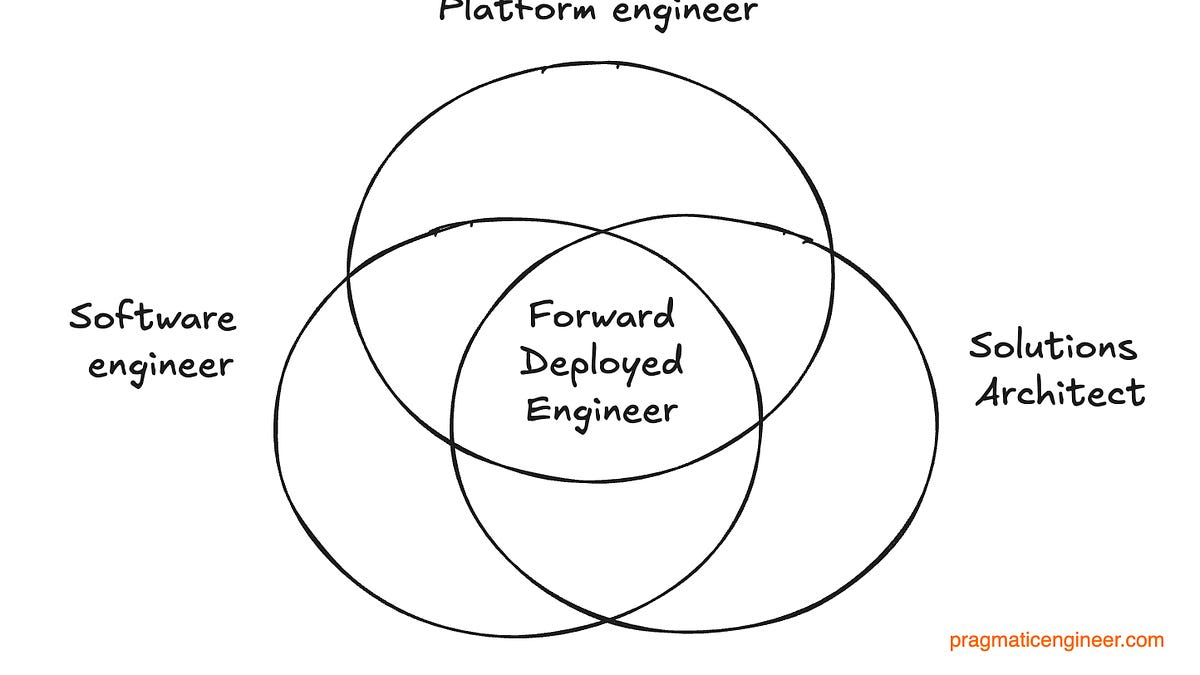
In the evolving landscape of enterprise software, a distinct professional archetype has emerged and gained significant traction: the Forward Deployed Engineer (FDE). Unlike traditional software engineers who operate within the insulated environment of a product team, or solutions architects who primarily design high-level systems, the FDE operates at the intersection of production-level coding and direct client engagement. As indicated by current industry discussions in 2025, the demand for these specialists is surging because the complexity of modern software—particularly in the B2B and enterprise sectors—has reached a point where 'out-of-the-box' solutions are rarely sufficient for high-value clients.
The Hybrid Nature of the FDE Role
At its core, the Forward Deployed Engineer is a hybrid role that requires a rare combination of deep technical proficiency and high emotional intelligence (EQ). FDEs are essentially software engineers who are 'deployed' to the customer's environment to ensure the product is not only installed but deeply integrated into the client's specific workflows. This involves writing custom code, building bespoke integrations, and managing the technical nuances of a client's legacy infrastructure. By working on the front lines, FDEs eliminate the traditional friction between the sales team's promises and the engineering team's deliverables, ensuring that the software provides immediate, tangible value to the end-user.
The AI Catalyst: Why Demand is Peaking in 2025
The explosion of Generative AI and Large Language Models (LLMs) has acted as a massive accelerant for the FDE role. In 2025, enterprises are no longer satisfied with simple API access to an AI model; they require complex Retrieval-Augmented Generation (RAG) pipelines, sophisticated data cleaning, and the integration of AI agents into proprietary internal databases. These implementations are notoriously fickle and highly dependent on the specific quality of a company's internal data. Consequently, companies cannot rely on a generic product; they need FDEs who can enter a client's ecosystem, understand their unique data silos, and architect the specific AI plumbing required to make the technology functional and safe.
The Strategic Feedback Loop
Beyond immediate implementation, FDEs serve as a critical intelligence gathering mechanism for the parent company. Because they witness exactly where a product fails or where users struggle in real-time, they provide a high-fidelity feedback loop that is far more accurate than traditional customer support tickets or quarterly business reviews. This 'ground truth' allows the core product engineering team to prioritize features based on actual market friction rather than theoretical roadmaps. In essence, the FDE transforms the client's environment into a living laboratory, accelerating the product-market fit and reducing churn for high-ticket enterprise contracts.
FDEs vs. Traditional Solutions Architects
It is important to distinguish the FDE from the traditional Solutions Architect (SA). While an SA focuses on the 'what' and the 'how'—creating diagrams and outlining the path to implementation—the FDE is responsible for the 'do.' FDEs are expected to commit production-ready code and often manage the full lifecycle of a client's technical onboarding. This shift toward a more 'code-heavy' client-facing role reflects a broader industry trend where the value proposition has shifted from providing a tool to providing a guaranteed outcome. In the high-stakes world of enterprise software, the ability to actually execute the integration is more valuable than the ability to plan it.
Challenges and the Risk of Burnout
Despite the high demand and prestige associated with the role—pioneered by firms like Palantir—the FDE path is fraught with challenges. The role requires constant context-switching between different client environments and a high tolerance for the instability of third-party legacy systems. Furthermore, the pressure to satisfy a paying client while adhering to the core product's architectural standards can create significant tension. As companies scale their FDE teams in 2025, the primary challenge will be managing burnout and ensuring that these engineers have a clear career path, whether that leads back into core product management or toward executive leadership in professional services.
Conclusion: The Future of Enterprise Implementation
As we look toward the future, the role of the Forward Deployed Engineer is likely to evolve into that of an 'AI Orchestrator.' As autonomous agents become more prevalent, the need for humans to manually bridge the gap between software and client data will shift toward auditing and refining the agents that perform the integration. However, the fundamental necessity of the FDE—the need for a highly skilled technical expert who can navigate the human and political complexities of a corporate client—will remain a cornerstone of the enterprise technology strategy for the foreseeable future.