India's trade deficit hits 5-month high as imports surge
Source Entity
TNN
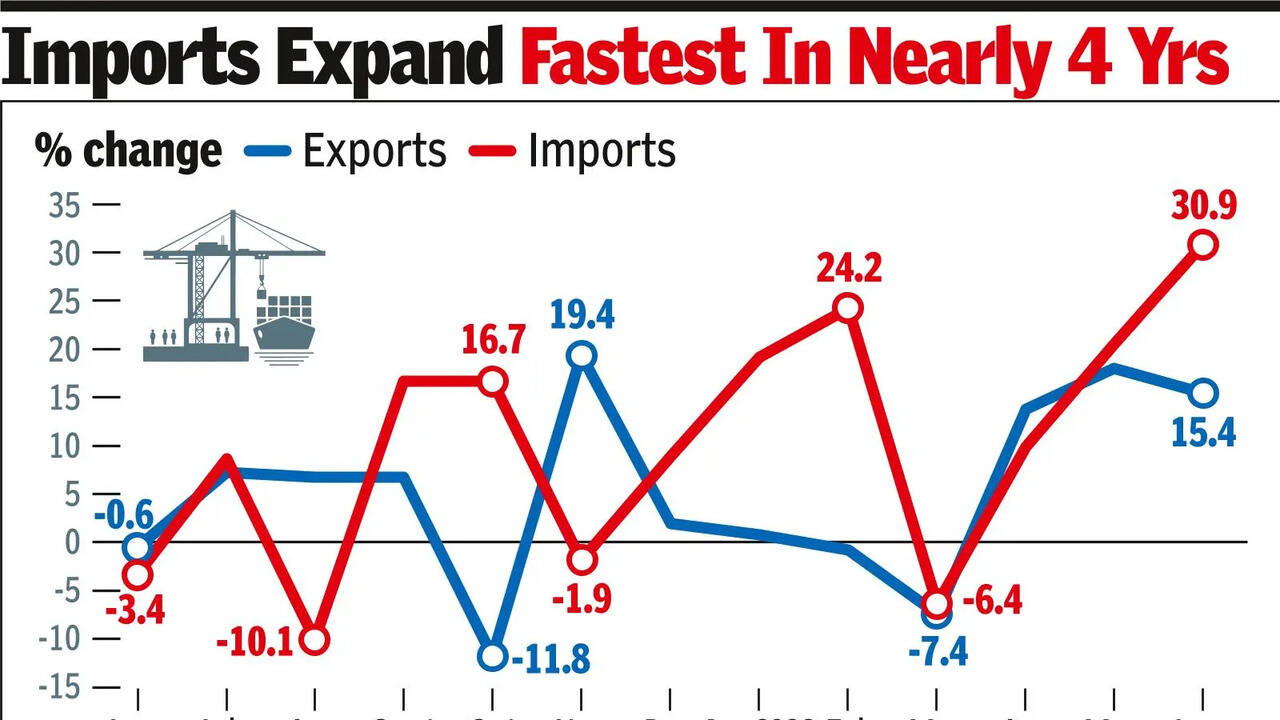
India's trade deficit reached a five-month high as imports surged significantly. Exports showed continued growth, but were overshadowed by increased import costs. Crude oil and fertilizer imports saw substantial year-on-year expansion in June. Electronics and engineering goods led export growth, while gold imports remained stable. Analysts anticipate a widening current account deficit for the fiscal year.
Analysis of India's Expanding Trade Deficit
India's economic landscape is currently navigating a complex phase as the trade deficit has climbed to a five-month high. This widening gap between the value of goods imported and exported indicates a period of increased external expenditure, primarily driven by the necessity of importing critical raw materials. While the Indian economy has shown resilience in various sectors, the recent surge in import costs has created a temporary imbalance that demands a closer look at the nation's dependency on global commodity markets.
The Surge in Essential Imports
The primary catalysts for the current trade deficit are the substantial year-on-year expansions in crude oil and fertilizer imports during June. Crude oil remains one of India's most significant import burdens due to the country's limited domestic production and high energy demand for industrialization and transport. Similarly, the spike in fertilizer imports is critical for maintaining agricultural productivity, highlighting a vulnerability to global supply chain fluctuations. When these two essential commodities see price hikes or volume increases, the impact on the trade balance is immediate and severe, often overshadowing growth in other sectors.
Resilience in High-Value Exports
Despite the widening deficit, there is a silver lining in the export data. The growth led by electronics and engineering goods suggests a strategic shift in India's manufacturing capabilities. The increase in these high-value exports indicates that the 'Make in India' initiatives are gaining traction, moving the country away from a reliance on low-margin goods toward more sophisticated, technology-driven products. However, the sheer scale of the import bill for energy and agriculture currently outweighs these gains, preventing the export growth from narrowing the overall deficit.
Macroeconomic Implications and the Current Account Deficit
Economists and analysts are now anticipating a widening Current Account Deficit (CAD) for the fiscal year. The CAD is a broader measure than the trade deficit, encompassing not just goods but also services and transfer payments. A widening CAD can put downward pressure on the Indian Rupee and may necessitate higher foreign exchange reserves to stabilize the currency. If the trend of surging import costs continues without a proportional leap in export revenues, the central bank may need to implement strategic interventions to manage liquidity and currency volatility.
Global Commodity Volatility and External Pressures
The current situation is not merely an internal phenomenon but a reflection of global volatility. The surge in crude oil and fertilizer costs is often tied to geopolitical tensions and supply constraints in key producing regions. Because India is a price-taker in the global oil market, any instability in the Middle East or shifts in OPEC+ policies directly translate into a higher trade deficit. The stability of gold imports provides some relief, suggesting that luxury consumption is not the driver of this deficit, but rather the structural necessity of energy and food security.
Future Economic Trajectory and Strategic Outlook
Looking ahead, the trajectory of India's trade balance will likely depend on two factors: the stabilization of global commodity prices and the acceleration of import substitution. To mitigate future deficits, India may double down on diversifying its energy sources—such as increasing investments in green hydrogen and renewables—to reduce the crude oil burden. Furthermore, enhancing domestic fertilizer production could shield the economy from external price shocks. If the growth in electronics and engineering exports continues to accelerate, it could eventually provide a sustainable counterweight to the import bill.
Conclusion
In summary, while the five-month high in the trade deficit is a cause for concern, it is largely a result of essential imports required for energy and food security. The growth in sophisticated exports provides a hopeful outlook for long-term structural improvement. However, the immediate pressure on the Current Account Deficit underscores the need for strategic energy independence and continued support for the high-tech manufacturing sector to ensure macroeconomic stability.