In pictures: France protests draw 146,000 as clashes erupt for fourth straight weekend
Source Entity
US Top News and Analysis
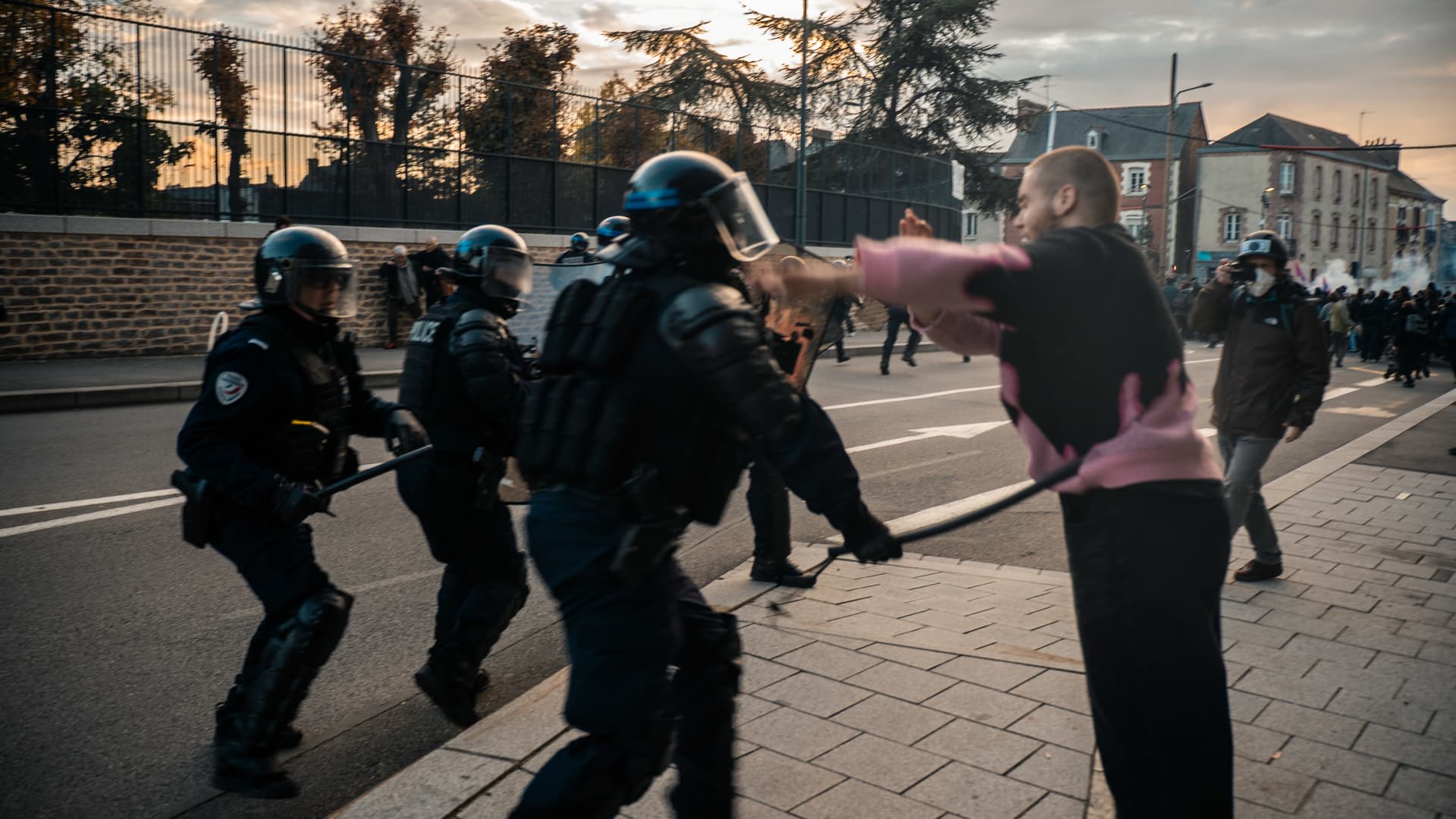
Protests over living costs and public services entered a fourth consecutive weekend in France, drawing over 146,000 demonstrators. Clashes between police and protesters resulted in hundreds of arrests as tensions persist across major cities.
Escalating Civil Unrest in France: A Crisis of Cost and Governance
For the fourth consecutive weekend, France has been gripped by widespread civil unrest as citizens take to the streets to voice deep-seated frustrations over the rising cost of living and the perceived degradation of public services. The latest demonstrations, which saw an estimated 146,000 participants according to the Interior Ministry, highlight a growing disconnect between the government’s policy trajectory and the lived realities of the French working class and student populations.
A Coalition of Discontent
What makes this current wave of unrest particularly significant is the broad-based nature of the coalition involved. The protests have successfully bridged the gap between traditional labor organizations, such as trade unions, and the more grassroots, populist energy of the revived "Yellow Vest" movement. By incorporating student unions into the fold, the movement has expanded its demographic reach, signaling that the grievances regarding economic instability and the erosion of public infrastructure are shared across generational lines.
Discrepancies in Mobilization Figures
As is common in high-stakes political demonstrations, there is a stark divergence in the reported turnout numbers. While the French Interior Ministry officially counted 146,000 demonstrators nationwide, a youth union alliance asserted that the true figure reached 250,000. In Paris alone, estimates varied significantly, with the government citing 46,000 participants compared to the alliance’s claim of 75,000. These conflicting data points reflect the broader political struggle to define the movement's legitimacy and the scale of public dissatisfaction.
The Mechanics of Clashes and Enforcement
The intensity of the weekend’s events was marked by significant physical confrontations between security forces and protesters. Reports from the scene confirm that police utilized tear gas to disperse crowds, particularly as the main march in Paris reached the Place de la Nation. The situation was further exacerbated by the destruction of property, including the setting of fires to garbage cans in various cities. The government's firm response, evidenced by at least 360 arrests nationwide, underscores the state's attempt to maintain public order amidst escalating volatility.
Broader Implications and Future Trajectory
The persistence of these protests into a fourth weekend suggests that the underlying issues—specifically inflation, purchasing power, and the state of public services—are not being sufficiently addressed through current policy frameworks. The fact that police felt compelled to block a separate, banned Yellow Vest demonstration indicates a preemptive effort by authorities to contain the movement's radical flanks. If the government fails to provide tangible economic relief or initiate a productive dialogue with these diverse factions, the cycle of weekly mobilization, clashes, and arrests is likely to continue, further straining the relationship between the French state and its citizenry.