School woes, inflation, political discontent: What is fuelling violent France protests
Source Entity
AYUSH PANDEY
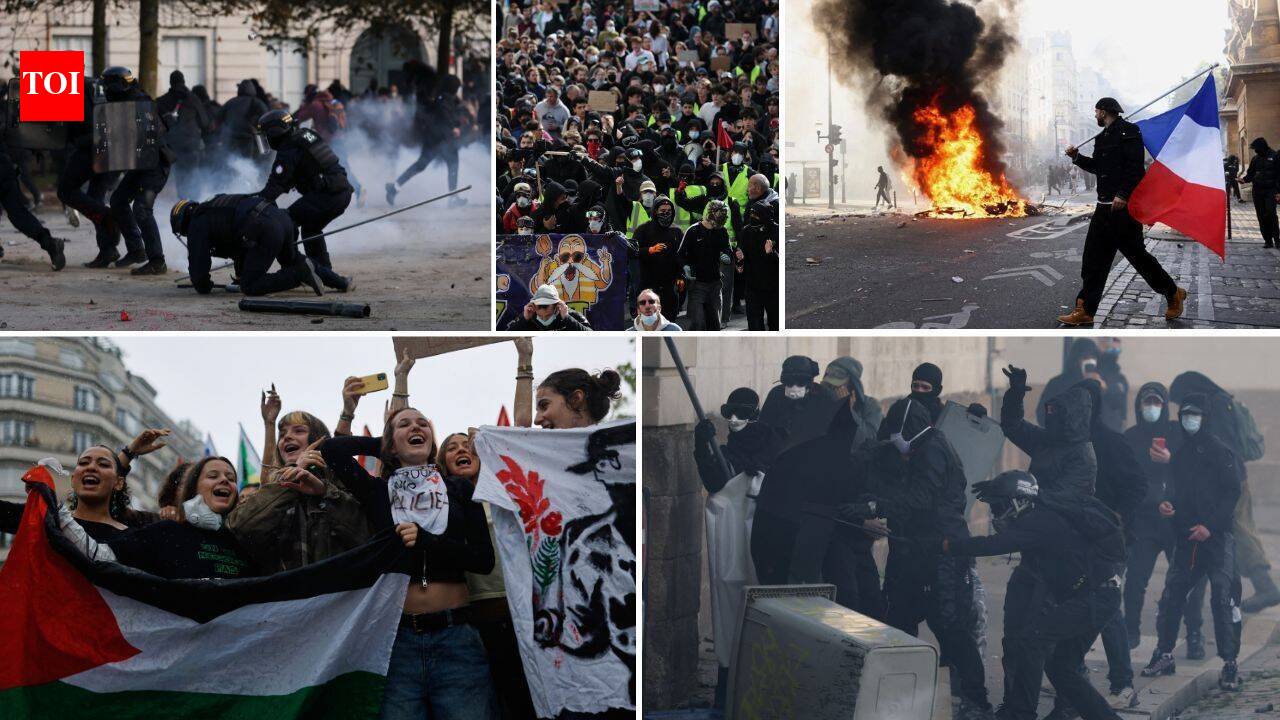
Widespread violent protests have erupted across France, resulting in over 270 arrests as demonstrators express anger over rising living costs. The unrest, which mirrors the 2018 'yellow vest' movement, has seen shops looted and public buildings damaged nationwide.
Escalating Unrest Across France: A Nation at a Crossroads
France is currently grappling with a wave of civil unrest that has seen more than 600 demonstrations planned across the country. What began as an expression of frustration over economic hardships has rapidly devolved into widespread violence, with reports of cars being set ablaze, shops being looted, and public buildings being targeted by angry crowds. The scale of these protests indicates a deep-seated dissatisfaction with the current socio-economic trajectory of the nation.
The Economic Catalyst: Rising Costs and Social Frustration
The driving force behind this surge in activity is the rapid increase in the cost of living, specifically the spiking prices of gasoline, energy, and food. These inflationary pressures have hit the French populace hard, leading to a resurgence of the "yellow vest" movement, which first gained international prominence in 2018 as a symbol of resistance against social injustice. The current climate suggests that the grievances of 2018 have not been adequately addressed, providing a fertile ground for renewed mobilization.
Broadening the Scope: Students and Unions Join the Fray
The situation has been further complicated by the convergence of diverse groups, including students and labor unions, who have aligned themselves with the protesters. The involvement of students suggests that the unrest is not limited to a single demographic, but rather reflects a broader generational anxiety regarding financial stability. By supporting these demonstrations, unions have amplified the collective voice of the protesters, signaling to the government that the demands for economic relief are widespread and institutionalized.
Government Response and the Cycle of Violence
Interior Minister Laurent Nuñez has officially acknowledged a "growing number of violent incidents," noting that the state is facing significant challenges, including direct assaults on police officers. In response, law enforcement has deployed tear gas and water cannons to disperse crowds, resulting in at least 272 arrests nationwide. This cycle of confrontation—between protesters scaling statues to display anti-police banners and police attempting to restore order—highlights the dangerous volatility currently gripping cities like Paris, Lyon, and Marseille.
Historical Context and Future Implications
The current atmosphere of protest is reminiscent of historical periods of French civil disobedience where economic grievances transformed into broader political challenges. As the government struggles to contain the violence while addressing the underlying inflation, the risk of long-term instability remains high. If the state cannot effectively mitigate the impact of rising energy and food costs, it is likely that these demonstrations will continue to evolve, potentially leading to a more profound political crisis that challenges the government's authority and policy direction.
Multiple Citing Sources