Nobel Prize in Physics 2026: Francis Halzen awarded for work on cosmic neutrinos
Source Entity
TRISHA MAHAJAN
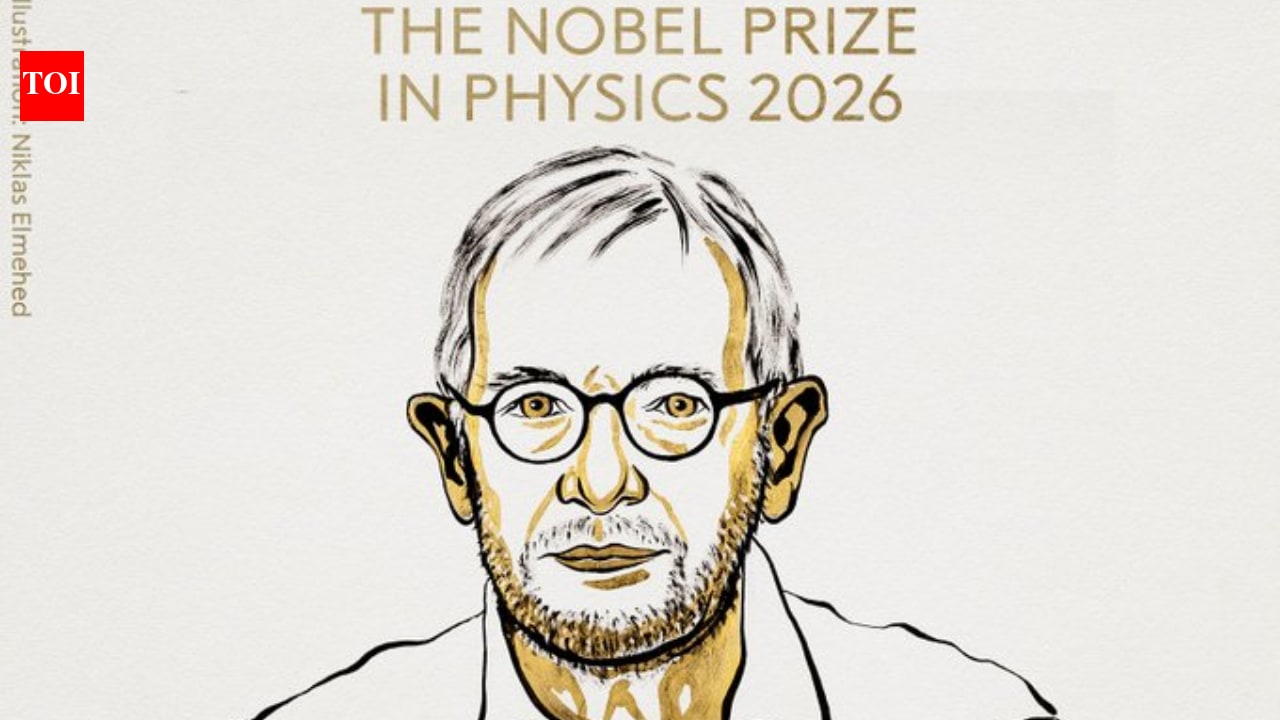
Belgian-American physicist Francis Halzen has been awarded the 2026 Nobel Prize in Physics for his leadership in the IceCube Neutrino Observatory. His work pioneered the detection of high-energy cosmic neutrinos, providing new insights into the most violent processes in our universe.
A New Era for Particle Astrophysics
The Royal Swedish Academy of Sciences has awarded the 2026 Nobel Prize in Physics to Francis Halzen, a Belgian-American physicist and professor at the University of Wisconsin–Madison. This prestigious recognition honors his decisive contributions to the IceCube Neutrino Observatory, a monumental scientific instrument located at the South Pole. By successfully detecting high-energy neutrinos of astrophysical origin, Halzen has fundamentally altered our ability to observe and understand the high-energy universe.
The Vision of the IceCube Neutrino Observatory
Halzen’s journey to this accolade began long before the observatory's completion, with his initial vision for detecting neutrinos at the South Pole presented as early as 1988. The IceCube project required immense scientific leadership and international collaboration to construct a massive detector using a cubic kilometer of Antarctic ice. By embedding thousands of light sensors deep within the ice, Halzen and his team created a unique apparatus capable of capturing the faint traces of 'ghost particles'—neutrinos—that traverse the Earth from the far reaches of space.
Understanding 'Ghost Particles'
Neutrinos are notoriously difficult to detect because they possess almost no mass and rarely interact with matter. However, they serve as invaluable messengers, carrying information about the most violent, high-energy processes occurring in the cosmos. Because they travel in straight lines, unaffected by magnetic fields or dense matter, they allow scientists to trace their origins back to distant galaxies and extreme cosmic events. Halzen’s work has essentially turned the Antarctic ice sheet into a telescope for the high-energy universe.
Historical Context and Scientific Impact
For decades, physicists sought a way to observe these elusive particles to unlock the secrets of cosmic rays and active galactic nuclei. Halzen’s leadership was the catalyst that transformed this theoretical possibility into a functional reality. By proving that the Antarctic ice could serve as a detection medium, he provided the scientific community with a tool that has effectively opened a new window into astronomy, moving beyond traditional light-based observations to particle-based exploration.
Recognition and Future Implications
The Royal Swedish Academy of Sciences awarded Halzen 12 million Swedish kronor, acknowledging that his vision was fundamental to the observatory's success. This award not only honors his past achievements but also underscores the growing importance of multi-messenger astronomy. As we look toward the future, the foundation laid by Halzen’s work at IceCube will continue to guide researchers in deciphering the mysteries of the distant universe, cementing his legacy as a titan of modern physics.