Can economics explain human beings? Antara Haldar’s Everyman takes on the ‘rational’ man
Source Entity
Pratap Bhanu Mehta
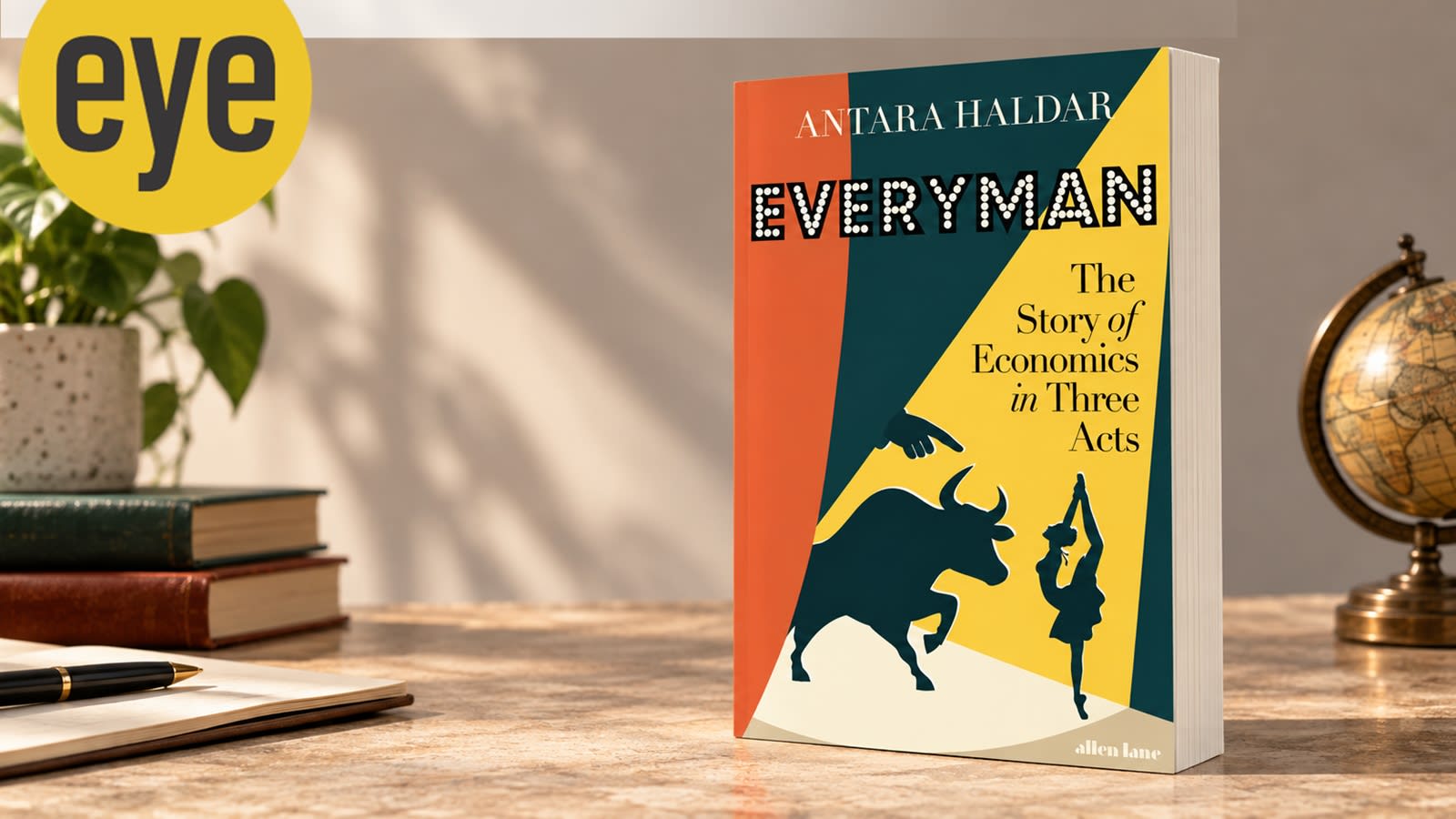
Antara Haldar’s book 'Everyman' critically examines the concept of 'Homo economicus', the rational, self-interested actor central to traditional economic theory. The work explores how this archetype, represented by various personas, shapes modern societal and economic structures.
The Rational Myth: Deconstructing Homo economicus
Antara Haldar’s latest work, Everyman, offers a provocative critique of the foundational character of modern economic theory: Homo economicus. By personifying this archetype as 'Neo,' Haldar invites readers to view the 'rational actor' not as an abstract mathematical variable, but as a full-blooded character defined by utility maximization and a rigid adherence to self-interest. This framing allows for a deeper examination of how economic models influence human perception and social behavior.
The Anatomy of Neo
Neo represents the embodiment of traditional economic realism. He is a creature of price points and opportunity costs, viewing the world through a lens of cold, calculated logic. Haldar highlights that Neo’s core philosophy—that the pursuit of individual self-interest will magically aggregate into public prosperity—serves as the bedrock for many modern policy decisions. However, by treating sentimentality as a weakness, Neo often ignores the nuanced, irrational realities of the human experience that fall outside of traditional spreadsheets.
The Avatars of Modernity
Beyond the generic 'Neo,' Haldar introduces specific archetypes that demonstrate how this rationalist ideology permeates different sectors of society. We encounter 'Finn,' the finance bro, whose influence allows him to reshape economies with the power of capital. There is also the 'Davos Man,' an elite figure whose globalized perspective often results in the dislocation of local economies in the name of liberalization. These characters illustrate the real-world consequences of applying a narrow, profit-driven logic to complex social systems.
The Technocratic Illusion
Perhaps most relevant to our current era is the archetype of 'Tek.' Representing the belief in boundless technological progress, Tek embodies the modern tendency to view every human problem as a technical hurdle to be cleared by innovation. Haldar’s analysis suggests that when we reduce humanity to a series of variables to be optimized, we lose sight of the qualitative aspects of existence that technology alone cannot solve.
Broader Implications for Economic Thought
The implications of Everyman reach far beyond academia. By challenging the assumption that all humans function as rational utility-maximizers, Haldar questions the legitimacy of economic models that prioritize efficiency over equity or human connection. If the 'rational actor' model is fundamentally flawed, then the policies derived from it—ranging from market deregulation to algorithmic governance—may be predicated on a misunderstanding of human nature itself.
Conclusion: Moving Beyond the Rational Actor
Ultimately, Everyman serves as a critical intervention in how we define human value. By exposing the 'machismo' and perceived toughness of the rational actor, Haldar encourages a move toward a more holistic understanding of human behavior. As we navigate an increasingly automated and data-driven world, recognizing the limits of the Homo economicus framework is essential for building a society that accounts for the complexity, irrationality, and intrinsic value of every individual.