In 2003, China planted native tree patches along a degraded riverbank; 20 years later, they held 19-30% of a rainforest's diversity
Source Entity
Latest News: Todays Latest News Headlines from India & World | Hindustan Times | Hindustan Times
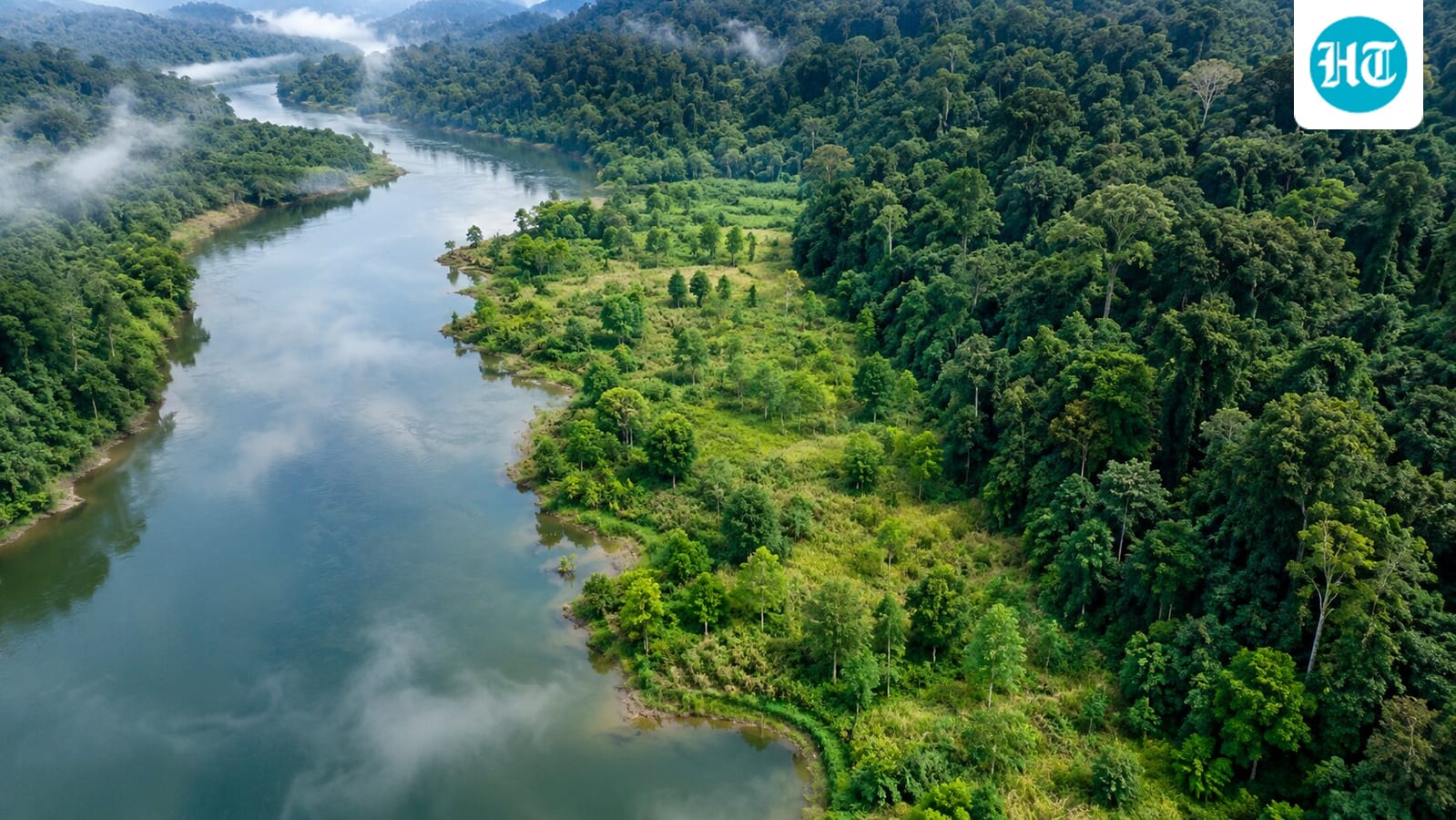
A 20-year study reveals that China's 'applied nucleation' reforestation project successfully increased forest cover by 36% along a 12-kilometer riverbank. While structural connectivity and vegetation metrics improved significantly, biodiversity and biomass remain at only 19-30% of mature rainforest levels.
Assessing Two Decades of Ecological Restoration
In 2003, a significant environmental initiative was launched to rehabilitate a degraded riverside corridor in China. By employing a strategy known as 'applied nucleation'—planting small, strategic clusters of native trees rather than attempting uniform reforestation—researchers aimed to catalyze natural forest succession. Two decades later, the results of this longitudinal study provide a critical look at the long-term efficacy of human-led ecological restoration projects.
Quantitative Success in Structural Restoration
The project yielded impressive metrics regarding landscape transformation. Over the 20-year period, forest cover across the 12-kilometer site increased by 36 percentage points, effectively adding 64 hectares of new forest. Furthermore, the restoration of natural shoreline vegetation saw a massive improvement, jumping from 38% to 90%. These figures indicate that the methodology was highly effective at achieving its primary goal of expanding forest canopy and stabilizing the riparian zone, contributing to a 119% increase in landscape connectivity.
The Role of Keystone Species
A notable finding in the study was the disproportionate impact of specific flora. Fig trees emerged as a dominant force in the recovery process, accounting for 76.8% of the total tree biomass within the planted patches. This highlights the importance of selecting resilient, keystone species in ecological engineering. Figs are critical for ecosystem health, often acting as a magnet for wildlife due to their year-round fruit production, which likely assisted in the observed structural growth of the corridor.
The Biodiversity Gap
Despite the clear success in physical reforestation and structural connectivity, the study reveals a sobering reality regarding ecological complexity. While the site performed well on China's Ecological Restoration Index, the functional biodiversity and total biomass of the new forest reached only 19-30% of what would be expected in a mature, natural rainforest. This suggests that while applied nucleation is an excellent tool for rapid greening and soil stabilization, it is not a complete panacea for replicating the intricate biological diversity of primary forests.
Broader Implications for Global Conservation
This case study serves as a vital lesson for global reforestation efforts. The 'biodiversity lag' observed in China indicates that forest structure can recover faster than the complex web of life that defines a true rainforest. As nations continue to set ambitious climate and reforestation goals, this research suggests that policymakers must differentiate between 'forest cover' and 'functional ecosystem restoration.'
Future Trends in Ecological Management
Looking ahead, the success of the applied nucleation model suggests it will remain a cornerstone of landscape management due to its cost-effectiveness and structural efficiency. However, the future of such projects will likely shift toward 'assisted migration' or more intensive enrichment planting to bridge the gap between simple forest cover and high-biodiversity ecosystems. The data from 2003 to 2023 underscores that while we can successfully repair the skeleton of a forest, the heart of an ecosystem—its full biodiversity—requires significantly longer timeframes and perhaps more nuanced intervention strategies to fully recover.
Verification Required?