Gakutensoku
Source Entity
Hacker News
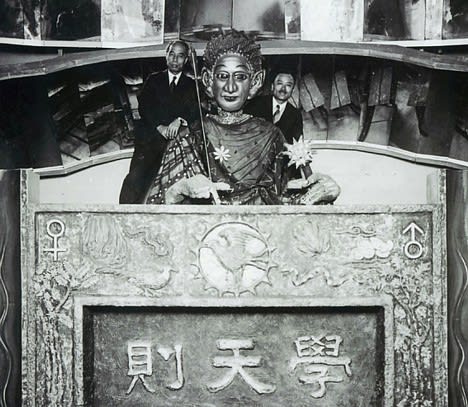
Gakutensoku, created in 1920s Osaka by biologist Makoto Nishimura, stands as East Asia's first robot. Unlike the subservient mechanical tropes of its era, this invention was designed as an inspirational companion to humanity.
The Legacy of Gakutensoku: East Asia's First Mechanical Pioneer
In the annals of robotics history, the name Gakutensoku—meaning "learning from the laws of nature"—occupies a unique and pioneering position. Created in Osaka in the late 1920s, this automaton holds the distinction of being the first robot ever built in East Asia. Its creator, the biologist Makoto Nishimura, was a man of diverse intellectual pursuits, having served as a professor at Hokkaido Imperial University and an editorial adviser to the Osaka Mainichi newspaper.
A Philosophical Response to Early Science Fiction
To understand the significance of Gakutensoku, one must consider the cultural climate of the early 20th century. During this period, the global perception of robotics was heavily influenced by Karel Čapek’s play R.U.R. (Rossum’s Universal Robots), which introduced the world to the term "robot" and depicted them as artificial, subservient laborers. Nishimura was deeply unsettled by this portrayal, viewing the concept of robots as mere slaves to humanity as a reductive and potentially dangerous trajectory for technological development.
Designing a Companion, Not a Slave
Driven by a desire to counter the dystopian narrative of robotic servitude, Nishimura embarked on a mission to redefine the relationship between humans and machines. He envisioned a robot that would serve as a friend and an inspirational model rather than a tool for labor. By naming his creation Gakutensoku, he underscored a philosophy of harmony, suggesting that machines should be designed to exist in balance with the natural laws of the world rather than in opposition to them.
The Intersection of Science and Artistry
Nishimura’s background as a biologist, particularly his work studying Marimo (lake balls), likely informed his holistic approach to the robot's design. The construction of Gakutensoku was not merely an exercise in mechanical engineering; it was a manifestation of a humanistic philosophy. By stepping away from the academic constraints of the Hokkaido Imperial University in 1926, Nishimura demonstrated a profound commitment to his vision, prioritizing the creation of a machine that reflected the beauty of humanity.
Historical Impact and Future Trends
While Gakutensoku remains a historical artifact, its legacy continues to resonate in modern Japanese robotics. The country’s contemporary focus on social robots—machines designed specifically for companionship, healthcare, and emotional interaction—can be traced back to Nishimura’s original, altruistic intent. In an era where artificial intelligence often sparks debates regarding human displacement, the story of Gakutensoku serves as a reminder that the evolution of robotics has always had a counter-current seeking to elevate, rather than replace, the human experience.
Conclusion
Ultimately, Gakutensoku stands as a testament to the idea that technology is a reflection of its creator's values. By rejecting the tropes of his time, Makoto Nishimura paved the way for a more nuanced understanding of synthetic life. His work remains a foundational chapter in the history of technology, proving that even in the early stages of industrial development, there were visionaries who believed that the true purpose of invention was to learn from the laws of nature and advance the human condition.