Every year, the Ganga is cleaned in Haridwar. Every year, the waste comes back
Source Entity
Vidheesha Kuntamalla
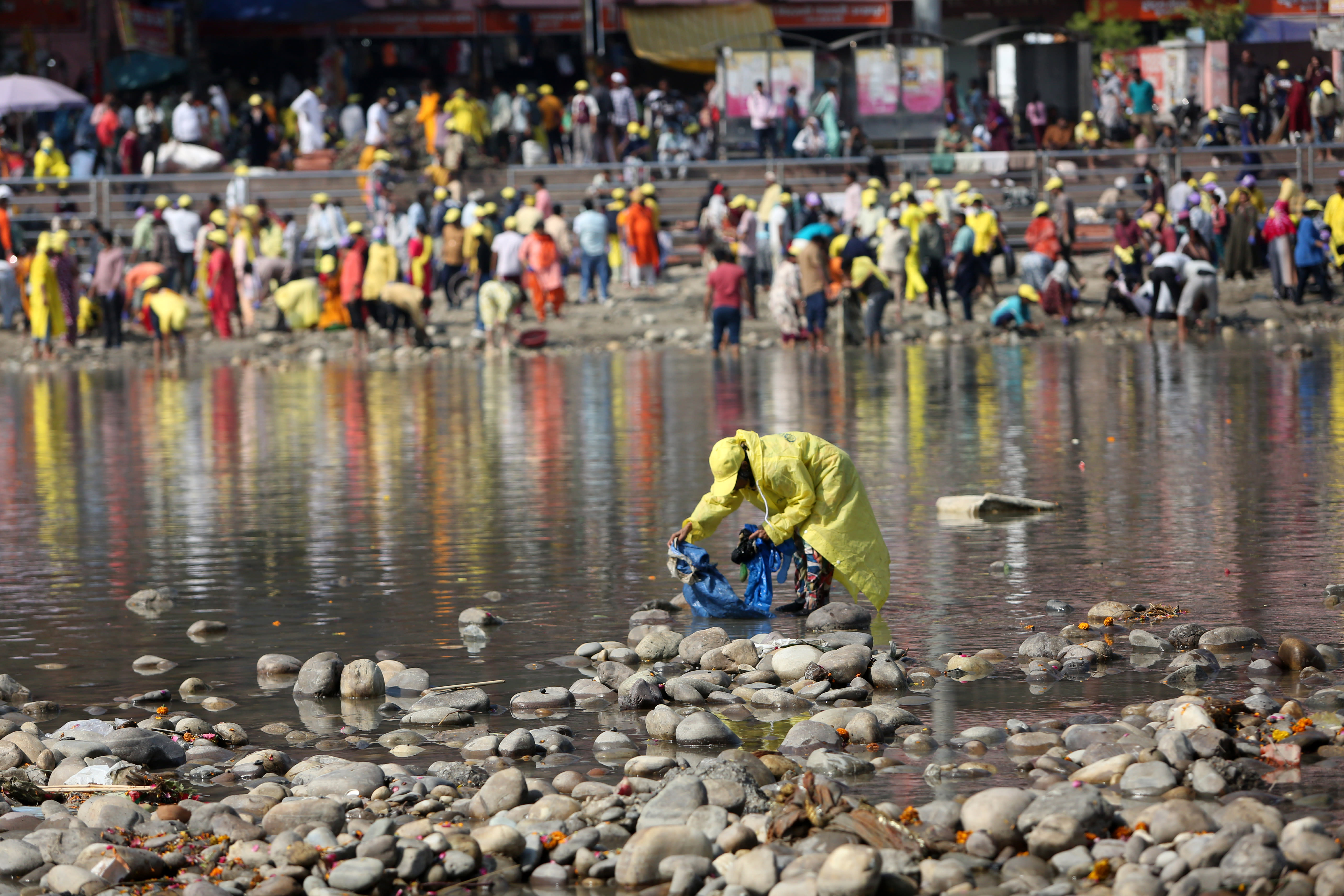
The annual drying of the Ganga in Haridwar for maintenance reveals a persistent cycle of waste accumulation and poverty. Despite regular cleaning efforts, the river continues to suffer from pollution while local youths rely on the exposed riverbed for meager income.
The Perpetual Cycle of the Ganga: Maintenance and Misery
The Ritual of Drying and Discovery
Every year, the Upper Ganga Canal undergoes a period of closure for essential maintenance, causing the river to recede significantly at Haridwar. This hydrological shift transforms the riverbed into an exposed landscape of silt and debris. For individuals like 20-year-old Vijay, who has scavenged the riverbed since childhood, this seasonal drying is not merely a maintenance event but a narrow window of economic necessity. As he sifts through the sediment near the iconic Shiva statue at Old Vishnu Ghat, the coins he recovers serve as a stark reminder of the river's role in local cultural and economic life.
The Persistence of Pollution
Despite recurring government initiatives and environmental campaigns aimed at cleaning the Ganga, the reality on the ground remains grim. The cycle of cleaning followed by the inevitable return of waste suggests that current management strategies are failing to address the root causes of pollution. The presence of waste on the riverbed, even after annual interventions, highlights a systemic disconnect between policy enforcement and the daily reality of waste management in riparian communities. The river acts as a repository for the refuse of human activity, which becomes visible only when the water recedes.
Socio-Economic Vulnerability
Vijay’s story is a microcosm of the intersection between environmental degradation and poverty. As a Class 7 dropout whose parents are daily-wage laborers, his reliance on scavenging coins from the riverbed underscores the lack of social mobility in the region. His sentiment—that the river "wishes" to give him money—reflects a deep, perhaps resigned, spiritual connection to the Ganga that masks the harsh economic deprivation he faces. When the river is dry, the community's lack of infrastructure for waste disposal and economic security becomes painfully evident.
The Failure of Conventional Cleaning
The annual maintenance of the Upper Ganga Canal provides a temporary illusion of progress, yet the environmental degradation remains stagnant. The structural approach of periodic cleaning is clearly insufficient to combat the volume of waste deposited throughout the year. This suggests that without a transition toward long-term, integrated basin management and robust waste management policies, the Ganga will continue to oscillate between being a flowing waterway and a dry, polluted basin, failing to reach the ecological health standards required for its preservation.
Looking Toward a Sustainable Future
For the Ganga to be truly restored, the focus must shift from reactive, seasonal cleaning to proactive, year-round pollution prevention. This requires addressing the socio-economic conditions of those living along its banks, who are currently forced to exist within the cycle of pollution. If the river continues to be treated as a dumping ground, the environmental costs will only escalate, further endangering both the river’s ecosystem and the vulnerable populations that depend on it for their survival.