Trump, Xi, Putin meet next week: Why fears of a 'Yalta 2.0' are growing
Source Entity
AASTHA JHA
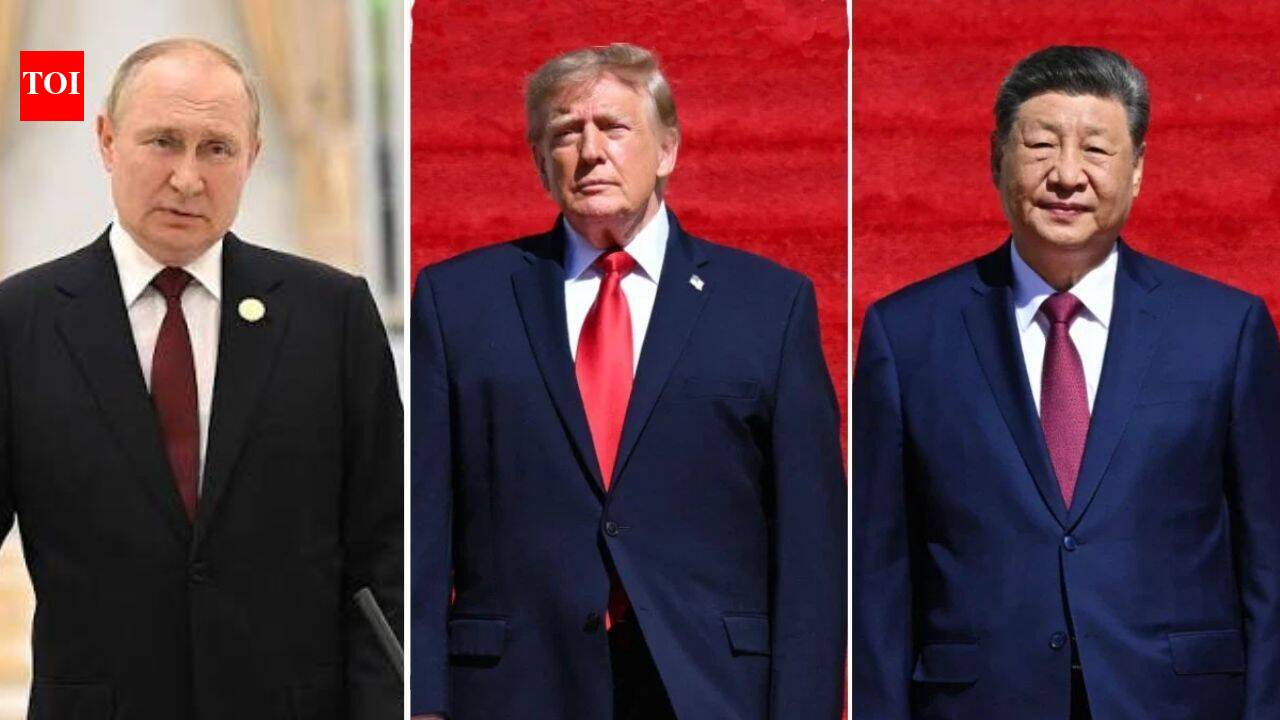
A proposed summit between Donald Trump, Xi Jinping, and Vladimir Putin in Shenzhen has sparked concerns regarding a 'Yalta 2.0' scenario. Critics fear major powers may dictate global affairs without input from smaller, affected nations.
The Specter of 'Yalta 2.0': Analyzing the Potential Trump-Xi-Putin Summit
The prospect of a high-stakes meeting between US President Donald Trump, Chinese President Xi Jinping, and Russian President Vladimir Putin in Shenzhen has sent ripples of apprehension through the international community. Scheduled to potentially occur on the sidelines of the Asia-Pacific Economic Cooperation (APEC) forum, the mere suggestion of this trilateral engagement has invoked historical parallels to the 1945 Yalta Conference. At that historic meeting, leaders of the Allied powers essentially partitioned spheres of influence, often disregarding the sovereignty of smaller states caught in the middle of geopolitical chess matches.
The Historical Shadow of Yalta
The comparison to Yalta is rooted in the fear of 'great power politics' returning to the forefront of global governance. In 1945, Churchill, Roosevelt, and Stalin met to shape the post-war order, a move that critics argue prioritized the stability of major empires over the self-determination of smaller nations. By bringing together the leaders of the United States, China, and Russia—three nations with vastly different ideological frameworks and strategic goals—observers fear a repeat of this top-down decision-making process where global security architectures are rearranged behind closed doors.
Divergent Priorities and Strategic Friction
While the prospect of such a summit suggests a desire for high-level diplomacy, the reality remains that these three leaders possess fundamentally different priorities. The United States continues to advocate for its vision of a rules-based international order, while China seeks to solidify its economic and regional hegemony, and Russia remains focused on its security interests and territorial integrity. The inherent tension between these competing agendas makes the prospect of a unified agreement difficult, yet the very act of discussing global issues in a trilateral format creates a perception of an exclusionary 'directorate' of powers.
Implications for Smaller Nations
For smaller nations in the Asia-Pacific and beyond, the primary concern is the 'bypassing' of established multilateral institutions. When major powers negotiate directly, the voices of smaller stakeholders are frequently relegated to the background, leading to anxieties that their security and trade interests could be bartered away to reach a consensus between the giants. This summit, if it proceeds, could fundamentally alter the diplomatic landscape, forcing smaller nations to navigate an environment where their fate might be decided by the whims of a few dominant actors.
The Path Forward: Uncertainty and Speculation
It is important to note that, as of now, the summit remains in the negotiation phase. There is currently no finalized agenda or specific format, which adds a layer of uncertainty to the proceedings. This lack of clarity has only fueled speculation, as diplomatic analysts attempt to decipher whether this meeting would be a genuine attempt at conflict resolution or a tactical maneuver to project power. The world remains in a state of watchful waiting as the details of this high-level meeting continue to evolve.
Conclusion: Assessing the Geopolitical Shift
Ultimately, the potential Shenzhen summit represents a critical juncture in contemporary international relations. Whether or not it leads to a formal agreement, the event underscores a shift toward more centralized, power-centric diplomacy. As the international community observes these developments, the challenge remains for global leaders to ensure that any discussions held at this level do not undermine the collective security and sovereignty of the wider global community.