Hyderabad emerged as the Deccan’s centralised minting centre under the Nizams, says historian
Source Entity
India Latest News: Top National Headlines Today & Breaking News | The Hindu
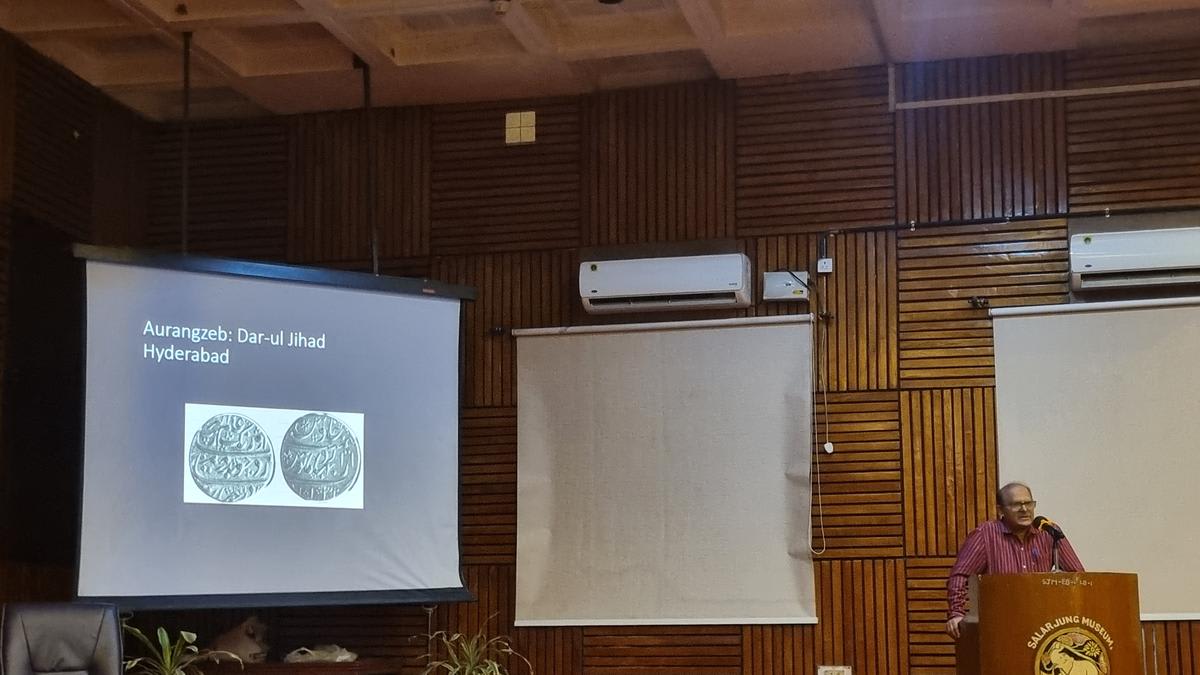
Historian Professor Danish Moin highlights Hyderabad's evolution into a centralized minting hub during the Asaf Jahi era. The lecture at Salar Jung Museum traced the historical significance of Deccan coinage as a tool for political and economic communication.
The Evolution of Deccan Currency: A Historical Perspective
Recent insights provided by Professor Danish Moin at the Salar Jung Museum in Hyderabad have shed new light on the economic architecture of the Deccan region. During his lecture on ‘Deccan Coinage and Mints,’ Professor Moin detailed how Hyderabad transformed into a centralized minting powerhouse during the later Asaf Jahi period. This shift marked a departure from decentralized production, as the city began consolidating its role as the primary hub for minting and distributing currency throughout the Nizam’s state.
The Asaf Jahi Transition
The centralization of coinage under the Nizams was not merely a logistical upgrade but a strategic move to consolidate economic control. By establishing Hyderabad as the core of currency production, the Asaf Jahi rulers were able to standardize their fiscal policy and ensure that the currency circulating in their territory was uniform. This transition reflected a broader trend in Indian history where princely states sought to project stability and administrative efficiency through their financial systems.
Coinage as Political and Religious Discourse
Professor Moin’s analysis emphasizes that coinage served as far more than a medium of exchange; it was a potent tool for political communication. From the 14th to the 19th century, dynasties across the Deccan—including the Vijayanagara Empire, the Bahmani dynasty, the Deccan Sultanates, and the Mughals—utilized coins to broadcast their legitimacy. Inscriptions on these coins frequently conveyed religious beliefs and political authority, acting as a portable propaganda machine that reached every corner of the realm.
Historical Continuity in the Deccan
The lecture provided a sweeping view of how coinage traditions evolved across different eras. The transition from the diverse minting practices of the Bahmani and Mughal periods to the centralized model of the Asaf Jahi era illustrates the changing nature of state power in the region. Each dynasty left a distinct mark on the numismatic history of the Deccan, creating a complex narrative of economic integration that spanned over five centuries.
Broader Implications and Future Research
Understanding the minting history of Hyderabad offers valuable insights into the administrative sophistication of the Nizam’s era. By examining the logistical challenges of dispatching coins from a single centralized location to various parts of the state, historians can better reconstruct the trade routes and economic networks of the period. This research not only preserves the numismatic heritage of the Deccan but also provides a framework for future studies on the economic history of princely India.
Conclusion
The lecture at the Salar Jung Museum reinforces the importance of numismatics in understanding historical governance. As Hyderabad continues to celebrate its rich cultural and political history, the study of its evolution as a centralized minting center serves as a reminder of the city’s long-standing role as a pivotal administrative and economic capital in the Indian subcontinent.
Verification Required?