Gautam Gambhir’s ‘right decisions, not popular decisions’: What lessons in ethics can we learn?
Source Entity
Nanditesh Nilay
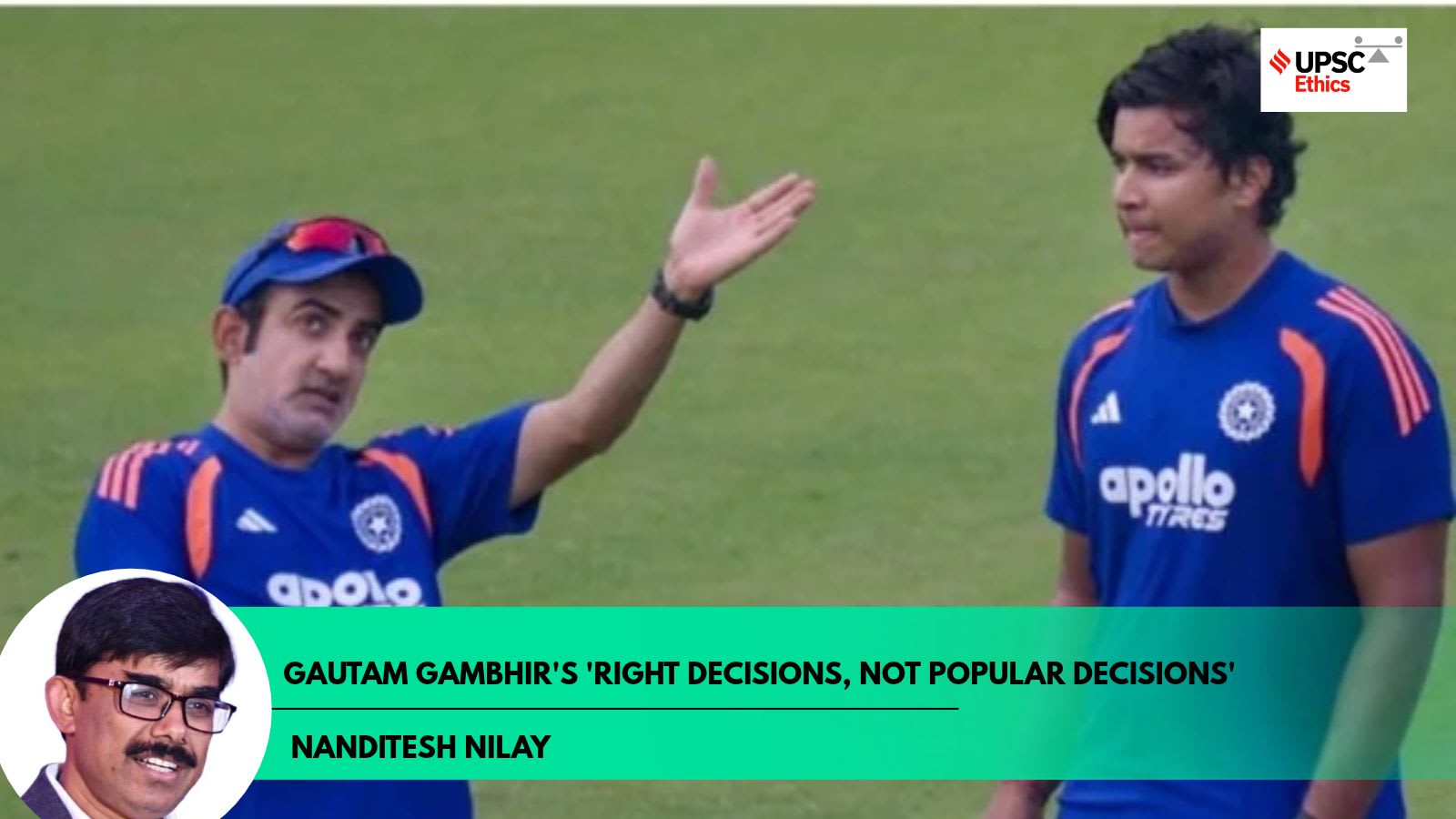
Indian cricket coach Gautam Gambhir has emphasized prioritizing merit over popularity in team selection. This approach highlights the ethical tension between public expectations and professional decision-making in leadership.
The Ethics of Leadership: Lessons from Gautam Gambhir
Indian cricket head coach Gautam Gambhir recently sparked a significant debate regarding the nature of leadership and accountability within high-stakes environments. Addressing criticism surrounding the limited playing opportunities for young talent Vaibhav Sooryavanshi, Gambhir articulated a philosophy rooted in the primacy of objective performance over public sentiment. By stating, "My job is not to make everyone happy. My job is to take the right decisions, not the popular decisions," he has drawn a clear line between populist appeasement and meritocratic duty.
The Dilemma: Popularity vs. Performance
At the core of this issue lies a classic ethical dilemma faced by leaders in sports and governance alike: the conflict between stakeholder expectations and long-term institutional goals. In the context of national sports, the "stakeholders" include fans, media, and sponsors who often champion the inclusion of young, exciting prospects based on potential or narrative appeal. However, the decision-maker—in this case, the coach—is tasked with the objective assessment of current form, experience, and team balance. Prioritizing a popular choice to pacify the public can lead to the erosion of meritocracy, potentially compromising the team's competitive integrity.
Ethical Frameworks in Decision-Making
Gambhir’s stance reflects a deontological approach, where the duty to adhere to professional standards and objective criteria takes precedence over the consequences of public backlash. This aligns with the ethical principle of 'integrity in leadership,' where a leader acts on moral principles rather than social pressure. When a selection committee faces pressure to include a popular player, they must navigate the tension between short-term popularity and the long-term success of the organization. By choosing the experienced player with a proven record, the leader prioritizes the collective goal over the individual narrative.
Institutional Implications and Accountability
This leadership model carries broader implications for organizational management. In any high-pressure environment, the ability to remain insulated from external noise is essential for maintaining a culture of accountability. When a leader consistently prioritizes 'right' decisions, they build a foundation of trust with those who value professional excellence. However, this also necessitates transparent communication; if the rationale behind unpopular decisions is not understood, it can lead to internal friction and public distrust. The challenge for Gambhir is to balance this rigid adherence to merit with the need for nurturing young talent like Sooryavanshi.
Future Trends in Sports Management
As data analytics continue to play a larger role in cricket, the definition of a 'right' decision is becoming increasingly quantifiable. Future trends suggest that selection processes will likely lean further toward data-driven insights to shield decision-makers from subjective criticism. Nonetheless, the human element—the subjective evaluation of temperament, leadership potential, and team chemistry—will always remain a part of the coach's mandate. The ability to defend these human-centric, non-popular decisions will continue to be a hallmark of effective, ethical leadership in the evolving landscape of Indian cricket.