Gen Z’s kanwariyas: barefoot and bereft
Source Entity
India Latest News: Top National Headlines Today & Breaking News | The Hindu
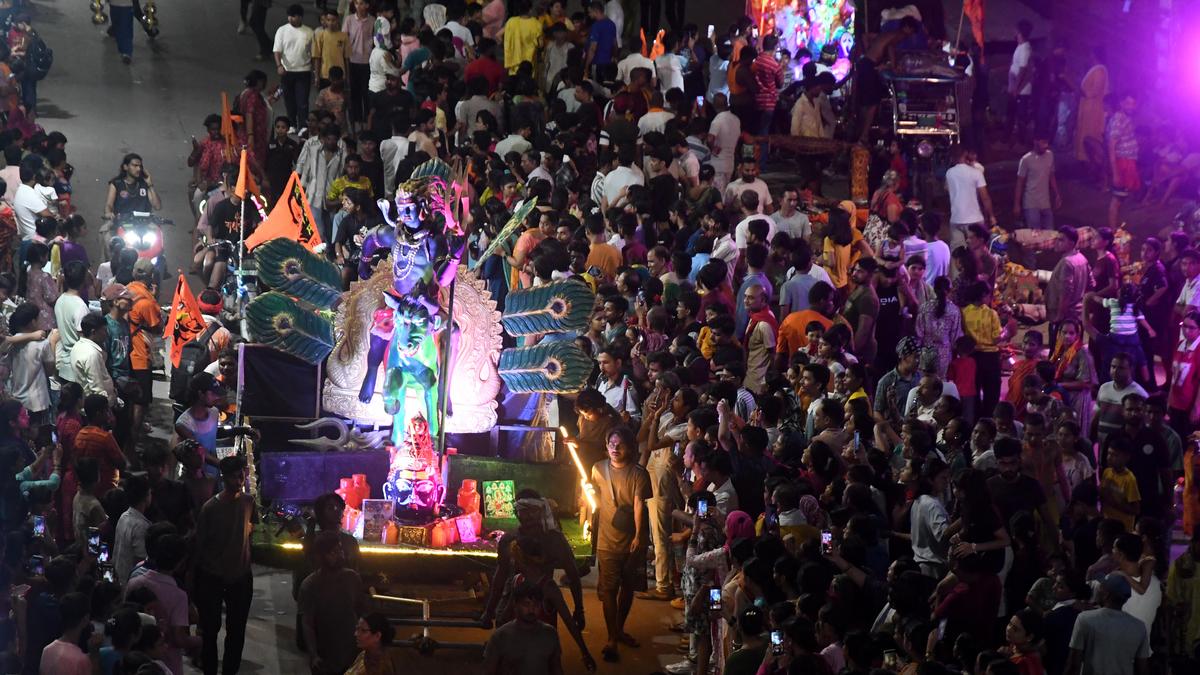
Millions of Gen Z men participated in the annual Kanwar Yatra, reflecting a strong shift toward religious traditionalism and political conformity. The event highlights a stark contrast between youth-led political protests and the growing trend of younger generations embracing cultural heritage.
The Resurgence of Tradition: Gen Z at the Kanwar Yatra
A Demographic Shift in Pilgrimage
The annual Kanwar Yatra, a monumental pilgrimage where devotees collect holy water from the Ganga in Haridwar to offer at local shrines, has seen a profound transformation. Recent observations indicate that the demographic makeup of this event is increasingly dominated by Gen Z, with millions of men in their 20s forming the backbone of the saffron-clad procession. This influx of youth into a deeply traditional religious practice marks a significant departure from expectations of secularization often associated with younger generations.
The Economics of Devotion
For many of these young participants, the pilgrimage represents a substantial financial and physical commitment. Reports suggest that some individuals dedicate a month’s worth of wages to fund their journey, often arriving in Haridwar without the means to secure formal accommodation. This willingness to endure extreme hardship—walking hundreds of kilometers barefoot while carrying heavy kanwars—speaks to a profound level of conviction that transcends mere economic logic, positioning the act as a defining personal and spiritual milestone.
Political Alignment and Social Conformity
Perhaps the most striking aspect of this Gen Z cohort is its ideological inclination. Unlike the youth who recently participated in protests at Delhi’s Jantar Mantar, the young men at the ghats of Haridwar exhibited a strong preference for the BJP and a desire to uphold established systems. This suggests that for a large segment of contemporary Indian youth, identity is increasingly tied to religious tradition and the preservation of the status quo rather than dissent against institutional power.
The Contrast with Modern Protest Culture
There is a palpable dichotomy in the current youth discourse in India. While some pockets of the younger generation engage in vocal, reform-oriented political activism in urban centers, the masses witnessed in Haridwar represent a different, perhaps more widespread, trend: the embrace of cultural continuity. By choosing to abide by tradition, these young people are actively defining their place within the social order, finding belonging in the communal experience of the Yatra.
Future Trends and Societal Implications
The trend of Gen Z’s participation in the Kanwar Yatra suggests that religious identity will continue to be a primary driver of social cohesion in the coming decade. As these young men move into positions of greater influence, their adherence to traditional values and political loyalty may reshape the national landscape. The visual spectacle of the 'river of saffron' flowing down National Highway 58 is not just a religious event; it is a signal of a generational shift toward a more conservative and tradition-bound future.
Conclusion
The participation of 50 million pilgrims, a large portion of whom are Gen Z, underscores the enduring power of religious tradition in modern India. While they walk the long, arduous road home to Delhi, Haryana, and beyond, these young men are carrying more than just Gangajal; they are carrying a vision of society that prioritizes cultural heritage and institutional stability over radical change.
Verification Required?