Activists try to deliver aid to Palestinians in homes besieged by Israeli settlers
Source Entity
BBC News
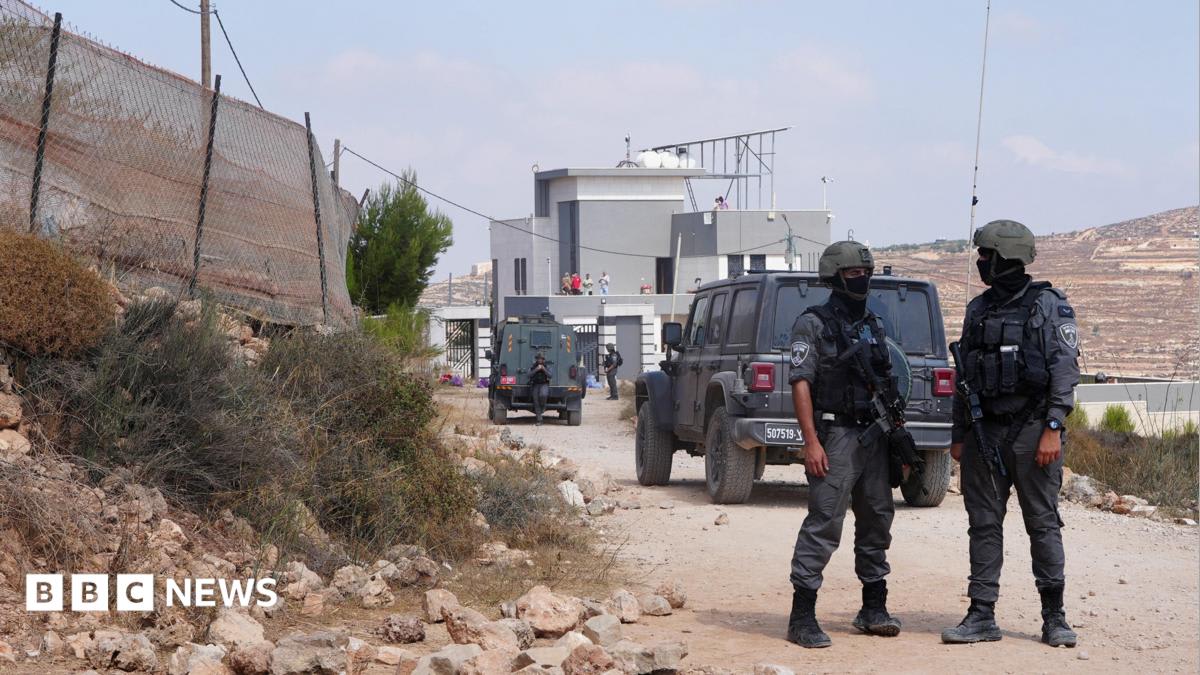
Activists attempted to deliver essential aid to two Palestinian families besieged by settlers in the West Bank village of Qusra. Despite the intervention of Israeli forces, families remain isolated amid ongoing tensions and restricted access to basic utilities.
The Siege of Qusra: A Humanitarian Standoff
The humanitarian situation in the occupied West Bank village of Qusra has deteriorated into a precarious standoff. Two Palestinian families have been effectively trapped within their homes for several days, facing a complete severance of their power and water supplies. This isolation is a direct consequence of a siege initiated by Israeli settlers, creating an environment where basic sustenance has become a point of contention and conflict.
The Role of Activists and Aid Delivery
In an attempt to mitigate the suffering of these families, activists ventured to the site to provide essential supplies, including food and water. However, the delivery process was fraught with complications. Residents reported that Israeli forces actively prevented the activists from making direct contact with the besieged families, forcing the aid to be abandoned at a distance from the dwellings. The Israel Defense Forces (IDF) have contested this account, complicating the narrative of who controls access to these vulnerable civilians.
Territorial Tensions and Military Restrictions
The IDF has designated the vicinity of Qusra a "closed military zone," a designation that carries significant weight in the West Bank. This legal framework allows the military to restrict movement and access, ostensibly to maintain security. However, the presence of settlers—some of whom were involved in the initial siege—adds a layer of complexity. Reports indicate that settlers returned to the area to set up a tent just one day after a military operation intended to disperse them, highlighting the persistent nature of these territorial frictions.
Historical Context of West Bank Settlements
The events in Qusra are emblematic of the broader, decades-long friction regarding settlement expansion and civilian movement in the West Bank. The interplay between settler activity, military oversight, and Palestinian vulnerability is a recurring pattern that frequently escalates into humanitarian crises. By cutting off essential utilities like power and water, the siege tactics aim to exert pressure on residents, effectively making daily life untenable in contested areas.
Future Implications and Security Concerns
The cycle of dispersal and return, as seen with the settlers setting up tents only to be removed again by the IDF, suggests a volatile environment where the rule of law is frequently challenged. The classification of the area as a closed military zone creates a vacuum where humanitarian aid is often caught in the crossfire of political and territorial disputes. As these families remain trapped, the international community continues to monitor the situation, concerned that such localized sieges could trigger wider instability in the region.
Conclusion
The situation in Qusra remains a stark reminder of the vulnerability of Palestinian families living in the path of settlement expansion. The failure to ensure a consistent, safe path for humanitarian aid highlights the severe challenges faced by those caught between military jurisdiction and settler encroachment. Until a sustainable resolution is reached regarding the status of these lands, the families in Qusra remain at risk of continued isolation and deprivation.