Thousands protest in Germany as far-right AfD eyes first govt since Nazi Party
Source Entity
PRISHA PATNAIK
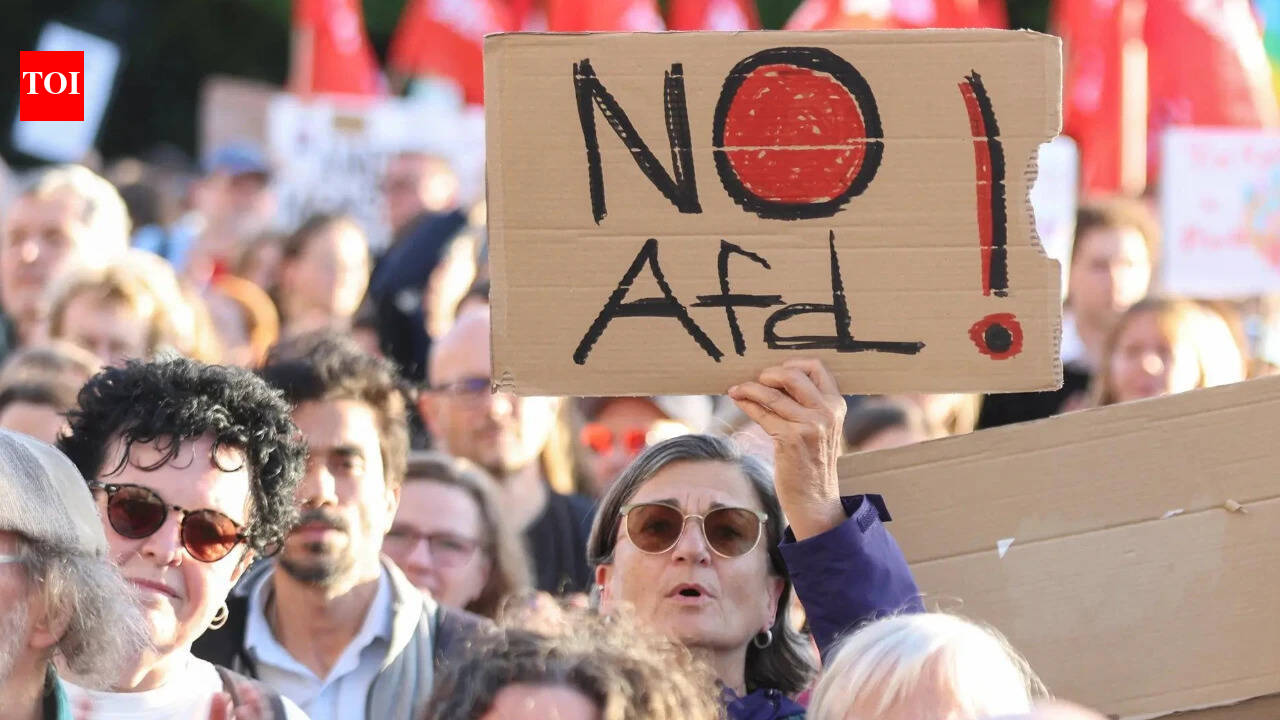
Thousands of protestors across Germany have taken to the streets following the AfD's record-breaking victory in Saxony-Anhalt. The party's success marks a historic shift, as it seeks to form the first far-right state government in Germany since the Nazi era.
The Resurgence of the Far-Right in German Politics
Recent electoral outcomes in Germany have sent shockwaves through the nation’s political landscape, as the Alternative for Germany (AfD) party achieved its most significant electoral success to date. By securing nearly 44% of the vote in the state of Saxony-Anhalt, the party has claimed 39 out of 83 seats, effectively positioning itself as a dominant force within the state legislature. This development has catalyzed immediate and widespread public outcry, with thousands of demonstrators gathering in Berlin and other major cities to voice their opposition to the party's platform and its potential ascendancy to power.
Historical Context and Political Parallels
The alarm expressed by protesters is deeply rooted in the historical gravity of the situation. The prospect of the AfD forming a state government is being framed by observers as a pivotal moment, as it would represent the first instance of a far-right party leading a German state government since the collapse of the National Socialist German Workers' Party (NSDAP) in 1945. This historical shadow serves as the primary driver for the intense public mobilization, as citizens fear that the normalization of far-right governance could erode the democratic safeguards established in post-war Germany.
The Mechanics of Governance
Despite their impressive electoral showing, the AfD remains short of an absolute majority. Consequently, the party is now actively maneuvering to secure support from other political factions to form a coalition government. This effort to build a governing majority marks a transition from a protest-based movement to a tangible legislative force. The legislative strategy employed by the AfD in Saxony-Anhalt is being scrutinized as a potential blueprint for future elections in regions like Berlin and Mecklenburg-Western Pomerania, where the party aims to replicate its success.
Societal Implications and Polarization
Germany is currently experiencing a profound period of political polarization. The demonstrations highlight a sharp divide between the segment of the electorate that has turned toward the AfD—likely driven by dissatisfaction with traditional political parties—and a large portion of the population that views the party’s rise as a threat to fundamental liberal values. The presence of banners and large crowds in Berlin underscores that this is not merely a regional political event, but a national crisis of identity and democratic stability.
Future Trends and Electoral Outlook
The long-term impact of these events will depend on whether established political parties choose to maintain a 'cordon sanitaire' or cooperate with the AfD to secure regional stability. If the AfD succeeds in forming a government, it will likely embolden their base and shift the national discourse further to the right. Conversely, if mainstream parties successfully exclude them from power, it could lead to further radicalization among AfD supporters who feel disenfranchised by the political establishment. The upcoming polls in Berlin and Mecklenburg-Western Pomerania will serve as the ultimate litmus test for the durability of this political shift.