Germany rejects new European security architecture after Lavrov's warning
Source Entity
Latest News: Todays Latest News Headlines from India & World | Hindustan Times
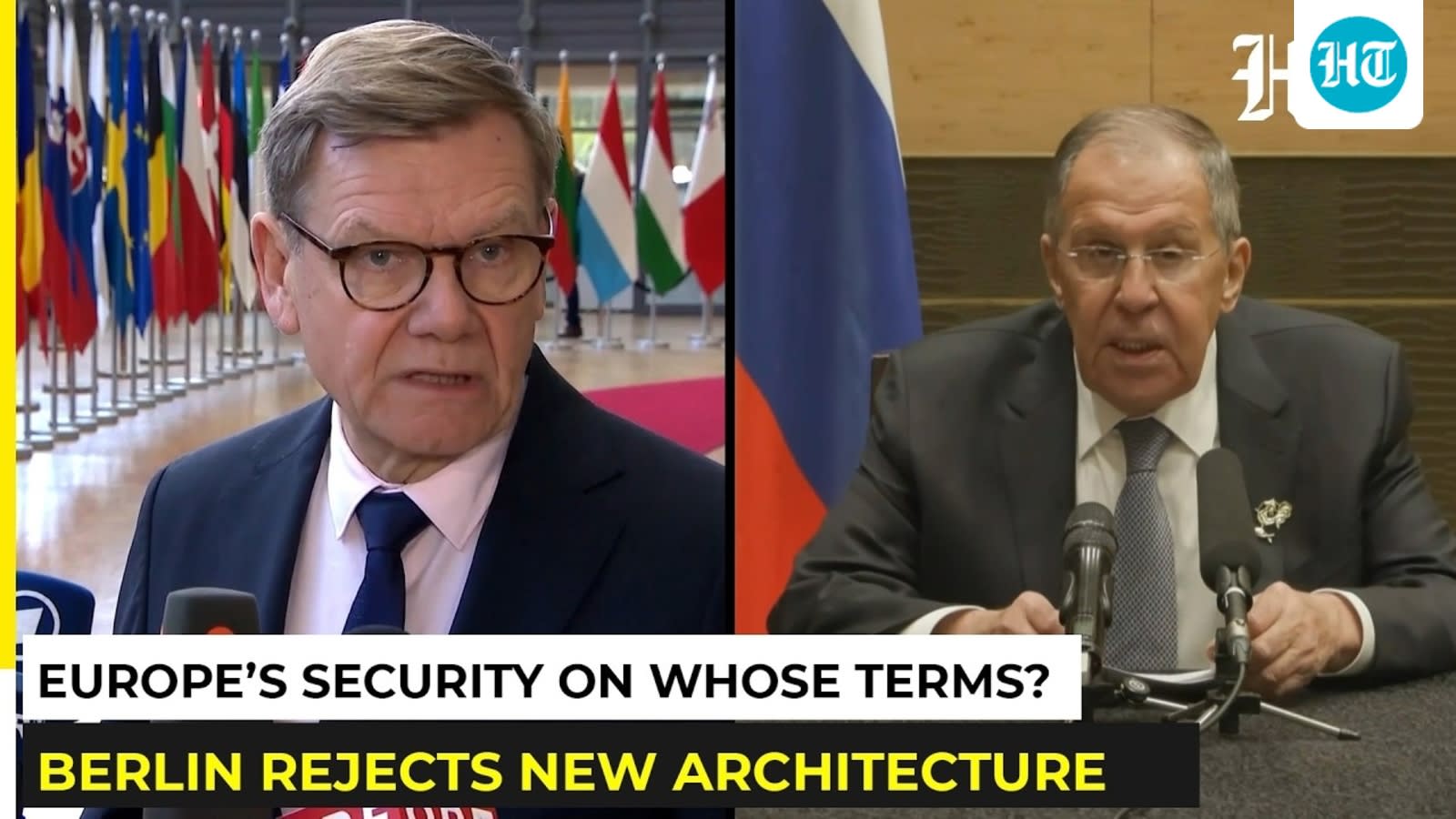
German Foreign Minister Johann Wadephul has dismissed Russian demands for a new European security framework, reaffirming the validity of post-Cold War agreements. This standoff highlights the growing geopolitical divide between Western alliances and Russia's proposed pan-Eurasian security vision.
Germany Rejects Russian Proposals for New European Security Architecture
German Foreign Minister Johann Wadephul has taken a firm stance against Russian efforts to dismantle the established European security order. Ahead of the EU Foreign Affairs Council meeting in Brussels, Wadephul explicitly rejected calls from Russian Foreign Minister Sergey Lavrov to renegotiate the continent's security architecture. This diplomatic friction underscores the fundamental disagreement between Western powers and the Kremlin regarding the sovereignty of nations and the legitimacy of existing alliances.
The Pillars of European Security
Wadephul emphasized that any future settlement concerning the conflict in Ukraine must be grounded in long-standing international agreements. By citing the 1975 Helsinki Final Act, the 1990 Charter of Paris, and the 1994 Budapest Memorandum, he reaffirmed that the current European order is built upon principles that explicitly protect the sovereignty of states. These documents serve as the bedrock for modern European diplomacy, ensuring that individual nations maintain the right to select their own security arrangements, including membership in defensive alliances.
The Clash of Visions: Helsinki vs. Eurasia
The tension arises from Sergey Lavrov's push for a 'pan-Eurasian security framework' predicated on the principle of 'indivisible security.' While Russia argues that this framework would promote stability, Western leaders view it as an attempt to undermine the autonomy of sovereign states and erode the influence of established institutions. This conflict represents a clash between a rules-based order centered on individual nation-state rights and an alternative vision that favors spheres of influence and multipolarity.
Global Alignments and Geopolitical Implications
The Russian proposal for a 'Eurasian Charter of Diversity and Multipolarity' has garnered support from nations such as Belarus and Iran, signaling a growing geopolitical polarization. As these countries align behind a new security narrative, the divide between the EU and Russia becomes increasingly entrenched. This move suggests a broader strategy by Russia to challenge the post-Cold War consensus and build a coalition that rejects the current Western-led security model.
Future Trends and Diplomatic Stagnation
Looking ahead, it is highly likely that diplomatic efforts to bridge this divide will remain stalled. Germany’s refusal to entertain discussions that might weaken existing alliances indicates that Europe is not prepared to sacrifice the principles of the 1990 Charter of Paris. As long as Russia continues to advocate for a framework that contradicts the sovereignty of its neighbors, the conflict in Ukraine will likely remain the primary theater where these competing visions of global security collide, ensuring that tensions between the EU and Russia remain at an all-time high.
Verification Required?