Giant grass planted near Bucha may help clean Ukraine’s war-damaged land
Source Entity
TOI WORLD DESK
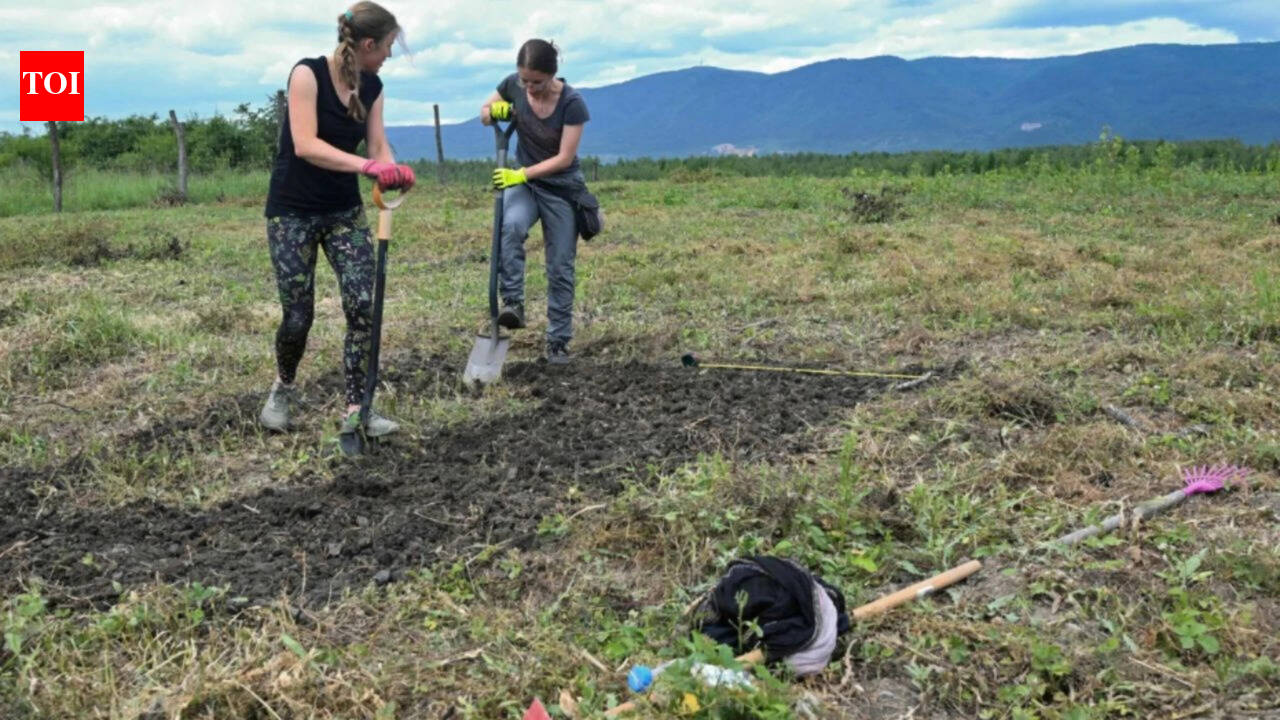
Scientists are testing the use of giant Miscanthus grass to remediate war-damaged soil in Ukraine. This NATO-backed project aims to remove pollutants while restoring agricultural productivity and generating renewable biomass.
Restoring Ukraine's Soil: The Role of Miscanthus
The Environmental Toll of Conflict
Ukraine’s status as the 'breadbasket of Europe' is fundamentally tied to its unique, nutrient-rich black soil. However, over four years of intense conflict have inflicted severe, lasting damage on this critical resource. Beyond the visible destruction of buildings and infrastructure, the war has decimated ecosystems, turning once-productive agricultural lands into barren zones contaminated by heavy metals, chemical residues, and unexploded ordnance. The degradation of this topsoil threatens not only the immediate food security of the nation but also the long-term ecological balance of the region.
The Potential of Giant Miscanthus
To address this crisis, researchers in the Czech Republic, supported by a NATO project, are investigating the efficacy of Miscanthus—a fast-growing, perennial grass species. This plant is being tested for its phytoremediation capabilities, which refers to the use of plants to extract, sequester, or detoxify environmental contaminants. Because Miscanthus grows rapidly and produces significant biomass, it acts as a biological filter, effectively pulling pollutants from the soil while simultaneously improving soil structure and organic matter content.
Mechanisms of Natural Recovery
The process of using Miscanthus to restore damaged land is twofold. First, the plant’s deep, expansive root system helps stabilize soil that has been loosened or churned by military activity, preventing erosion. Second, as the plant matures, it naturally accumulates contaminants from the soil into its stalks. By harvesting this biomass, the pollutants are removed from the environment entirely. This process is not only restorative but also sustainable, as the harvested biomass can be repurposed as a source of renewable energy, creating a circular economic model for recovery.
Early Findings and Strategic Implications
Initial research and pilot testing have yielded encouraging results, suggesting that this method could be a scalable solution for Ukraine’s vast, damaged agricultural tracts. By transitioning contaminated fields into productive Miscanthus plantations, farmers can potentially rehabilitate their land without the need for intensive, costly chemical treatments. This strategy transforms a liability—polluted, unusable land—into an asset that supports both renewable energy production and the eventual return to traditional food crop cultivation.
Future Outlook and Sustainability
Looking ahead, the implementation of this project represents a significant intersection of environmental science and post-war reconstruction. If the project continues to show success, it could serve as a global blueprint for agricultural land remediation in other conflict-affected zones. As Ukraine looks toward long-term recovery, integrating such nature-based solutions will be essential in ensuring that the nation's soil remains a viable, life-sustaining foundation for generations to come.