Temple restoration work on Goa island unearths relics from 14th to 16th century
Source Entity
Pavneet Singh Chadha
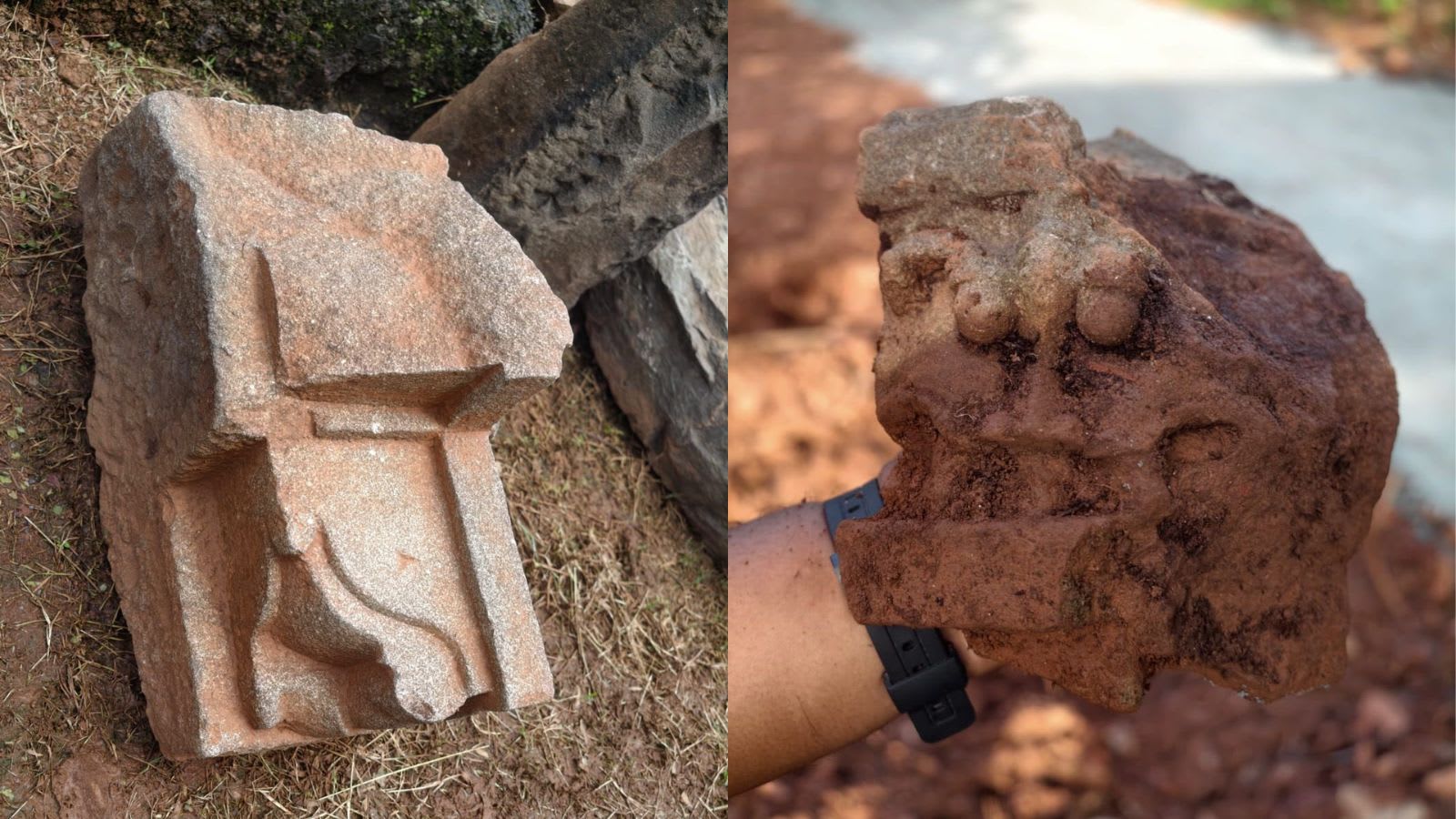
Restoration work at the Saptakoteshwar Temple site on Goa's Divar island has uncovered 14th to 16th-century relics. These findings, including a 'Kirtimukh' motif and pillar carvings, confirm the existence of an ancient temple complex.
Archaeological Breakthrough on Divar Island
Recent restoration efforts at the site of the Shree Saptakoteshwar Temple on Goa’s Divar island have yielded a significant archaeological discovery. Chief Minister Pramod Sawant announced that excavation work has unearthed relics dating back to the 14th through 16th centuries. These findings provide tangible evidence of an expansive ancient temple complex and associated corridors, offering a clearer window into the architectural and religious landscape of medieval Goa.
Significant Historical Artifacts
Among the items recovered from the site are a 'Kirtimukh' motif—a decorative element traditionally positioned above temple doorways—and the carved capital of a stone pillar. These artifacts are not merely decorative but serve as critical markers of the craftsmanship and religious devotion prevalent in the region during that era. The presence of these specific architectural elements suggests a sophisticated level of construction that was characteristic of the temple architecture during the pre-colonial period in Goa.
Strengthening Historical Chronology
Chief Minister Sawant emphasized that these discoveries are vital for strengthening the historical chronology of the region. By uncovering layers of history that date back several centuries, the state is better positioned to document the sacred legacy of Divar island. These artifacts act as a bridge between the oral traditions of the local community and the physical evidence required to validate the historical significance of the Saptakoteshwar site.
Contextualizing the Discovery
The 14th to 16th-century timeframe is particularly significant in Goan history, as it precedes and encompasses the early stages of colonial influence. The existence of a temple complex during this period illustrates the cultural continuity that persisted in Goa. Restoration projects like this one are essential not only for the preservation of heritage sites but for the scientific study of how religious infrastructure evolved within the island’s unique geographic and cultural context.
Implications for Future Heritage Preservation
This discovery highlights the importance of integrating archaeological oversight into routine restoration and infrastructure projects. As the state continues to revitalize its heritage sites, the findings at Divar provide a blueprint for how such projects can yield high-value historical data. Future efforts are likely to focus on the systematic cataloging of these relics to ensure they are preserved for public education and academic research.
Conclusion
The unearthing of these relics at the Saptakoteshwar Temple site marks a major milestone in Goan archaeology. By confirming the existence of a complex dating back to the 14th century, the state has reaffirmed the site's status as a repository of historical truth. As the restoration continues, these artifacts will undoubtedly play a central role in shaping the narrative of Goa’s rich and multifaceted heritage.