Gemini Robotics 2 brings whole body intelligence to robots
Source Entity
Hacker News
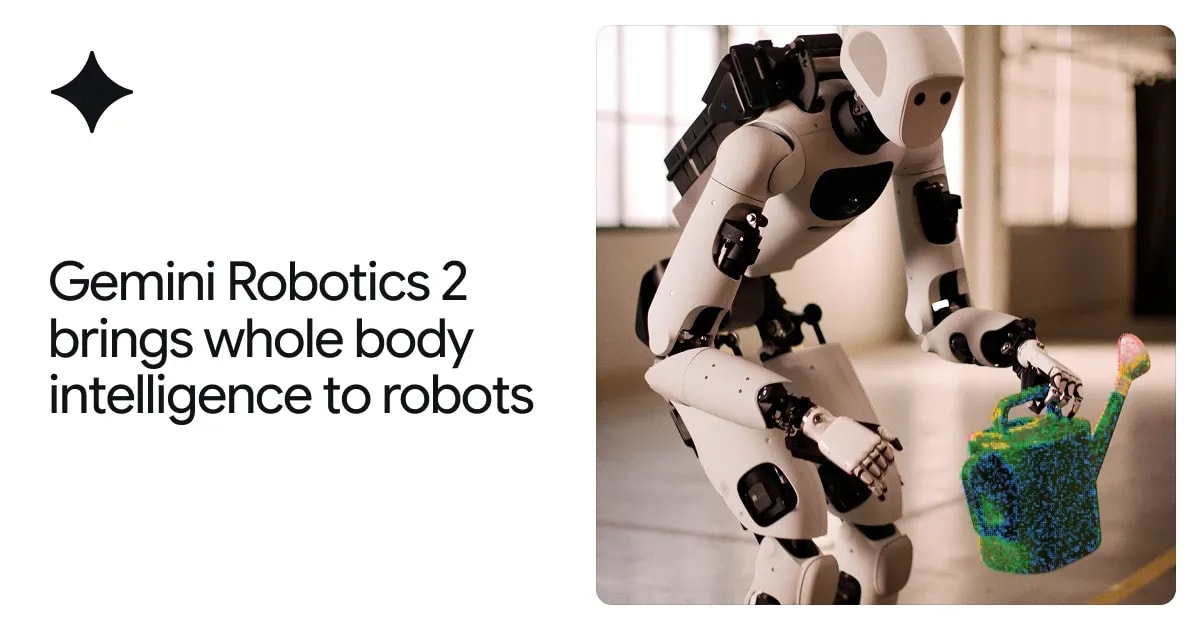
Google DeepMind has unveiled Gemini Robotics 2 and ER 2, advancing robotic intelligence through whole-body control and embodied reasoning. These models enable robots to perform complex, multi-step tasks while collaborating in real-world environments.
The Evolution of Embodied Intelligence
Google DeepMind has officially unveiled its latest advancements in robotics, centering on the rollout of Gemini Robotics 2 and the Gemini Robotics ER 2 model. This shift represents a transition from narrow, pre-programmed robotic sequences to a paradigm of "whole-body intelligence." By moving beyond simple upper-body manipulation, these new models allow humanoid robots—such as Apptronik’s Apollo 2—to coordinate complex movements from their feet to their fingertips, effectively bridging the gap between digital reasoning and physical action.
Breaking the Limits of Traditional Robotics
Historically, robotics has been hampered by the difficulty of transferring learned skills across different hardware platforms and the inability of machines to adapt to unpredictable, real-world environments. Most legacy systems relied heavily on teleoperation or rigid, repetitive programming. Gemini Robotics 2 addresses these systemic limitations by enabling robots to learn autonomously and execute fluid motions, such as walking, crouching, and stretching, which are essential for interacting with the human world.
The Role of Embodied Reasoning (ER 2)
Central to this technological leap is the Gemini Robotics ER 2 model, which functions as a sophisticated high-level brain for robotic agents. Unlike previous iterations that focused primarily on visual-language-action (VLA) tasks, ER 2 introduces "embodied reasoning." This capability allows robots to perform real-time task orchestration, time their decisions to match the physical world's pace, and interact with humans through natural conversation. By offloading complex planning to ER 2 while utilizing lower-level VLA models for motor execution, the system achieves a new level of operational efficiency.
Tool Orchestration and Multi-Robot Collaboration
One of the most significant features of Gemini Robotics ER 2 is its capacity for tool orchestration. The model can natively interface with external systems, such as Google Search, to gather information or execute user-defined functions during task completion. Furthermore, the architecture supports multi-robot collaboration, allowing multiple units to work in tandem to solve complex problems. This represents a fundamental shift toward deploying robots that can function as intelligent, communicative members of a team rather than isolated machines.
Broader Implications and Future Trends
This development signals a future where humanoid robots can integrate more seamlessly into human-centric environments, such as warehouses, homes, or offices. The ability to plan multi-step tasks—like picking up a watering can while navigating obstacles—moves robots closer to achieving true utility. As these models continue to scale, we can expect to see a drastic reduction in the time required to train robots for diverse tasks, potentially accelerating the widespread adoption of general-purpose humanoid hardware.
Conclusion
Google DeepMind’s latest announcement marks a watershed moment in the field of robotics. By combining whole-body motion control with advanced embodied reasoning, the company is laying the groundwork for a new generation of intelligent, adaptable machines. As these technologies mature, the focus will likely remain on refining the synergy between high-level logical reasoning and the precision required for physical manipulation in dynamic, real-world settings.