Grabette: an open system to record robot-manipulation data
Source Entity
Hugging Face - Blog
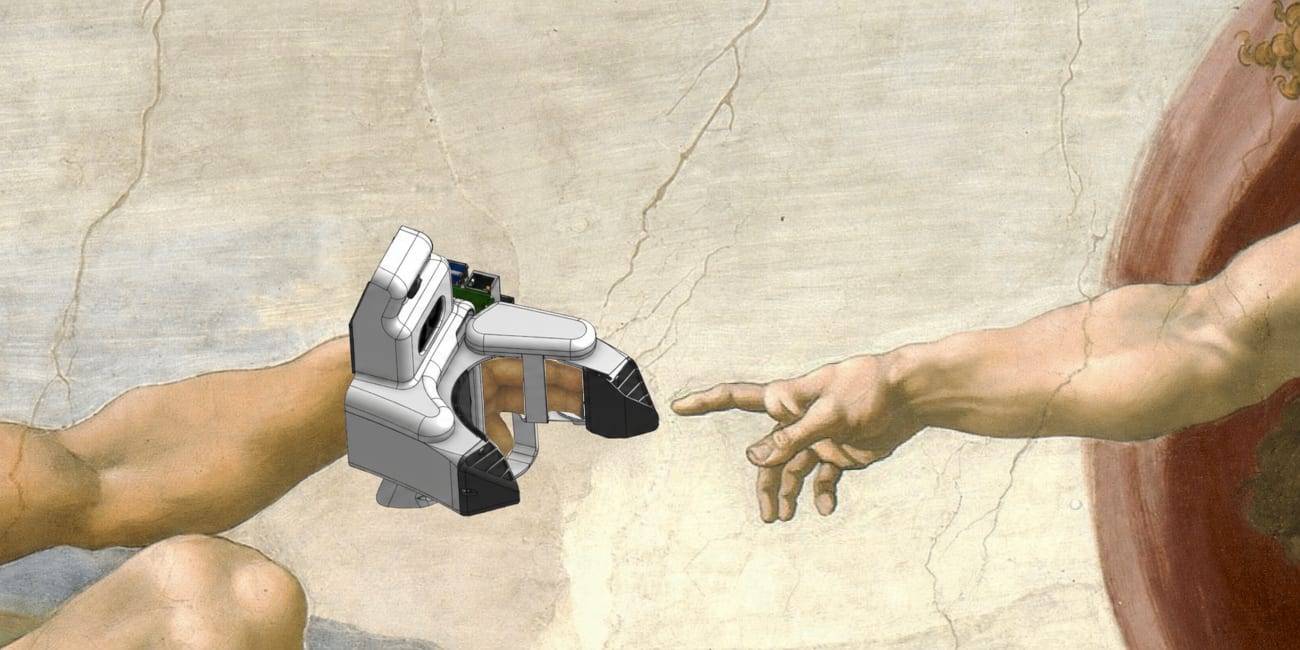
Grabette is an open-source system designed to simplify robot-manipulation data collection using handheld grippers. By removing the need for complex hardware, it aims to solve the data scarcity bottleneck in training advanced robot learning models.
The Data Bottleneck in Robotics
Recent advancements in artificial intelligence have produced highly capable policy architectures, including transformer-based Vision-Language-Action (VLA) models, diffusion models, and flow-matching policies. Despite these sophisticated frameworks, the field of robotics faces a significant supply-side crisis: a profound lack of diverse, high-quality, real-world manipulation data. As of the July 21, 2026, update, the industry consensus is clear—the primary limiting factor for robotic progress is no longer the model architecture, but the availability of the training data itself.
Introducing Grabette: A Democratized Approach
Grabette emerges as an innovative open system specifically engineered to record robot-manipulation data. By utilizing a handheld gripper, the system allows users to record complex manipulation tasks in a matter of minutes. This approach effectively bypasses the traditional, high-cost barriers to entry, such as the requirement for expensive robotic hardware and complex teleoperation setups. By enabling rapid data capture, Grabette lowers the threshold for contributions to robot learning datasets.
Streamlining the Data Pipeline
One of the most critical features of Grabette is its ability to automatically convert recorded movements into robot-ready datasets. In traditional robotics research, the pipeline from raw teleoperation to usable training data is often manual, time-consuming, and prone to errors. Grabette automates this transition, ensuring that the data is structured correctly for immediate integration into training pipelines, thereby accelerating the iteration cycle for roboticists and researchers.
Collaborative Growth and Open Science
At its core, Grabette is built on the philosophy of collective contribution. By fostering an open, collaborative environment, the project encourages users to share their data, which helps build a shared, diverse dataset for the global community. This communal model is essential for overcoming the 'data scarcity' problem, as it allows for the aggregation of varied manipulation tasks that would be impossible for any single laboratory or company to collect independently.
Future Implications for Robot Learning
As Grabette continues to evolve on GitHub, its impact on the future of robot learning could be profound. By democratizing the ability to collect data, it shifts the focus of research from 'how to acquire data' to 'how to effectively utilize large-scale data.' If successful, this platform could catalyze a surge in training data volume, potentially unlocking a new generation of robots capable of performing complex, real-world tasks with greater dexterity and generalization capabilities than current models allow.