Farmers in Gujarat booked for burning effigies of PM, Amit Shah on Modi’s birthday
Source Entity
Brendan Dabhi
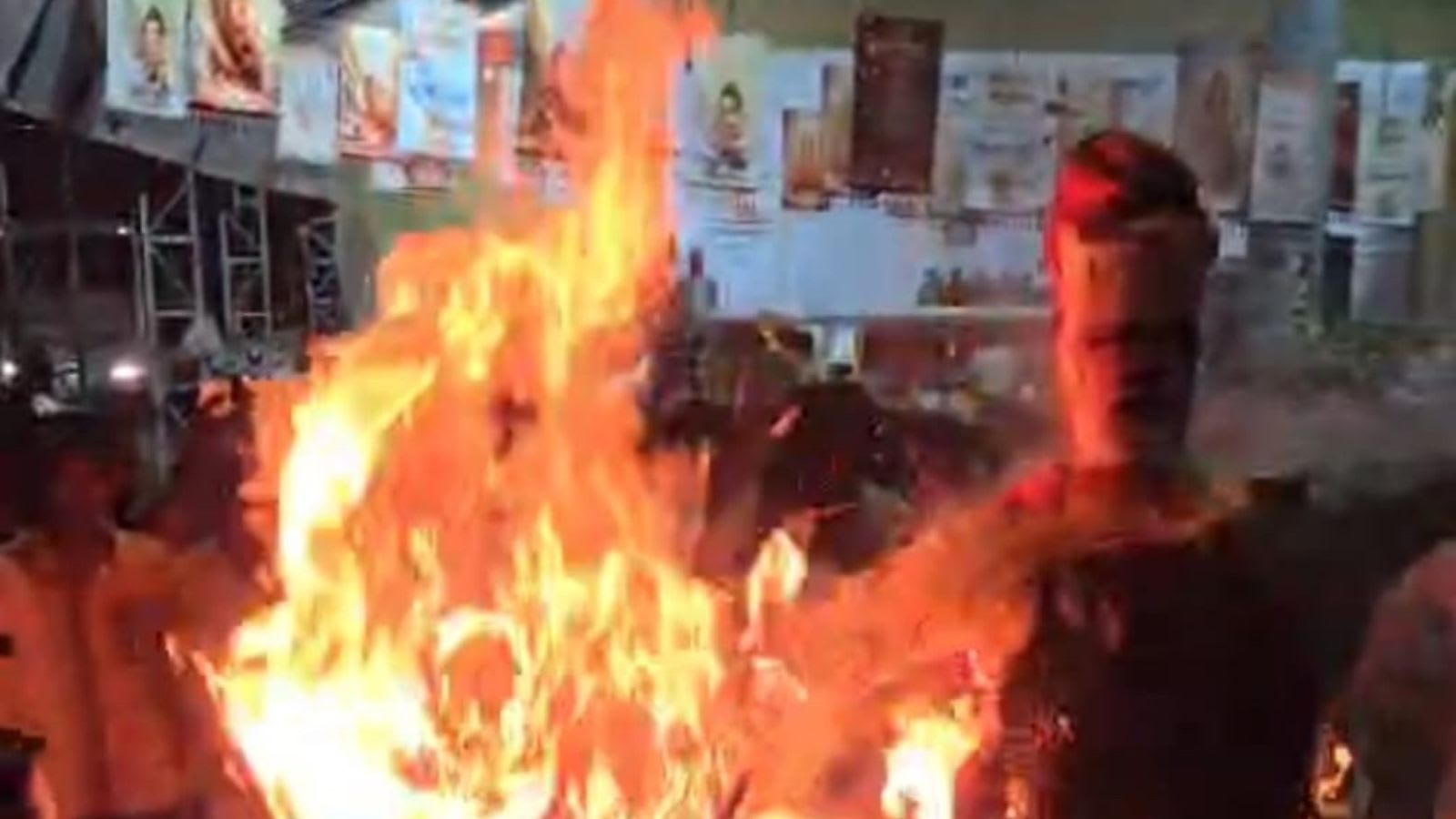
Farmers in Gujarat's Morbi district were booked after burning effigies of PM Modi and Amit Shah during a protest. The agitation stems from a long-standing dispute over high-tension power lines installed by a subsidiary of Adani Energy Solutions.
Tensions Escalate in Morbi: Farmers Face Legal Action
On September 18, the Morbi police in Gujarat registered a First Information Report (FIR) against 21 identified individuals and several unknown persons following a protest in Jetpar village. The demonstration, which occurred on the birthday of Prime Minister Narendra Modi, involved the burning of effigies representing both the Prime Minister and Home Minister Amit Shah. Authorities have charged the participants with multiple offenses, including unlawful assembly and criminal conspiracy, marking a significant escalation in the ongoing friction between local agriculturalists and state-backed infrastructure projects.
The Root of the Agrarian Conflict
The protests in Jetpar are not isolated incidents but rather the culmination of months of sustained agitation by local farmers. At the heart of this conflict is the installation of high-tension electricity transmission lines running directly across private farmland. The project is being executed by Halvad Transmission Limited, a special purpose vehicle operating under the umbrella of Adani Energy Solutions Ltd (AESL). Farmers argue that the placement of these lines poses a significant threat to their land utility, safety, and overall agricultural productivity.
Legal and Administrative Implications
The registration of the FIR, initiated by Inspector Nilesh S. Ghetiya of the Morbi Taluka police station, underscores the government's firm stance against public demonstrations targeting high-ranking officials. By invoking charges of criminal conspiracy and unlawful assembly, the state is signaling a strict approach to dissent that manifests in the destruction of state figures' effigies. This legal development creates a chilling effect on local protest movements, as farmers now face the prospect of judicial proceedings while still contending with the physical presence of the power infrastructure on their fields.
Corporate Infrastructure vs. Land Rights
This incident highlights a broader, recurring tension in India’s development narrative: the friction between large-scale industrial infrastructure and the rights of landholders. Adani Energy Solutions Ltd, as a major player in the energy sector, often works in tandem with state power mandates. For the farmers in Morbi, the installation of high-tension towers is viewed as an infringement on their livelihood. The transition from peaceful protest to provocative displays like effigy burning suggests that existing grievance redressal mechanisms may be perceived as ineffective by the local community.
Future Trends and Social Stability
Looking ahead, the situation in Jetpar serves as a bellwether for potential future unrest in regions where rapid industrialization meets traditional farming. As India continues to expand its power grid to meet growing energy demands, companies and state authorities will likely face increased scrutiny regarding land acquisition and compensation protocols. If the core demands of the farmers regarding the rerouting or compensation for these power lines remain unaddressed, it is probable that the current legal tensions will persist, potentially leading to further civil disobedience and judicial disputes between private entities and local agrarian unions.