Halliday’s latest smart glasses feature a much-improved display
Source Entity
Victoria Song
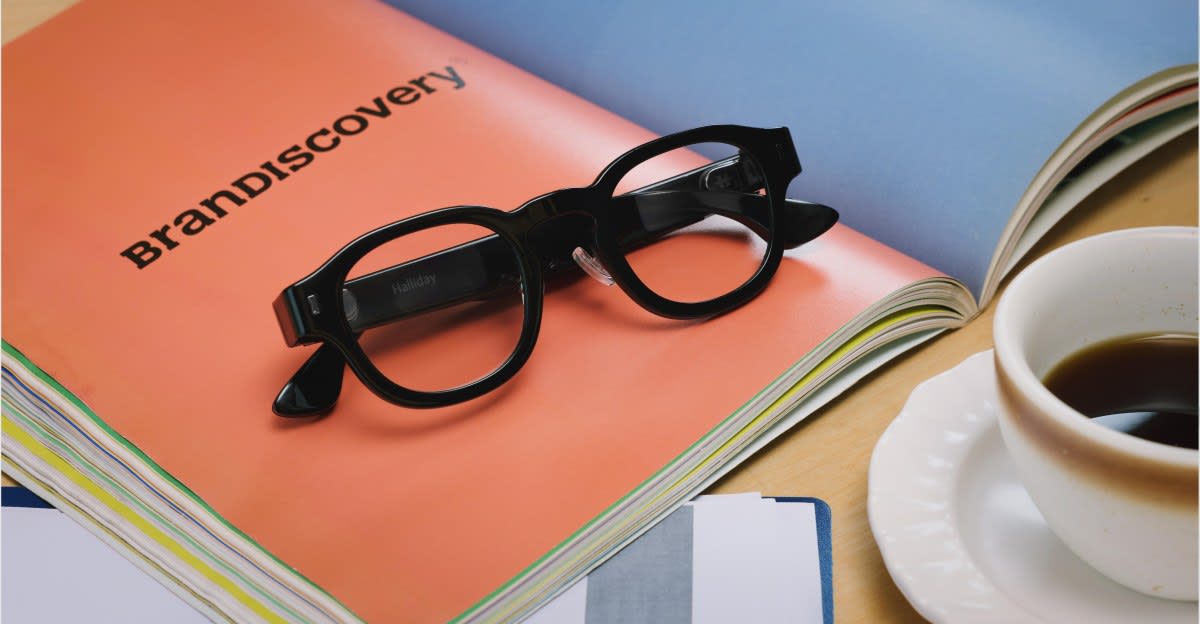
Halliday has launched its second-generation smart glasses, abandoning the flawed movable display window of its predecessor. The new model utilizes more traditional waveguide technology, offering a significantly improved and more comfortable user experience.
The Evolution of Halliday’s Smart Glasses
From Prototype to Practicality
When Halliday first unveiled its smart glasses at CES 2025, the industry was met with a bold but ultimately flawed vision. The initial design featured a tiny, movable display window embedded directly into the frame. While the concept of a modular, adjustable display was ambitious, the execution proved problematic for users. Reports from early testers highlighted that the hardware was incredibly finicky, requiring precise alignment that made the viewing experience cumbersome. Most notably, the physical strain caused by the optics—often resulting in eye fatigue within minutes—cast doubt on the product's viability in a competitive market.
Abandoning the Movable Window
The transition to the Halliday Gen 2 represents a significant pivot in the company's design philosophy. By discarding the original movable display window, Halliday has acknowledged that specialized, niche hardware configurations often fail to meet the ergonomic standards required for wearable technology. This shift toward more traditional waveguide technology is a critical move, as waveguides have become the industry standard for balancing transparency, image quality, and form factor in augmented reality (AR) wearables.
Improving the User Experience
The primary criticism of the first-generation device was the physical discomfort it induced. By moving to a more stable, integrated waveguide system, the Gen 2 glasses aim to solve the issues of eye strain and misalignment. While the new displays are not entirely invisible—users can still spot reflections if they look at the glasses from specific angles—they represent a major step forward in usability. This refinement is essential for companies looking to move past the 'gimmick' phase of smart glasses and into a space where users can wear the device for extended periods without experiencing discomfort.
The Competitive Landscape
The smart glasses market is currently defined by high-profile competitors like Meta, whose display technology has set a high bar for invisibility and integration. While Halliday’s second attempt may not reach the level of the 'nigh-invisible' screens seen in industry-leading products, the jump in performance is undeniable. By focusing on fundamental display stability rather than experimental hardware, Halliday is aligning itself with the broader industry trend of prioritizing comfort and reliability over flashy, yet impractical, features.
Future Implications for Wearable Tech
Halliday's trajectory serves as a case study for the iterative nature of hardware development in the AR sector. It highlights that the path to widespread adoption is paved with incremental improvements rather than radical, unpolished departures from standard optics. As Halliday continues to refine its waveguide implementation, the focus will likely shift toward software integration and battery efficiency. For now, the successful transition to the Gen 2 model suggests that the company is listening to user feedback and correcting course, a necessary trait for any player in the rapidly evolving wearable tech landscape.