‘Constitution, not convenience’: Harvard-affiliated Indians hit out at anti-EC protests
Source Entity
AASTHA JHA
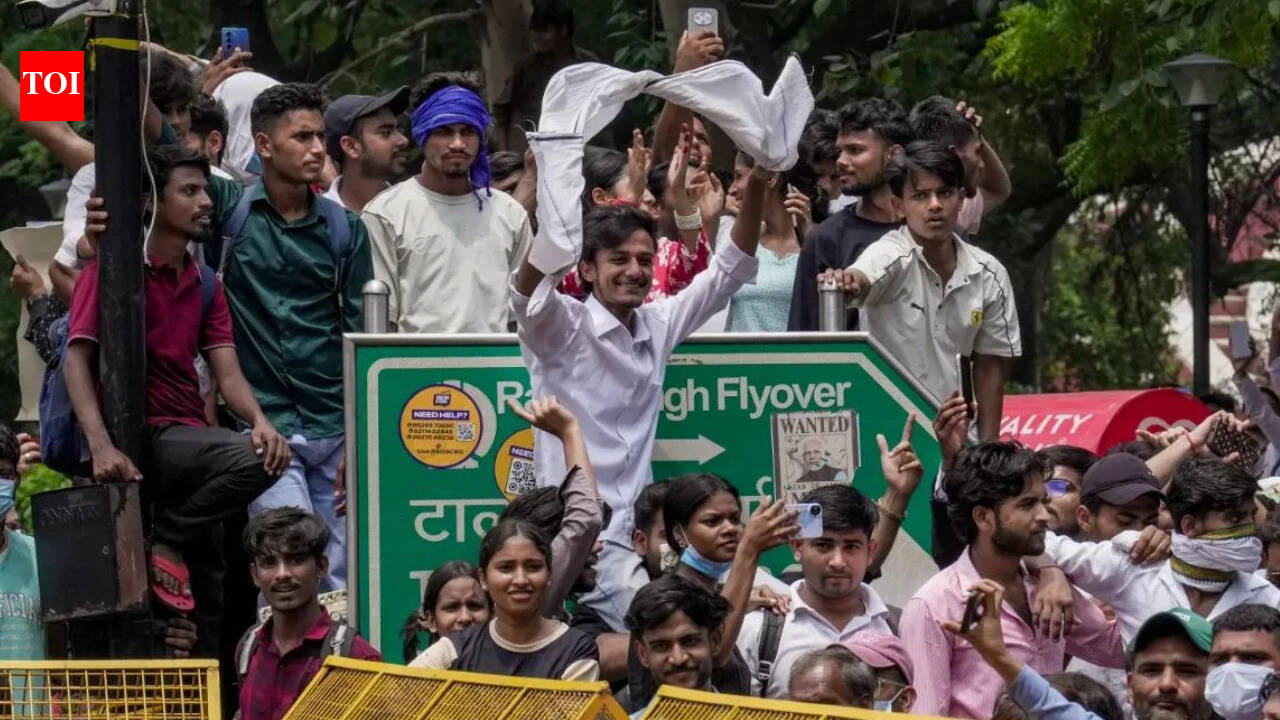
Two opposing groups of Harvard-affiliated individuals have issued conflicting statements regarding protests against India's Election Commission. The debate highlights a deep divide over the legitimacy of dissent versus the protection of constitutional institutions.
The Harvard Divide: Institutional Integrity vs. Democratic Dissent
A Clash of Perspectives
Recent developments in New Delhi have sparked a unique intellectual and political confrontation, manifested through two conflicting letters issued by groups affiliated with Harvard University. The controversy centers on the recent protests directed at Election Commissioner Gyanesh Kumar and the subsequent security response in the capital. While one group of Harvard-affiliated individuals decries the government's handling of the protests as an assault on democratic rights, a second group—the Harvard Club of India—has issued a sharp rebuttal, framing the protests as an unsubstantiated attack on the credibility of India’s constitutional pillars.
The Anatomy of the Protest
The tension escalated on October 10, when Delhi was effectively turned into a fortress. Reports indicate that approximately 41,000 security personnel were deployed to prevent planned protests, leading to the detention of nearly 7,000 individuals. Protesters, including members of the NSUI, gathered at Connaught Place to voice their opposition to the Election Commission. The initial letter from Harvard-affiliated signatories, released on October 12, characterized this police action as an 'unprecedented siege' and labeled the treatment of peaceful protesters as 'arbitrary, illegal, and unconstitutional.'
Intellectual Polarization
The discourse took a sharp turn when 44 Harvard scholars and professionals countered the narrative presented by the initial group. This dissenting faction argued that while dissent is a non-negotiable fundamental right in a democracy, it must be exercised responsibly. They specifically warned against making unsubstantiated allegations that serve to erode public trust in essential institutions like the Election Commission and the Supreme Court. By emphasizing 'Constitution, not convenience,' this group highlighted the thin line between legitimate political opposition and the potential delegitimization of state machinery.
Broader Implications for Indian Democracy
This debate underscores a broader, recurring tension in the world's largest democracy: the conflict between the right to protest and the sanctity of constitutional institutions. When academic and professional communities—even those based abroad—weigh in on domestic policy, it reflects the intense scrutiny India’s institutional health currently faces. The involvement of alumni like Shadan Farasat and Meher Pasricha in these discussions demonstrates how global academic networks are increasingly becoming arenas for debating the internal political climate of their home nations.
Future Trends and Institutional Trust
Looking forward, the debate between these two Harvard-affiliated factions serves as a microcosm of the wider societal polarization in India. As political actors continue to leverage international platforms to amplify domestic grievances, the pressure on institutions like the Election Commission to remain transparent and beyond reproach will only intensify. The challenge for India’s democracy will be to foster a culture where robust dissent can coexist with respect for institutional processes, ensuring that neither the right to protest nor the credibility of the state is permanently compromised.