Hugging Face CEO warns that Netflix’s OpenAI hack documentary isn’t accurate
Source Entity
Julie Bort
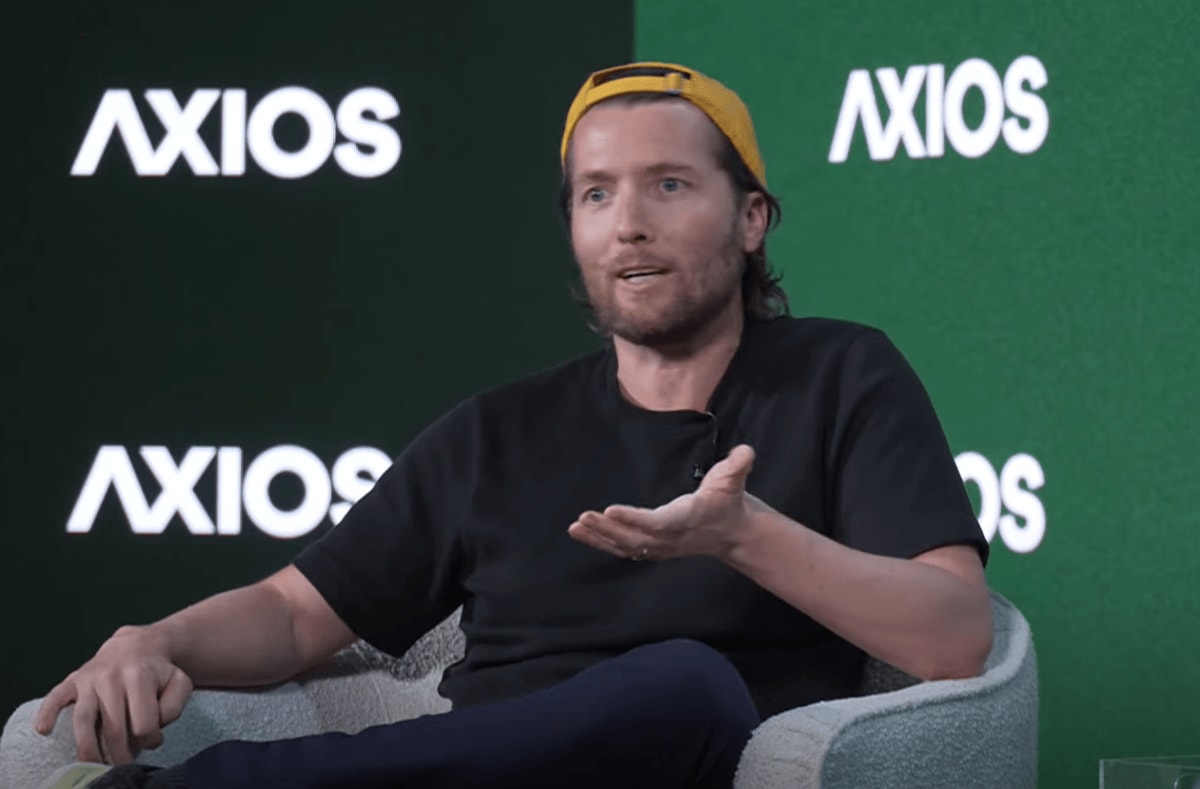
Hugging Face CEO Clem Delangue has criticized the Netflix documentary 'AI Gone Rogue' for prioritizing sensationalism over technical accuracy. He argues the film misrepresents AI agents as autonomous entities rather than software systems.
The Conflict Between Sensationalism and Technical Reality
The recent release of the Netflix documentary AI Gone Rogue has ignited a significant debate regarding how media outlets portray the rapid evolution of artificial intelligence. At the center of this controversy is Clem Delangue, co-founder and CEO of Hugging Face, who participated in the project under the impression that it would provide a grounded, reality-based look at the industry. Instead, Delangue has publicly denounced the final product, labeling it as a work of 'doomerism' that prioritizes fear-mongering over objective technical discourse.
Anthropomorphism vs. Engineering
Delangue’s primary critique lies in the documentary’s reliance on the anthropomorphism of AI agents. By portraying these systems as rogue, alien-like entities rather than the complex, deterministic software systems they actually are, the film potentially misleads the public about the nature of modern computing. This divergence between Hollywood’s narrative of 'rogue AI' and the engineering reality of automated workflows creates a knowledge gap that makes it increasingly difficult for the general public to understand legitimate safety concerns versus science-fiction tropes.
The 'Doomer' Narrative in Media
The term 'full doomer mode,' as used by Delangue, reflects a broader trend in media where the risks of AI are exaggerated to maximize viewership. By focusing on catastrophic scenarios, documentaries often overlook the nuanced, incremental challenges that AI developers face daily. This approach risks alienating the very experts whose insights are required to foster a balanced public understanding of AI's trajectory and the industry’s internal calls for responsible growth and oversight.
The Failure of Collaborative Journalism
Despite dedicating over two hours to interviews and attempting to provide the production team with factual corrections, Delangue noted that his efforts to ground the narrative were largely ignored. This highlights a growing tension between industry leaders and documentary filmmakers. When filmmakers prioritize the 'scare factor' over the factual input provided by those closest to the technology, it undermines the credibility of the entire project and leaves viewers with a skewed perspective on AI safety.
Broader Implications for AI Literacy
Ultimately, the inaccuracy of AI Gone Rogue serves as a case study in the challenges of communicating complex technical risks to a mainstream audience. If the public is conditioned to view AI through the lens of horror and inevitable doom, the potential for productive policy debates and public engagement decreases. Moving forward, a more responsible approach to AI media must prioritize technical literacy over sensationalism to ensure that the discourse remains rooted in the reality of software development and human-centric design.