From IAC to paper leaks: Why anti-system movements pose a unique political challenge | Explained
Source Entity
India Latest News: Top National Headlines Today & Breaking News | The Hindu
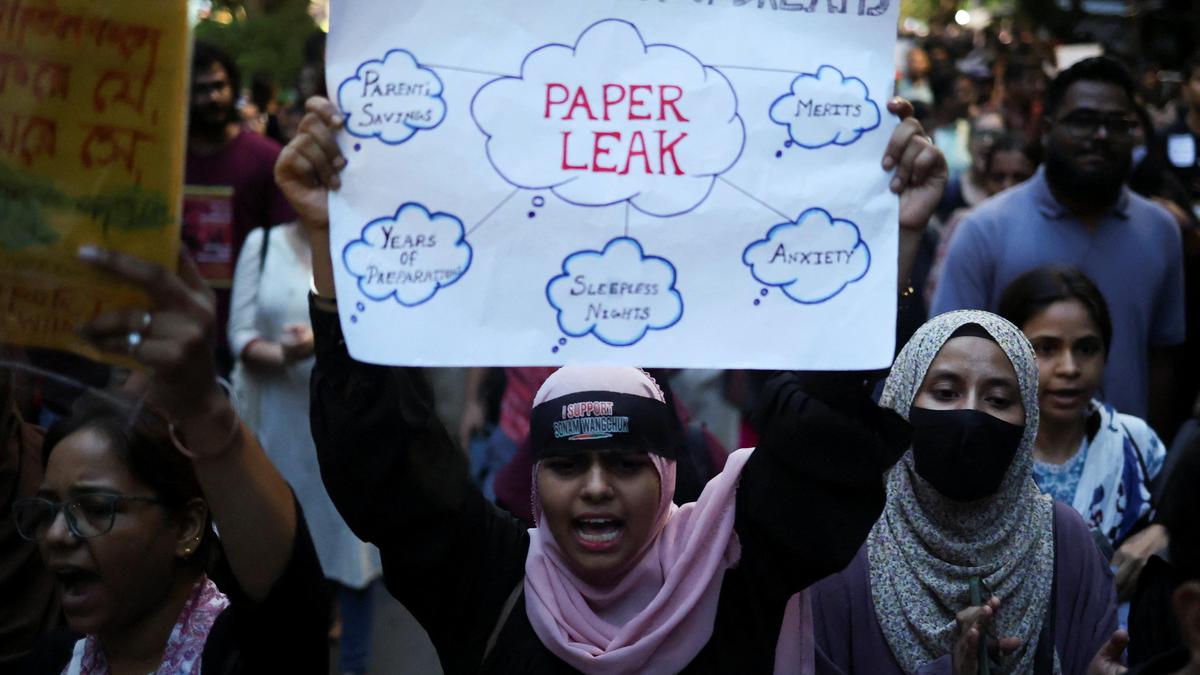
The recent student-led protests over NEET examination leaks are drawing historical parallels to the India Against Corruption movement. Both represent significant anti-establishment challenges that threaten to undermine the perceived competence and credibility of the ruling government.
The Resurgence of Anti-System Movements: From IAC to NEET
The contemporary student-led protests triggered by recurring examination paper leaks and the controversies surrounding the NEET examination have reignited a critical debate regarding the nature of anti-system movements in India. These protests are increasingly being viewed through the lens of the India Against Corruption (IAC) movement, which significantly destabilized the second United Progressive Alliance (UPA) government between 2011 and 2013.
The Anatomy of Political Disruption
While the specific catalysts for these movements differ—the IAC focused on systemic corruption, whereas current protests center on the integrity of public examinations—the structural impact on the political establishment remains strikingly similar. Both movements derive their potency from being perceived as 'outsider' challenges, unaligned with traditional political party structures, which allows them to capture the public imagination and force the government onto the defensive.
Historical Parallels and Governance Challenges
During the UPA tenure, the IAC movement successfully framed corruption as the defining failure of the Manmohan Singh administration. Similarly, the current recurring paper leaks are evolving into a litmus test for the BJP-led NDA government. The failure to secure public examinations strikes at the heart of the social contract, as citizens expect the state to provide meritocratic pathways for upward mobility. When these pathways are compromised, the perceived legitimacy of the governing authority suffers.
The 'Citizen Campaign' Strategy
Historically, the IAC movement utilized a 'citizens' campaign' narrative, a strategy that distanced it from formal political affiliations despite accusations from the UPA that it was a collaboration between the RSS and civil society activists. This ambiguity is a hallmark of modern anti-system movements; by framing themselves as non-partisan, these groups can aggregate grievances from across the political spectrum, making them difficult for the ruling party to dismiss or neutralize using traditional political discourse.
Implications for Future Governance
Looking ahead, these movements suggest a trend where specific, localized governance failures can rapidly escalate into broader political crises. For the ruling establishment, the challenge lies in the erosion of institutional trust. When the administration of public exams becomes a source of widespread anxiety rather than opportunity, the government's claim to efficient and transparent management is fundamentally weakened.
Conclusion
In summary, the transition from the anti-corruption rhetoric of the 2010s to the current focus on exam integrity highlights a shifting landscape of political accountability. As these movements continue to challenge the establishment, the ability of the government to restore public confidence in critical institutions will likely determine its political trajectory in the coming years.
Verification Required?