Infallible, impervious, precise: How IAF transformed its bombing capability
Source Entity
TOI DEFENCE DESK
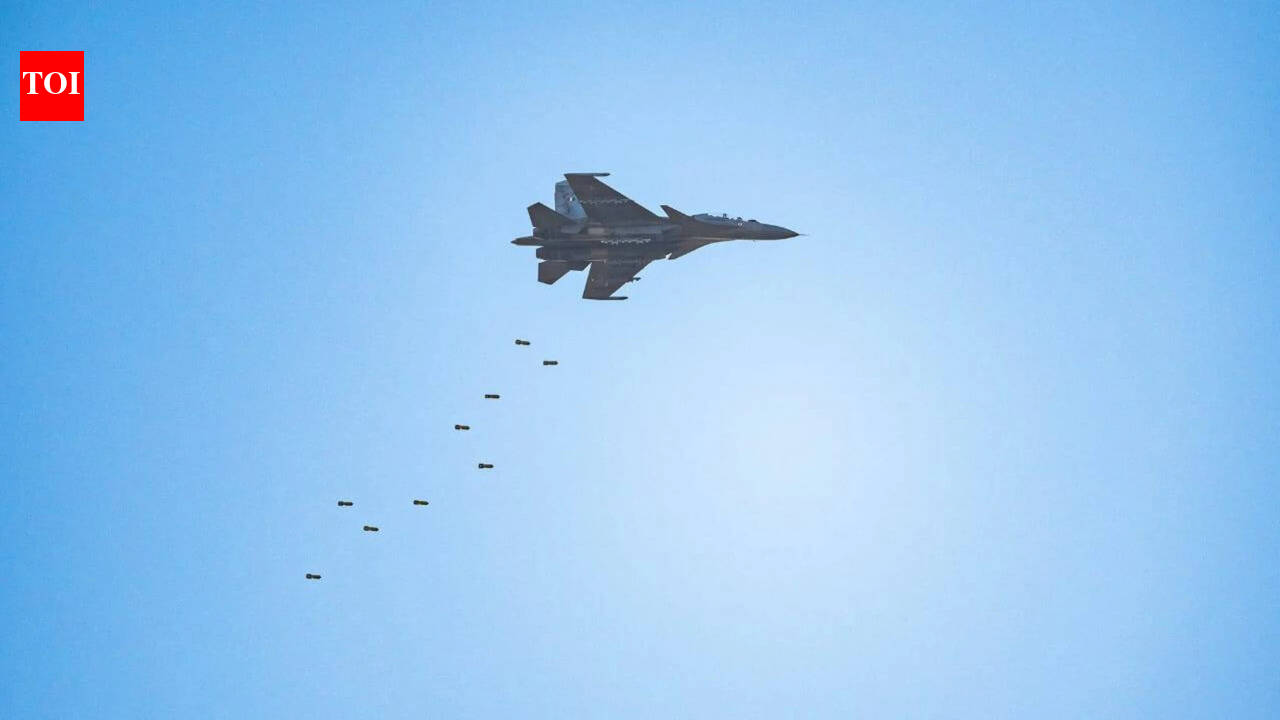
The Indian Air Force has undergone a transformative evolution in precision bombing, transitioning from improvised solutions in the 1990s to a fully autonomous, high-precision strike force by 2025. This progression highlights India's growing strategic autonomy and technological sophistication in modern warfare.
The Evolution of Indian Air Force Precision Strike Capabilities
The Indian Air Force (IAF) has undergone a profound technological and operational metamorphosis, shifting from conventional aerial bombardment to a doctrine defined by clinical, surgical precision. This evolution reflects broader trends in modern military aviation, where the emphasis has transitioned from the quantity of ordnance delivered to the accuracy of the individual strike. By minimizing collateral damage while ensuring the neutralization of high-value targets, the IAF has aligned itself with the standards of premier global air forces.
Historical Foundations: From 1971 to Kargil
The roots of this capability can be traced back to the 1971 conflict, where the IAF demonstrated early proficiency in pinpoint strikes that proved decisive in the theater of operations. However, the true turning point in the modernization journey occurred during the 1999 Kargil conflict. Faced with challenging high-altitude terrain, the IAF was compelled to innovate, utilizing improvised targeting systems to achieve results that were previously considered improbable. This period served as a critical testing ground, highlighting the gap between traditional delivery methods and the emerging requirement for precision-guided munitions.
The Strategic Shift: Balakot and Beyond
The 2019 Balakot air strikes represented a watershed moment for the Indian military. Unlike previous engagements, this operation demonstrated the deployment of advanced munitions designed for deliberate, high-stakes precision. It signaled a shift in political and military will, as the IAF proved it could penetrate contested airspace and deliver payloads with extreme accuracy under significant pressure. This operation validated years of investment in sensor technology, intelligence, surveillance, and reconnaissance (ISR) integration.
Operation Sindoor and the Future of Warfare
By 2025, the IAF solidified its status as a precision-centric force with the execution of Operation Sindoor. Unlike the earlier, developmental phases of the Kargil era, Operation Sindoor was characterized by a fully precision-weapon campaign. This signifies that precision is no longer an exception but the standard operating procedure for the IAF. The integration of modern avionics, satellite-linked targeting, and state-of-the-art guided bombs has fundamentally altered the IAF's strategic calculus.
Broader Implications and Strategic Autonomy
The ability to conduct fully precision-based campaigns grants the IAF and the Indian government significantly more strategic flexibility. In an era where global conflicts are increasingly scrutinized, the capacity to strike with surgical accuracy is a vital deterrent. Furthermore, the transition to indigenous and advanced imported precision systems reduces reliance on external partners for targeting data, thereby enhancing India’s strategic autonomy. Looking ahead, the focus will likely shift toward the integration of AI-driven targeting and swarm drone technology, ensuring that the IAF remains at the cutting edge of aerial warfare.