IIT Madras' WSAI and CODE to organise workshop on systems biology & metabolic engineering
Source Entity
Latest News: Todays Latest News Headlines from India & World | Hindustan Times | Hindustan Times
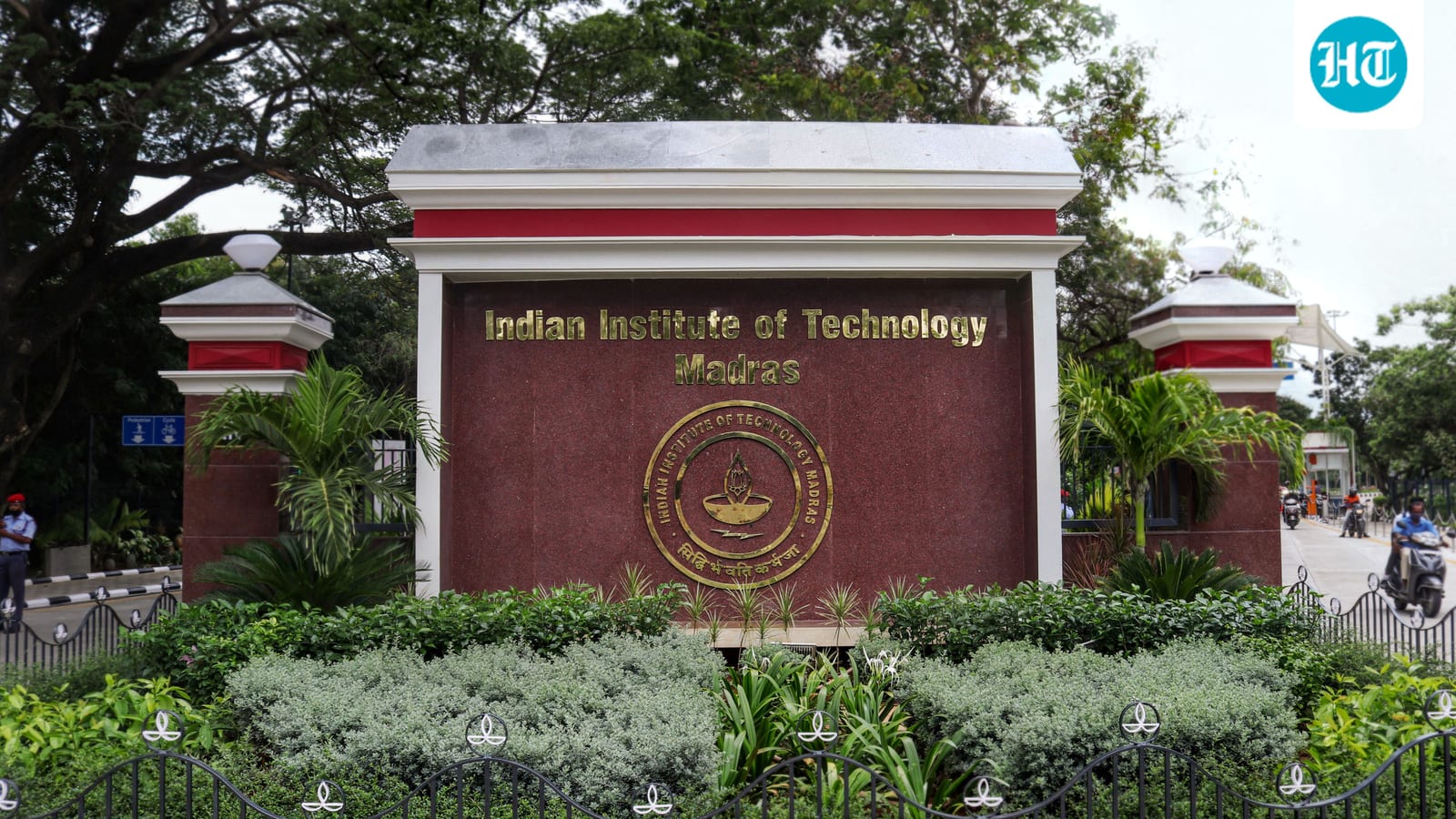
IIT Madras is hosting a national workshop titled 'Metabolic Modelling - From Pathways to Predictions' from September 16 to 18, 2026. The event, organized by WSAI and CODE, aims to train students and faculty in systems biology and metabolic engineering through hands-on sessions.
IIT Madras Spearheads Advanced Research Training in Systems Biology
The Indian Institute of Technology (IIT) Madras has announced a significant academic initiative, organizing a National Workshop titled 'Metabolic Modelling - From Pathways to Predictions.' Scheduled for September 16–18, 2026, this event represents a collaborative effort between the Wadhwani School of Data Science and AI (WSAI) and the Centre for Outreach and Digital Education (CODE). By bridging the gap between data science and biological engineering, the institution continues to position itself as a hub for interdisciplinary innovation.
Integrating Data Science with Biological Engineering
The workshop focuses on the intersection of systems biology, metabolic engineering, and constraint-based modelling. In an era where computational power is increasingly vital to understanding complex biological networks, this curriculum is designed to equip participants with the skills to translate raw biological data into predictive models. By leveraging the expertise within the Wadhwani School of Data Science and AI, IIT Madras is facilitating a deeper understanding of how metabolic pathways can be mathematically represented and optimized.
Bridging the Knowledge Gap
Designed for a diverse audience, including students, researchers, and faculty members from across India, the program utilizes a dual-methodology approach. By combining traditional classroom lectures with intensive, hands-on training sessions, the workshop ensures that participants move beyond theoretical comprehension to practical application. This pedagogical structure is essential for fostering the next generation of scientists who must navigate both the wet-lab environment and the computational landscape of modern biotechnology.
The Role of CODE and Institutional Outreach
Through the Centre for Outreach and Digital Education (CODE), IIT Madras is extending its research capacity to a broader national audience. This initiative aligns with the institute's mission to democratize access to high-level technical training. By hosting this event on-campus in Chennai, the university provides an immersive environment that encourages networking and collaborative research among peers from various academic institutions across the country.
Future Implications and Trends
As the field of metabolic engineering advances, the demand for professionals proficient in constraint-based modelling will likely surge. This workshop serves as a critical stepping stone for participants, allowing them to remain at the forefront of bio-engineering trends. The emphasis on 'predictions' suggests a focus on future-proofing biological research, where computational simulations replace time-consuming trial-and-error methodologies, ultimately accelerating innovation in sectors like medicine, agriculture, and industrial biotechnology.
Conclusion
The upcoming workshop at IIT Madras underscores the growing importance of computational biology in India's academic ecosystem. By providing a platform for rigorous training in systems biology and metabolic modelling, the institute is not only enhancing the technical capabilities of individual researchers but is also strengthening the national framework for high-impact biotechnological research. Participants are encouraged to engage fully with the three-day program to leverage these advanced computational tools in their respective fields.
Verification Required?