40 years ago July 21, 1986: Games boycott announced
Source Entity
The Indian Express
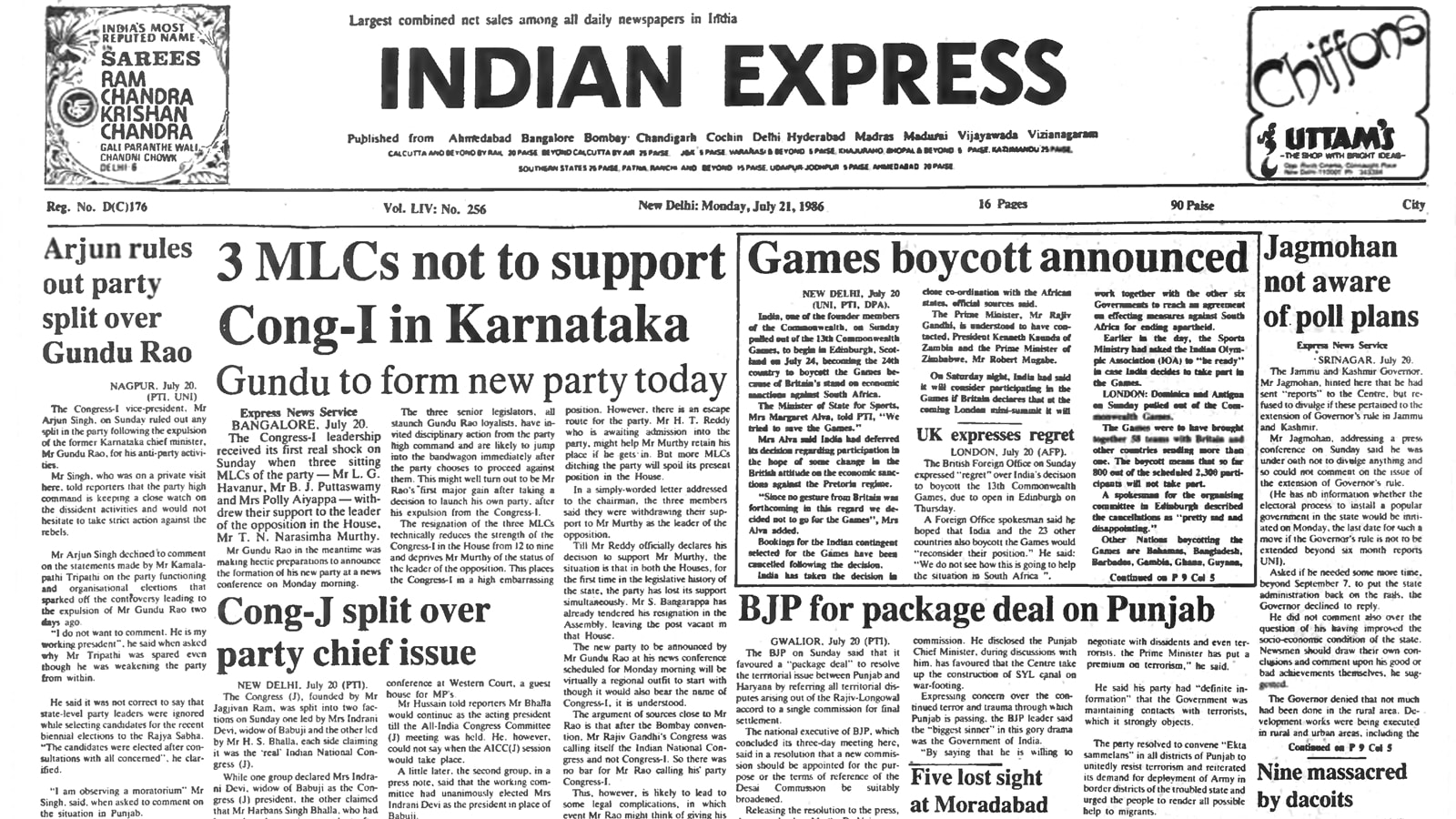
In July 1986, India joined 23 other nations in boycotting the 13th Commonwealth Games in Edinburgh to protest Britain's stance on South African sanctions. Simultaneously, Governor Jagmohan of Jammu and Kashmir remained guarded regarding reports sent to the Centre concerning the potential extension of Governor’s rule.
The 1986 Commonwealth Games Boycott: A Geopolitical Standoff
On July 21, 1986, India made a significant diplomatic statement by withdrawing from the 13th Commonwealth Games scheduled to commence in Edinburgh on July 24. This decision marked India as the 24th nation to join a widespread boycott of the event. The primary catalyst for this collective action was the British government's refusal to impose robust economic sanctions against the apartheid regime in Pretoria, South Africa.
Diplomatic Tensions and the Role of Sports
The Minister of State for Sports at the time, Margaret Alva, articulated the gravity of the situation, noting that the government had exhausted all avenues to save the Games before finalizing the withdrawal. India’s decision to defer its participation until the final days reflected a desperate hope that the British government, led by Prime Minister Margaret Thatcher, might shift its policy regarding the Pretoria regime. However, the lack of movement on sanctions made the boycott an unavoidable gesture of solidarity with the global anti-apartheid movement.
The Broader Context of Anti-Apartheid Activism
The boycott of the 1986 Edinburgh Games remains a hallmark example of how international sporting events have historically functioned as stages for political protest. By refusing to compete, these 24 nations sought to isolate South Africa on the global stage, pressuring the Commonwealth and the United Kingdom to adopt a firmer stance against institutionalized racism. This event underscored the deep-seated tension between the Commonwealth’s stated values of equality and the geopolitical pragmatism exercised by its leading member, Britain.
Domestic Turbulence in India
While the national focus was drawn to the international stage in Edinburgh, India was simultaneously grappling with significant internal political challenges. Governor Jagmohan of Jammu and Kashmir, during a press conference held during this same period, addressed the volatile political climate in his state. His cryptic remarks regarding reports sent to the central government highlighted the fragility of the political situation in the region.
Governance and Accountability in the 1980s
Governor Jagmohan's refusal to divulge the contents of his communications with the Centre regarding the extension of Governor’s rule speaks to the high-stakes nature of governance during that era. The juxtaposition of a global diplomatic boycott and the internal administration of Jammu and Kashmir captures the multifaceted pressures on the Indian state in 1986. Both incidents underscore a period where internal stability and external moral positioning were inextricably linked in the national discourse.
Legacy and Future Implications
The 1986 boycott remains a poignant reminder of the power of collective diplomatic action. It set a precedent for how nations use international platforms to advocate for human rights, a trend that continues to influence modern international relations. By prioritizing global justice over athletic prestige, India and its fellow boycotting nations demonstrated the enduring importance of aligning national policy with international humanitarian values, even at the cost of traditional sporting participation.