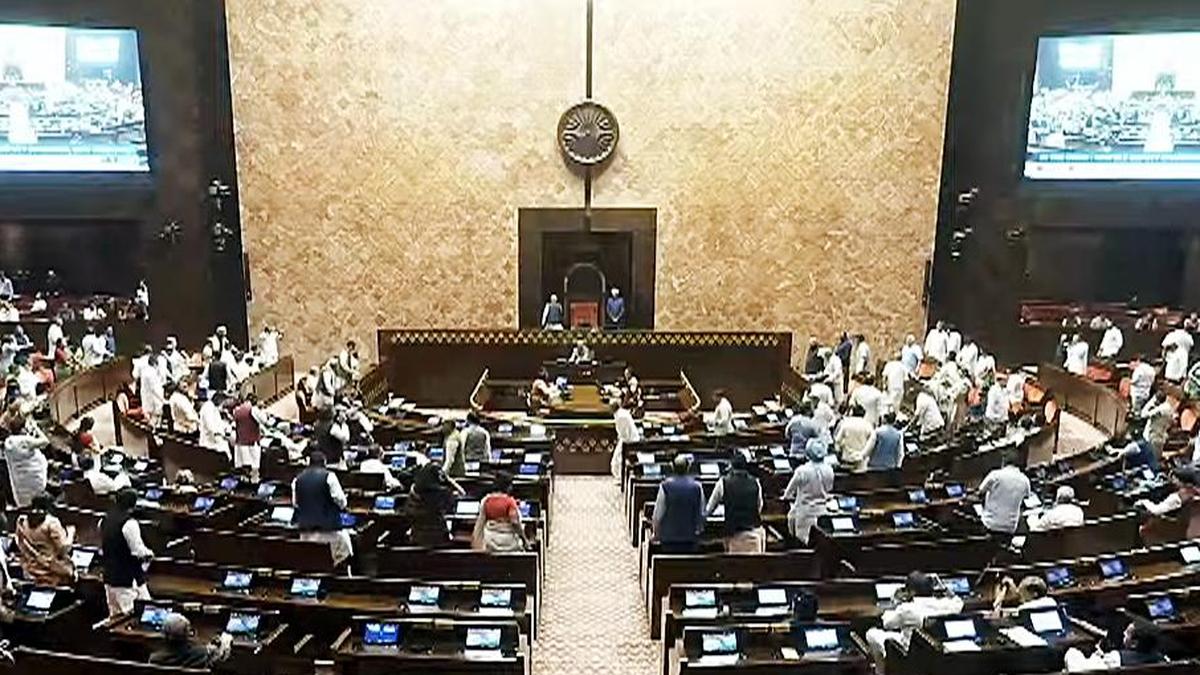
Rajya Sabha adjourned again; Opposition MPs seek apology from Amit Shah
Source Entity
India Latest News: Top National Headlines Today & Breaking News | The Hindu
The Indian government has introduced the 2026 Public Examinations Amendment Bill to impose stricter penalties, including 10-year prison terms and ₹50 lakh fines, for paper leaks. This legislative move follows intense nationwide protests led by the Cockroach Janta Party and the subsequent resignation of Education Minister Dharmendra Pradhan.
Legislative Overhaul: Addressing the Examination Crisis
The introduction of the Public Examinations (Prevention of Unfair Means) Amendment Bill, 2026, marks a significant pivot in the Indian government’s approach to academic integrity. By proposing a 10-year prison sentence and a ₹50 lakh fine for those involved in paper leaks, the state is signaling a transition from punitive measures toward a more deterrent-heavy framework. This legislative effort aims to amend the existing two-year-old framework, which had faced scrutiny for failing to curb the rising frequency of examination malpractices.
The Catalyst: Protests and Political Pressure
This legislative action did not occur in a vacuum; it follows weeks of sustained civil unrest. The Cockroach Janta Party (CJP) spearheaded nationwide student protests, specifically targeting the systemic failures surrounding the NEET(UG) question paper leak. The pressure generated by these youth-led movements was significant enough to force a shift in the political landscape, culminating in the resignation of Union Education Minister Dharmendra Pradhan. The current bill serves as a direct response to the demands for accountability raised by these protesters.
Parliamentary Dynamics and Resolution
For nearly a week, the Lok Sabha faced a legislative logjam as the opposition raised concerns regarding police conduct during the July 20 march to Parliament. The deadlock was only broken through delicate, behind-the-scenes negotiations facilitated by Speaker Om Birla. The agreement to discuss the 2026 Amendment Bill reflects a rare moment of consensus, necessitated by the gravity of the student welfare issues at stake and the need to restore public trust in the examination system.
Structural Reforms: Speed and Severity
Beyond the increased financial and custodial penalties, the 2026 Bill introduces crucial procedural reforms. By instituting a two-month cap on investigations and providing statutory backing for fast-track courts, the government is attempting to eliminate the long delays that previously allowed offenders to evade justice. This 'fast-track' approach is intended to provide immediate closure to affected students, ensuring that the judicial process keeps pace with the urgency of the academic calendar.
Future Implications and Governance
Union Minister of State in the PMO, Jitendra Singh, has framed this bill as a fundamental commitment to the welfare of the youth. As the bill moves through the Lok Sabha, its success will be measured by its ability to deter organized networks that profit from examination irregularities. The shift toward a 10-year sentencing guideline and rigorous time-bound investigations suggests that the government is bracing for a more aggressive enforcement era in the administration of public entrance examinations.
Conclusion
The 2026 Amendment Bill represents a critical juncture in the intersection of student advocacy and legislative reform. By balancing the need for strict punitive measures with a streamlined judicial process, the government hopes to stabilize the examination system. Whether these reforms will effectively curb the culture of leaks remains to be seen, but the legislative intent is clear: the state is prioritizing the structural integrity of public examinations as a matter of national importance.
Multiple Citing Sources
Verification Required?