India, China open door to clarifying LAC perceptions
Source Entity
India Latest News: Top National Headlines Today & Breaking News | The Hindu
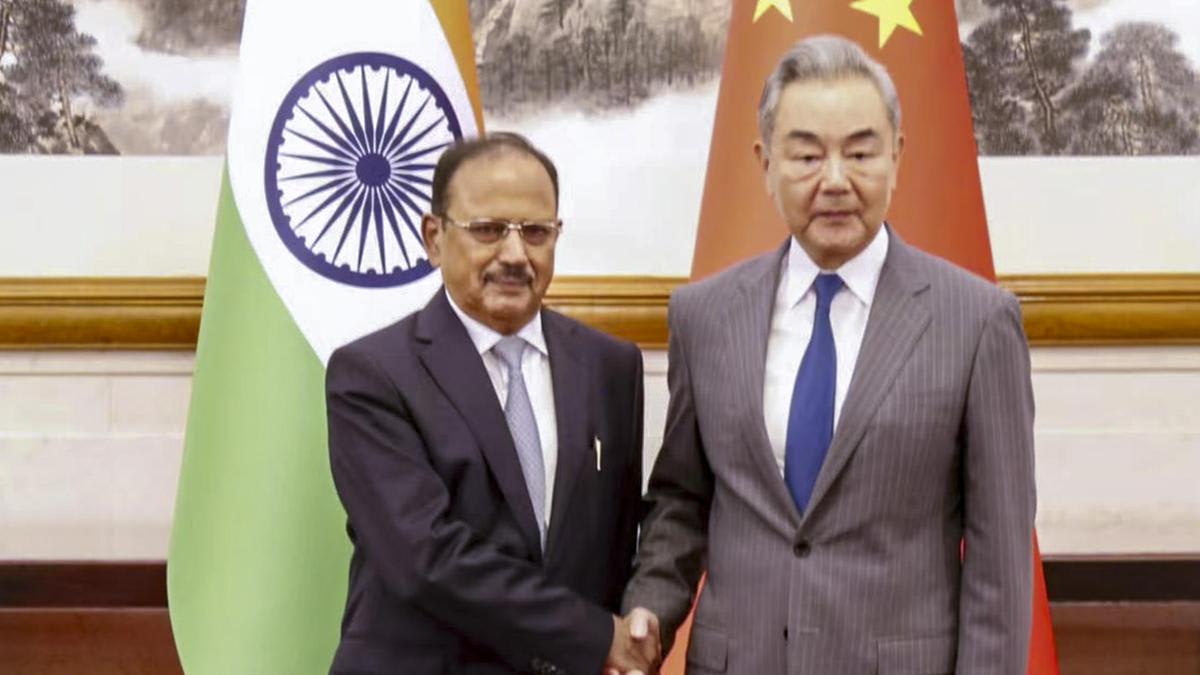
India and China have reached an eight-point consensus during the 25th round of Special Representatives' talks to improve border management. The agreement focuses on clarifying LAC perceptions, establishing new hotlines, and advancing boundary delimitation negotiations.
Diplomatic Thaw: Analyzing the 25th Round of India-China Border Talks
A Renewed Framework for Border Stability
The 25th round of Special Representatives’ talks between India’s National Security Adviser Ajit Doval and Chinese Foreign Minister Wang Yi marks a significant pivot in bilateral relations. By focusing on the 'Line of Actual Control' (LAC), both nations have acknowledged that differing perceptions of the border are the primary drivers of friction in both the Western and Eastern sectors. The resulting eight-point outcome document signals a move toward institutionalizing communication to mitigate the risk of accidental escalation.
Operationalizing De-escalation
Central to the agreement is the establishment of new military meeting points and dedicated border hotlines. These mechanisms are designed to provide real-time communication channels for field commanders, effectively serving as a safety valve to prevent local misunderstandings from spiraling into broader military confrontations. By emphasizing 'effective border management,' both sides are prioritizing operational stability, which remains a prerequisite for any broader diplomatic normalization.
Addressing the 'Perception Gap'
Perhaps the most notable outcome is the explicit commitment to discuss the respective perceptions of the LAC. Historically, the absence of a mutually agreed-upon line has led to frequent standoffs. The agreement to explore an 'early harvest' of boundary delimitation in specific sectors suggests a pragmatic, incremental approach to the larger boundary question, moving away from rigid, all-or-nothing negotiations toward sector-specific clarity.
The Role of Expert Groups
The reactivation of Expert Groups and Working Groups to advance the framework for settlement indicates that both New Delhi and Beijing are seeking to return to established diplomatic protocols. By aligning these discussions with previous bilateral agreements, the current leadership is attempting to build a bridge back to a period of more predictable border management, provided that the political will holds on both sides.
Geopolitical Implications and Future Trends
These talks occur against the backdrop of heightened anticipation regarding President Xi Jinping's potential visit to India for the BRICS Summit. The progress achieved in Beijing acts as a crucial confidence-building measure. If these mechanisms successfully reduce tensions on the ground, it could clear the path for high-level political engagement. However, as experts note, this remains a long road; while these steps are welcome, they represent the beginning of a complex process of rebuilding trust and resolving decades-old territorial disputes.
Conclusion
The consensus reached by Doval and Wang Yi represents a cautious but necessary step toward stabilizing a volatile border. By prioritizing transparency and communication, India and China have created a roadmap to manage their differences. The coming months will be critical in determining whether these agreements translate into tangible peace on the ground or remain mere diplomatic gestures.
Verification Required?