‘Nuclear weapons not routine instruments of statecraft’: India’s warning to Pakistan at UN
Source Entity
AYUSH PANDEY
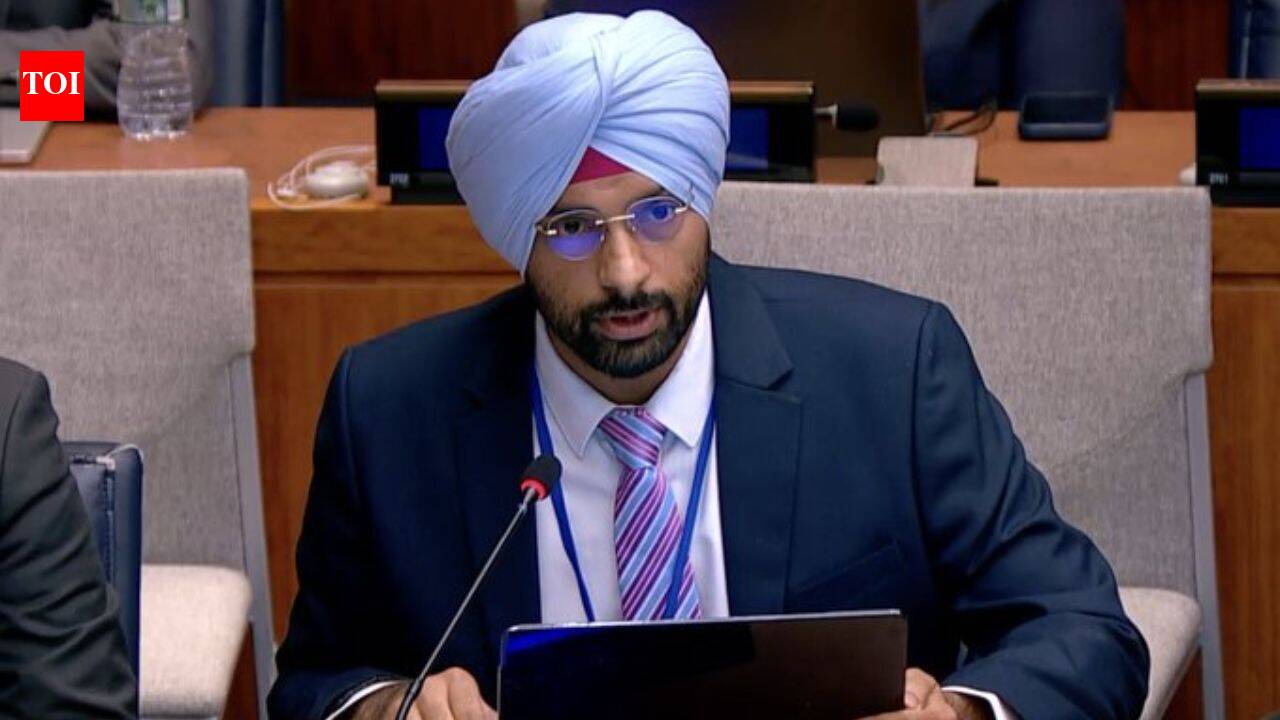
India has strongly rebuked Pakistan at the UN for its attempts to leverage nuclear threats and spread misinformation regarding Jammu and Kashmir. New Delhi emphasized that it will not tolerate nuclear blackmail and condemned Pakistan's history of state-sponsored terrorism.
India’s Diplomatic Offensive at the United Nations
In a series of firm diplomatic maneuvers at the United Nations General Assembly in October 2026, India has taken a decisive stance against Pakistan’s rhetoric. Represented by Anmol Sher Singh Bedi at the First Committee and MP Mahima Kumari Mewar at the Fourth Committee, New Delhi utilized its 'Right of Reply' to dismantle Pakistan’s narrative on regional stability and the status of Jammu and Kashmir. This diplomatic push reflects a hardening of India’s position, signaling that it will no longer remain passive in the face of what it describes as systematic abuse of international forums.
Confronting Nuclear Posturing
The core of India's recent diplomatic warning centers on the rejection of nuclear intimidation. By explicitly stating that "nuclear weapons are not routine instruments of statecraft," Indian representatives have drawn a clear red line. Historically, South Asia has lived under the shadow of nuclear brinkmanship; however, New Delhi’s assertion that it will not bow to "nuclear blackmail" suggests a strategic move to devalue Pakistan's tactical nuclear posturing. This is a significant shift in diplomatic tone, aiming to isolate the credibility of Pakistan’s threats on the global stage.
Addressing the Kashmir Narrative
At the Fourth Committee, which handles decolonization and special political issues, Mahima Kumari Mewar launched a scathing critique of Pakistan’s attempts to internationalize the issue of Jammu and Kashmir. India categorized Pakistan’s statements as "lies and falsehoods," reinforcing the legal reality that the region is an integral part of the Indian Union. By calling out the misuse of the UN platform, India is effectively attempting to strip Pakistan of its ability to influence international opinion regarding the internal governance of the Union Territory.
Highlighting Regional Instability and Terrorism
Beyond diplomatic rhetoric, India’s intervention highlighted the humanitarian cost of Pakistan’s policies. Ms. Mewar pointed to the actions of Pakistani armed forces and their proxies, accusing them of killing innocent civilians who were advocating for basic rights. This move shifts the focus from abstract political debates to the tangible impact of state-sponsored terrorism. By linking Pakistan’s internal record—characterized by military dictatorships and sham elections—to its regional aggression, India is framing the narrative around Pakistan’s own democratic deficits.
Implications for Future Bilateral Relations
This confrontation at the UN underscores the deep-seated mistrust that continues to define India-Pakistan relations. The mention of the Indus Waters Treaty and the broader context of regional security suggests that India is prepared to leverage multiple diplomatic and technical frameworks to exert pressure. As India continues to assert its regional leadership, these clashes at the UN serve as a barometer for the limited prospect of immediate normalization between the two nations.
Conclusion
India’s strategic use of the 'Right of Reply' serves as a clear indicator of its evolving foreign policy: proactive, firm, and uncompromising on issues of national sovereignty. By challenging both the nuclear threats and the disinformation campaigns originating from Islamabad, New Delhi is reinforcing its position as a responsible global actor while simultaneously creating a diplomatic perimeter that Pakistan is finding increasingly difficult to breach.
Multiple Citing Sources