India's GDP grows 7.8% in Q1: Factors powering the economy despite global turmoil
Source Entity
SHIVANGHI PAYAL
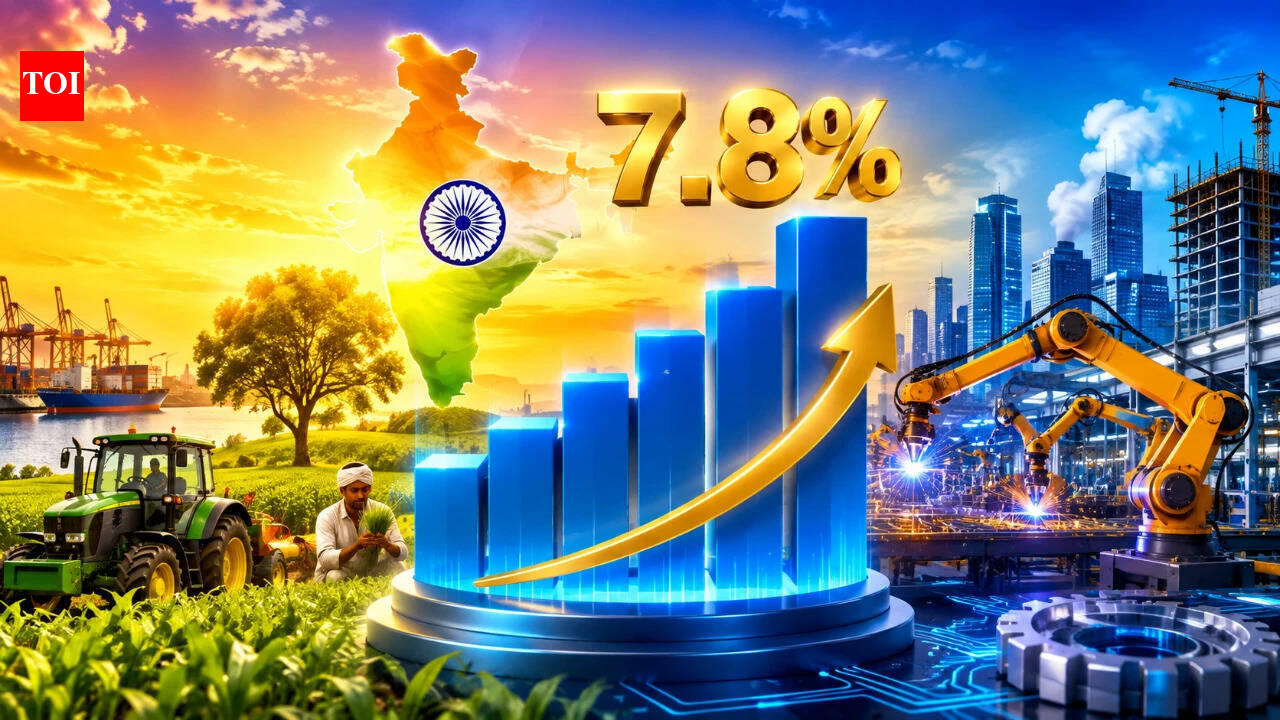
India's economy achieved a robust 7.8% growth in Q1 of the 2026-27 fiscal year, fueled by strong manufacturing and service sectors. Despite global oil shocks and regional conflicts, the nation exceeded central bank expectations, leading to upward revisions in historical growth data.
India’s Economic Resilience: A 7.8% Q1 Surge
India has demonstrated remarkable economic fortitude, recording a 7.8% GDP growth rate for the April-June quarter of the 2026-27 financial year. This performance, announced by the National Statistics Office (NSO), has defied widespread concerns regarding the potential economic fallout from geopolitical instability in West Asia and the unpredictable impacts of El Nino. By outperforming the central bank’s initial projections of 7%, the nation has signaled a sustained period of domestic demand and industrial vitality.
The Engines of Growth: Manufacturing and Services
The primary drivers behind this expansion have been the manufacturing and services sectors. Notably, the manufacturing sector registered a significant 9.2% growth rate during this period. This surge, coupled with a healthy expansion in construction, highlights a shift toward industrial strengthening. As supply chain issues and global uncertainties persist, the ability of these sectors to maintain such a 'healthy clip' suggests that domestic productivity is effectively insulating the economy from external shocks.
Navigating Global Uncertainties
Despite facing what some have termed the largest oil shock in the history of capitalism, India’s performance has been described as a 'herculean feat.' The government has emphasized that the collective strength of the domestic market—bolstered by increased investment and exports—has successfully offset the adverse effects of global instability. This growth trajectory reflects a transition where India is increasingly reliant on internal consumption rather than external tailwinds to drive its national output.
Statistical Revisions and Historical Context
An important aspect of this report involves the upward revision of GDP data for previous financial years. By incorporating more accurate producer price indices, the NSO has provided a clearer, more optimistic view of the economy’s recent history, including an upward adjustment of the March quarter growth to 8.6%. These revisions suggest that the economic foundation was stronger than previously estimated, lending further credibility to the current 7.8% growth figure.
Future Outlook and Policy Implications
While the current momentum is undeniably strong, analysts maintain a cautious outlook regarding the remainder of the fiscal year. The potential for a growth slowdown remains, and the discrepancy between the RBI’s earlier 6.7% projection and actual performance necessitates a recalibration of future economic policy. The government and the central bank are now tasked with balancing this high-growth environment against the potential risks of inflation and global supply chain volatility.
Conclusion
In summary, India’s 7.8% growth in the first quarter of the 2026-27 fiscal year is a testament to the structural resilience of its economy. By effectively leveraging manufacturing and services to counter global volatility, India has positioned itself as a robust outlier in the current economic climate. Moving forward, the focus will likely remain on sustaining this momentum while managing the lingering risks that threaten long-term stability.
Multiple Citing Sources