India's first privately-developed rocket reaches orbit on dramatic debut launch
Source Entity
Stephen Clark
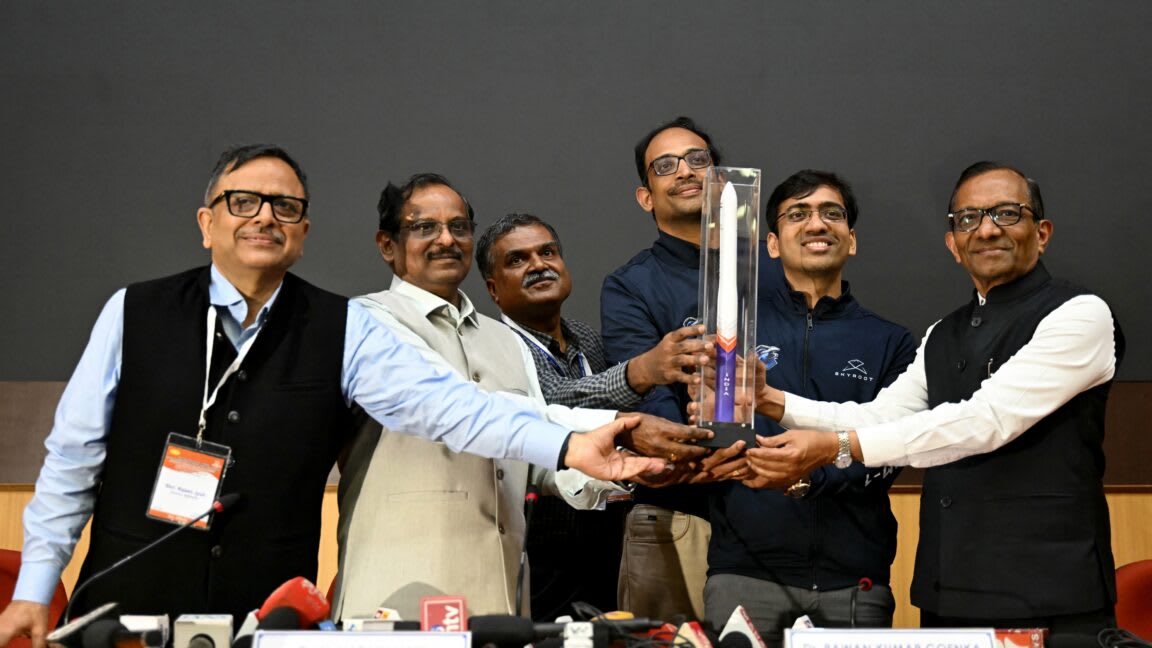
Skyroot Aerospace has made history with Mission Aagaman, successfully placing India's first privately developed rocket, Vikram-1, into orbit on its maiden flight. The launch from Sriharikota marks a global milestone, as it is the first private company to reach orbit on its first attempt.
A Historic Leap for Indian Space Exploration
India has entered a new era of space exploration with the successful maiden flight of the Vikram-1, developed by Hyderabad-based Skyroot Aerospace. On Saturday, July 18, 2026, the rocket successfully reached a 280-mile-high orbit, marking the first time a fully commercial satellite launcher from India has achieved orbital insertion. This event, designated as Mission Aagaman, represents a pivotal shift in the Indian aerospace landscape, transitioning from a state-led monopoly under ISRO to a vibrant, private-sector-driven ecosystem. The launch, which took place from the Satish Dhawan Space Centre on Sriharikota Island, was not without tension, as a last-minute technical glitch caused a delay of over thirty minutes before the solid-fueled first stage finally ignited.
Unprecedented Global Achievement
What distinguishes the Vikram-1 launch from other global milestones is the efficiency of its debut. According to the reports, Skyroot Aerospace achieved orbit on its very first attempt—a feat that is virtually unheard of in the high-risk domain of private orbital launches. To put this in perspective, SpaceX, the current global leader in commercial spaceflight, required three failed attempts before successfully reaching orbit. This immediate success signals a high level of technical maturity and precision in Skyroot's engineering process, positioning India as a formidable competitor in the global small-satellite launch market. By bypassing the typical 'trial and error' phase seen in Western startups, Skyroot has demonstrated a streamlined approach to rocket development.
Technical Specifications and Operational Execution
While the Vikram-1 is described as modest in size compared to the massive workhorse rockets typically deployed by national space agencies, its design is optimized for the growing demand for small-satellite deployments. The use of a solid-fueled first stage booster provided the necessary thrust to propel the vehicle from the Bay of Bengal launch site into its target orbit. The operational handling of the launch—specifically the ability of the ground crew to resolve a technical problem during the countdown—highlights the robustness of the mission's support infrastructure. The successful climb to a 280-mile orbit proves that the vehicle's trajectory and staging sequences were precisely calibrated.
Catalyst for the Indian Spacetech Ecosystem
The success of Mission Aagaman is expected to act as a catalyst for a wave of other Indian spacetech startups. For years, the Indian private sector was limited to component manufacturing for government projects, but the Vikram-1 success validates the viability of end-to-end private launch capabilities. This victory is likely to attract increased venture capital into the Hyderabad and Bangalore tech hubs, where firms are already designing the next generation of space hardware. The focus is now shifting toward more ambitious goals, including the development of reusable rockets, which would significantly lower the cost of access to space and allow Indian firms to compete on price with global giants.
Broader Implications and Future Trends
Looking forward, the success of Skyroot Aerospace suggests a trend toward the 'democratization' of space in India. With more private firms now aiming for the skies, the burden of satellite deployment will shift from government agencies to commercial providers, allowing ISRO to focus on deep-space exploration and interplanetary missions. The emergence of a competitive private launch market in India will likely lead to faster innovation cycles and a surge in the deployment of commercial constellations for telecommunications, Earth observation, and climate monitoring. The trajectory set by Vikram-1 indicates that India is no longer just a participant in the global space race but is emerging as a hub for cost-effective, high-reliability commercial launch services.
Conclusion
In summary, the debut of the Vikram-1 is more than just a successful rocket launch; it is a proof of concept for the entire Indian private space industry. By reaching orbit on the first attempt, Skyroot Aerospace has set a new global benchmark for commercial space startups. As other Indian firms follow suit, the nation is poised to become a central pillar of the global space economy, blending technical precision with commercial agility.
Multiple Citing Sources