Govt clears new investment policy for urea sector
Source Entity
Latest News: Today's Latest News Headlines from India & World | Hindustan Times | Hindustan Times
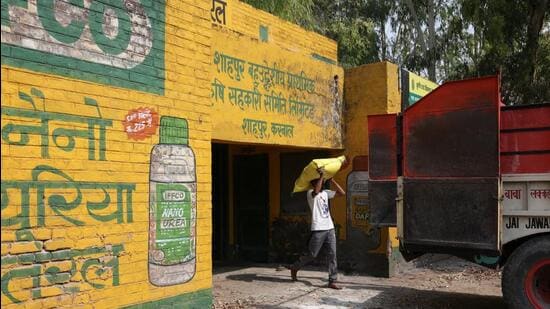
The Indian government has approved a new investment policy for the urea sector to enhance domestic production capacity, which currently stands at 26.94 million tonnes across 33 operational units.
Strategic Overhaul of India's Urea Investment Landscape
The Indian government has officially cleared a new investment policy aimed at revitalizing the urea sector. This move comes at a critical juncture for India's agricultural infrastructure, as the nation seeks to balance the high demand for nitrogenous fertilizers with the need for sustainable and cost-effective production methods. By opening the doors to new investments, the government aims to modernize the existing industrial base and reduce the long-term reliance on volatile international markets.
Analyzing Current Production Capacity
Currently, India operates 33 urea manufacturing units with a combined annual installed capacity of 26.94 million tonnes. While this represents a significant industrial footprint, the gap between domestic production and total demand often necessitates heavy imports to meet the needs of the farming community. The existing capacity is a blend of older plants and newer installations, some of which may be operating below peak efficiency. The new policy is likely designed to address these inefficiencies by encouraging the setup of state-of-the-art facilities that can maximize output per unit of feedstock.
The Drive Toward Self-Reliance (Atmanirbhar Bharat)
A primary driver for this policy shift is the goal of achieving greater self-sufficiency in urea production. Urea is a cornerstone of Indian farming, and any disruption in the global supply chain or spike in import prices can lead to inflation in food prices and economic distress among farmers. By incentivizing domestic investment, the government is leveraging the 'Atmanirbhar Bharat' (Self-Reliant India) initiative to ensure that the domestic supply chain is robust enough to withstand global shocks, thereby safeguarding national food security.
Technological Evolution and Environmental Concerns
Modern investment in the urea sector is no longer just about quantity, but about the quality and sustainability of production. The new policy is expected to encourage a shift toward more energy-efficient technologies and potentially 'green urea' initiatives. Traditional urea production is highly energy-intensive and relies heavily on natural gas. By attracting new capital, the government can steer the industry toward cleaner feedstocks and lower emission standards, aligning India's agricultural goals with its broader international climate commitments.
Economic Implications for the Fertilizer Industry
From a business perspective, a new investment policy signals a shift in the regulatory environment, potentially offering more favorable terms for private players to enter or expand within the sector. This could lead to increased competition, driving innovation in plant management and distribution logistics. Furthermore, expanding the capacity beyond the current 26.94 million tonnes will likely create significant employment opportunities in the industrial belts where these plants are located, stimulating local economies and supporting ancillary industries.
Conclusion: A Roadmap for Agricultural Stability
In summary, the clearance of the new investment policy for the urea sector is a strategic move to fortify India's agricultural backbone. By building upon the existing foundation of 33 operational units, the government is positioning the country to move from a state of import dependency to one of industrial strength. If implemented effectively, this policy will not only increase the 26.94 million tonne capacity but will also modernize the sector, ensuring that Indian farmers have consistent, affordable access to essential nutrients.
Verification Required?