Knowledge Nugget: Why Green Energy Corridor Phase-III matters for India’s renewable energy push
Source Entity
Roshni Yadav
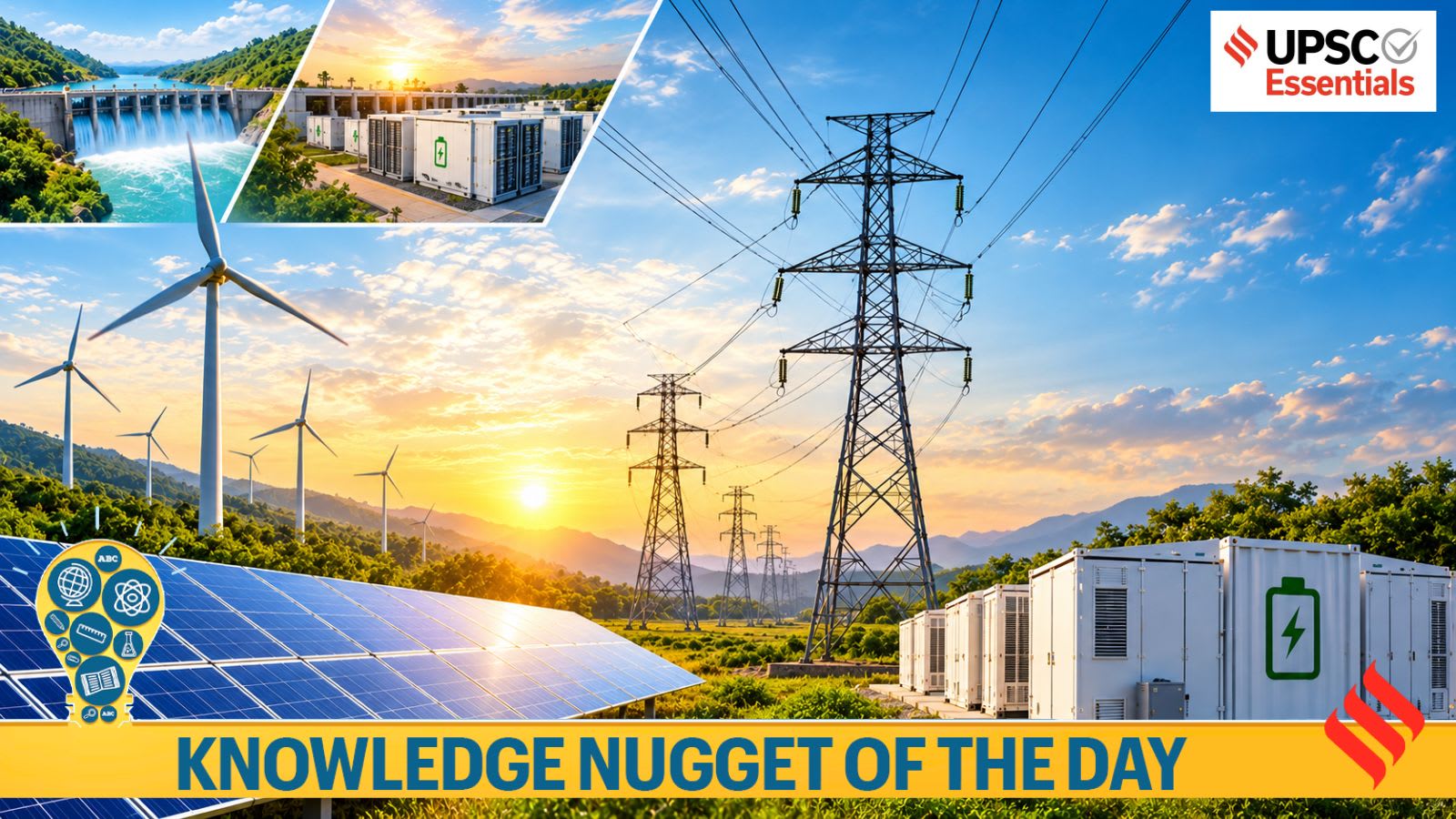
The Union Cabinet has approved the Green Energy Corridor Phase-III, an ambitious Rs 1.86 lakh crore project designed to evacuate 135 GW of renewable energy. This initiative is critical for strengthening India's grid infrastructure and integrating intermittent clean energy sources effectively.
Strengthening India’s Green Energy Infrastructure: The GEC-III Initiative
On September 30, the Union Cabinet approved the third phase of the Green Energy Corridor (GEC-III), a landmark policy move aimed at fortifying India’s electrical grid for a sustainable future. With a significant financial outlay of Rs 1,86,405 crore, this initiative seeks to facilitate the evacuation of up to 135 gigawatts (GW) of renewable energy. By focusing on the expansion of transmission lines and transformation capacity, the government is addressing the immediate infrastructural bottlenecks that hinder the large-scale integration of green power into the national grid.
The Challenge of Energy Evacuation
'Evacuation' is a technical term referring to the process of transferring electricity from renewable generation sites—often remote wind or solar farms—to the urban centers where consumer demand is highest. As India rapidly scales its renewable energy capacity, the existing grid faces substantial pressure. The primary challenge lies in the intermittent nature of renewable sources, which requires a robust, flexible, and high-capacity transmission network to ensure that generated power is not wasted and can be absorbed by the grid reliably.
Strategic Implementation and Objectives
Managed by the Ministry of New and Renewable Energy (MNRE), the Green Energy Corridor project is being executed in strategic phases. The GEC-III is specifically designed to augment intra-state transmission capabilities, ensuring that individual states can manage their growing renewable portfolios effectively. With a completion target set for the fiscal year 2033, this long-term investment represents a systematic approach to modernizing the national power infrastructure to support a cleaner energy mix.
Grid Stability and Battery Storage
The expansion of transmission capacity is only one half of the equation. As the share of renewable energy grows, grid stability becomes a paramount concern. The government’s focus on the GEC-III project highlights the necessity of coupling transmission upgrades with advanced battery storage solutions. These storage technologies are essential for balancing supply and demand, allowing the grid to store excess energy generated during peak production hours and release it when generation is low, thereby preventing grid collapse and ensuring consistent supply.
Broader Implications and Future Outlook
This initiative is a critical component of India’s broader climate commitments and energy security strategy. By investing heavily in the physical architecture of the power sector, the government is creating the necessary framework for a transition away from fossil-fuel dependence. Looking ahead, the success of GEC-III will likely serve as a blueprint for future energy projects, demonstrating how massive infrastructure upgrades can catalyze the growth of clean technology and support India’s long-term economic and environmental goals.